
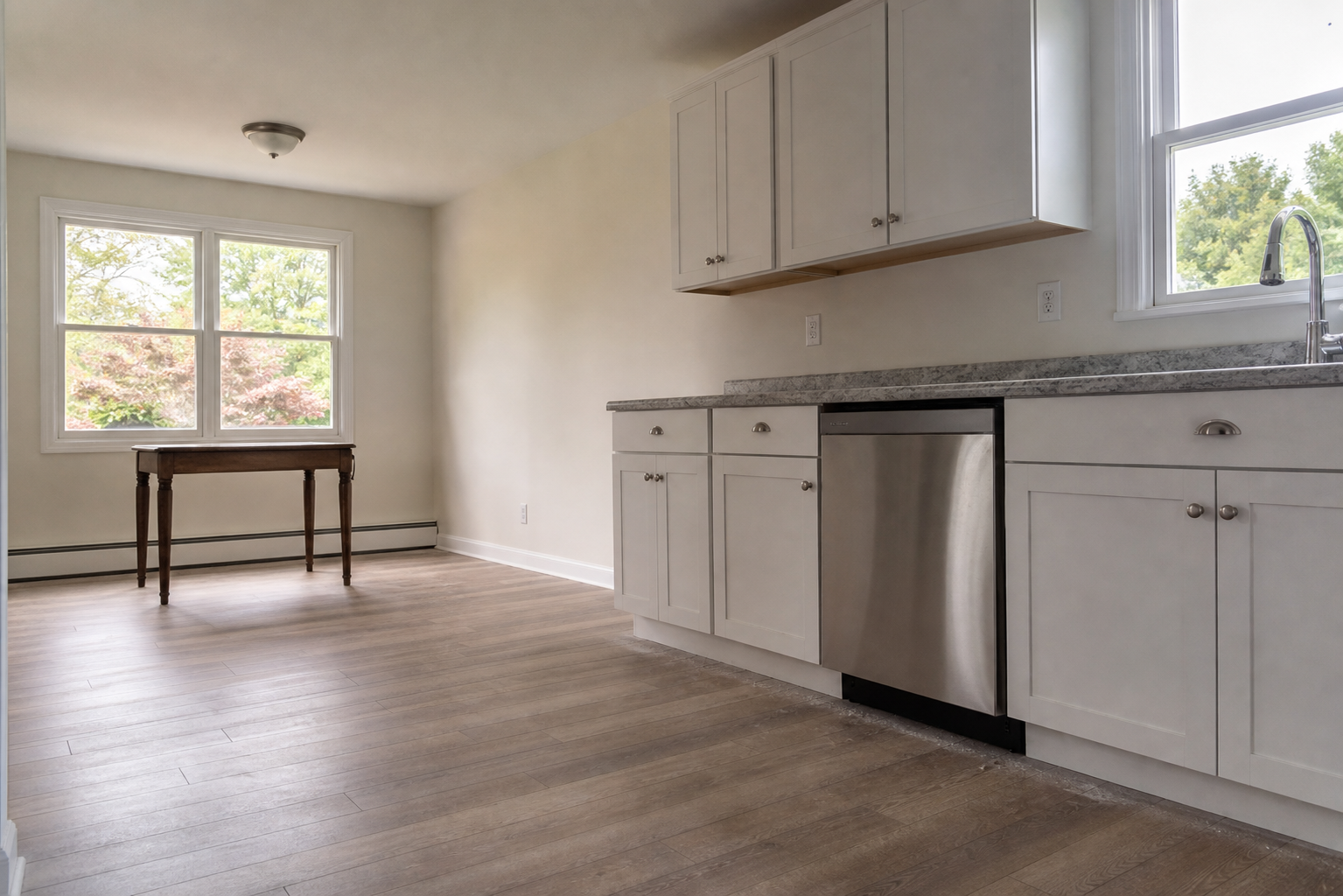
A renovation may be complete from a construction standpoint while the space is still far from ready to use. Fine dust can remain on walls, trim, cabinet interiors, fixtures, floors, ledges, and nearby rooms. Unlike everyday household dust, construction residue often resettles after the first pass.
Ready to plan your cleaning?
Review post-construction cleaning services and confirm your rooms, priorities and timing.
Understanding the process helps homeowners plan post-construction cleaning in Babylon, NY at the right stage of the project. It also helps establish realistic expectations for labor, surface care, and the number of cleaning passes required.
Wait until active construction is finished
Cleaning should begin after contractors have completed dusty work, removed tools, and cleared building debris. If sanding, cutting, drilling, or punch-list repairs continue after the cleaning, new particles will spread across the finished areas and may require another visit.
Confirm that paint and coatings have cured enough for safe cleaning. Utilities should be working, permanent lighting should be available, and sinks and drains should be functional when they are part of the space. Ask the contractor to identify any finish with special care instructions.
Remove construction debris before detailed cleaning
Post-construction cleaning generally focuses on dust and ordinary cleanup, not the disposal of heavy building materials. Contractors should remove lumber, drywall pieces, tile scraps, sharp objects, buckets, protective film, and other jobsite debris unless separate arrangements have been made.
Loose nails, blades, exposed wiring, unstable materials, and unfinished surfaces create safety risks. Walk through the area before the cleaning appointment and address hazards. A cleanable site should be substantially complete and safe to enter.
Expect more than one dust pass
Fine dust becomes airborne when surfaces are disturbed. A first pass removes the largest accumulation, but additional particles may settle afterward. Effective cleaning often uses a sequence of high dusting, detailed wiping, vacuuming, and floor care, followed by a final inspection and touch-up pass.
The exact method depends on the dust type and surface. Dry removal may be appropriate before damp wiping because immediately wetting heavy dust can create paste or streaking. High-efficiency equipment and clean cloth rotation can help prevent redistribution.
A practical high-to-low sequence
- Reachable upper ledges, vents, fixtures, and horizontal surfaces
- Walls or trim when included and safe for the finish
- Cabinet interiors, shelves, counters, and appliance exteriors
- Doors, frames, baseboards, switches, and lower details
- Vacuuming and floor cleaning, followed by a final dust check
Protect new finishes with the right products
Newly installed materials may be more vulnerable than older surfaces. Natural stone, specialty tile, engineered flooring, wood, painted cabinets, stainless steel, glass, and finished metal can each require specific products and techniques. Share manufacturer instructions whenever they are available.
Avoid aggressive scraping or solvents unless the method is approved. Paint, adhesive, grout haze, silicone, stickers, and protective films may require trade-specific removal. If the residue resulted from installation, the contractor may be the appropriate party to correct it.
Cabinet and storage interiors take time
Dust can enter empty cabinets, drawers, closets, and shelving even when doors were closed. Each compartment must be opened, vacuumed or wiped as appropriate, and checked before items are stored. Large kitchens or built-in storage systems can add substantial labor.
Keep the interiors empty until cleaning is complete. Installing liners, organizing possessions, or filling shelves too early makes dust removal slower and can trap residue underneath belongings.
Floors usually need repeated attention
Construction dust collects in floor edges, transitions, corners, grout lines, and textured surfaces. Begin with dry debris removal using methods safe for the flooring. Mopping too early can spread dust into a film, while excessive water can damage certain new materials.
Adhesive, paint, grout haze, or protective coatings may not be ordinary soil. Identify these materials before cleaning and confirm the approved removal method. New floor warranties and installer guidance should take priority over generic advice.
Occupied homes require extra planning
When renovation happens in one part of an occupied home, dust may travel beyond the work zone. Discuss adjacent hallways, stairs, vents, and rooms that were exposed. Protect personal belongings and keep non-work areas closed when possible during construction.
After cleaning, replace or service HVAC filters according to professional guidance and the system manufacturer’s instructions. Cleaning reachable vent exteriors is different from duct cleaning, which is a separate specialty service.
Information to provide when requesting a quote
- Approximate square footage and rooms included
- Type of renovation and the surfaces installed
- Whether the home is empty, occupied, or partially furnished
- Current photos showing dust and remaining materials
- Access details, deadline, and any contractor restrictions
Also identify any requested window, wall, cabinet, appliance, or specialty treatment. Clear scope prevents confusion between routine cleaning, post-construction dust removal, and contractor correction work.
Plan for dust beyond the renovated room
Open doorways, shared hallways, staircases, and normal foot traffic can carry fine dust beyond the construction boundary. Include adjacent areas in the walkthrough even if they were not physically renovated. It is better to identify exposure before the appointment than to discover afterward that the finished room is clean while the path leading to it is not.
Plan the final clean before move-in or reopening
Leave a buffer between the cleaning and the date furniture, inventory, or personal belongings must return. The buffer gives dust time to settle and allows a final inspection. It also protects the schedule if the project requires additional labor.
Crystal Breeze Cleaning provides post-construction cleaning in Babylon, NY. Request a personalized quote with project photos, room details, current condition, and the intended completion date so the cleanup can be planned around the actual scope.
Ready to plan your cleaning?
Review post-construction cleaning services and confirm your rooms, priorities and timing.