
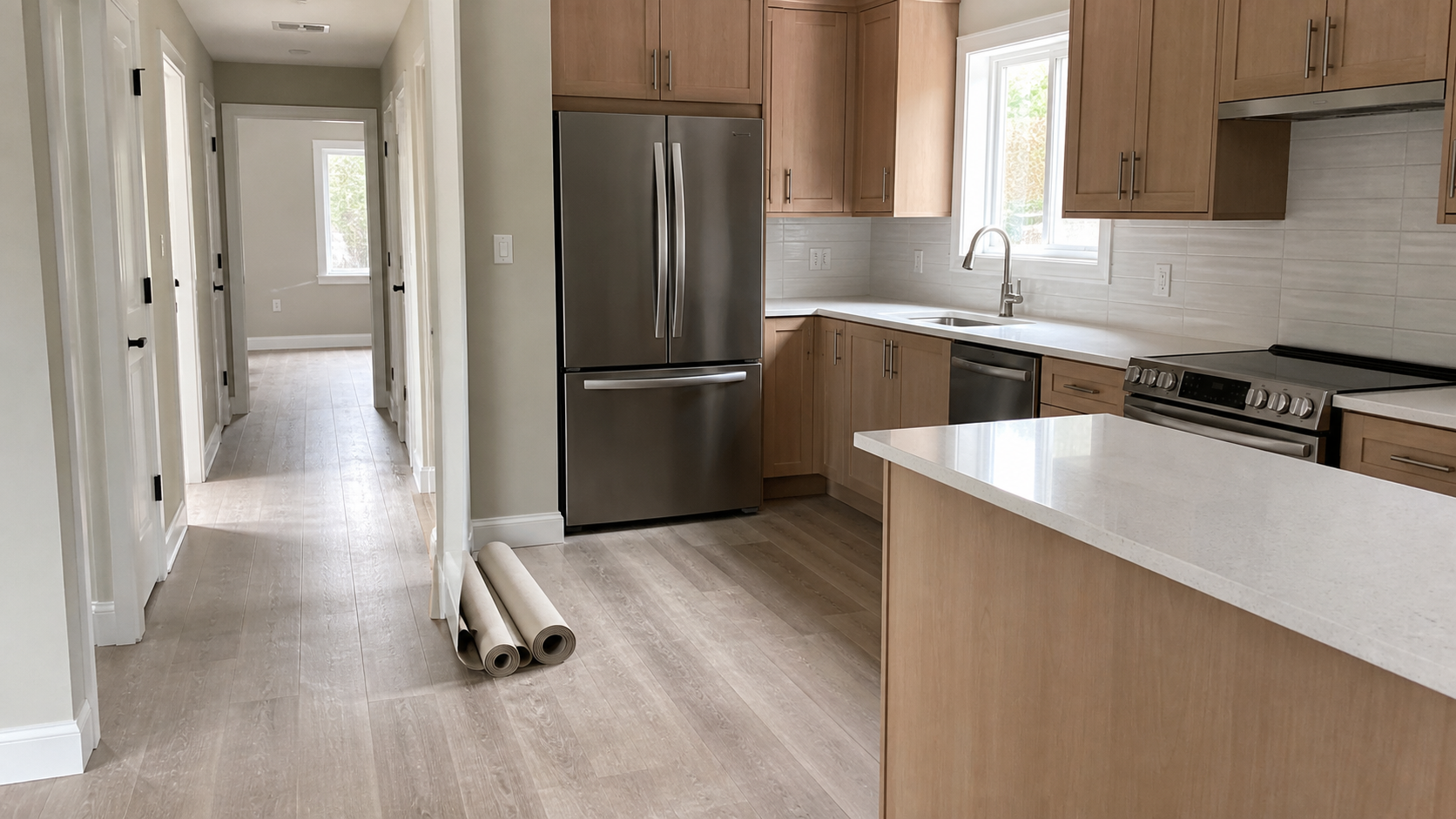
A renovated room can look finished before it is ready for furniture, clothing, cookware, and everyday use. Fine dust may still rest on ledges, trim, shelves, cabinet interiors, fixtures, and new floors. Moving belongings back too early can spread that residue and block surfaces that still need cleaning or contractor attention.
Ready to plan your cleaning?
Review post-construction cleaning services and confirm your rooms, priorities and timing.
For a Dix Hills homeowner, the useful question is not simply whether construction looks complete. It is whether the project has reached a clean handoff point: dusty work has paused, new materials are identified, repairs are separated from cleaning, and the rooms are accessible for a final review.
Use three separate handoffs
A smoother move-back plan separates the project into three decisions. First, the contractor confirms which work is complete and which punch-list items remain. Second, the cleaning scope is confirmed for the accessible surfaces and rooms. Third, the homeowner or manager inspects the cleaned areas before furniture and boxes return.
Combining those steps can create confusion. A cleaner should not have to decide whether a paint mark is removable residue or an unfinished repair. Movers should not arrive while cabinets are still being detailed or floors are drying. Give each handoff its own time on the schedule.
Ask the contractor for a readiness check
Before scheduling final cleaning, confirm whether sanding, cutting, drilling, painting, grouting, caulking, and fixture installation have stopped in the affected rooms. If dusty trades will return, identify which spaces can still be released for cleaning and which should remain outside the scope.
Contractor tools, unused materials, protective scraps, and approved debris should be removed from the cleaning path. Large debris, hazardous material, or disposal requiring special handling should remain assigned to the appropriate contractor or provider.
Questions for the contractor handoff
- Which rooms are fully released for cleaning?
- Which repairs or installations remain unfinished?
- Have paint, caulk, adhesive, grout, and finishes cured as directed?
- Are there material-specific care instructions for new surfaces?
- Will any trade return after the planned cleaning date?
Mark repairs separately from residue
Walk through the home before cleaning and note scratches, chips, loose hardware, failed caulk, paint defects, leaks, grout cracks, and damaged flooring. Those conditions are not ordinary cleaning tasks. Recording them first helps prevent a repair issue from being mistaken for dust or soil.
Stickers, adhesive, paint spots, grout haze, protective film, and sealant residue may also require installer-approved methods. Avoid assuming that stronger pressure, scraping, or a different chemical is the answer. New finishes can be damaged by an unapproved removal method.
Make every target surface accessible
Empty cabinets, drawers, shelves, closets, and renovated rooms before the cleaning appointment. Keep furniture, dishes, clothing, linens, and moving boxes outside the released work area. An empty room allows high surfaces, interiors, trim, fixtures, and floors to be addressed in a logical order.
Include the paths workers used, not only the remodeled room. Dust may travel into hallways, stairs, entrances, utility areas, and nearby rooms used to stage materials. A room list and simple floor plan can make the expected scope easier to confirm.
Document the new materials
List new hardwood, tile, stone, vinyl, laminate, cabinetry, glass coatings, metal finishes, and specialty fixtures. Share installer or manufacturer care instructions when they are available. The cleaning method should follow the material rather than using one routine for every surface.
Also identify areas that should not be touched, components that are still curing, and any surface with uncertain care requirements. A documented limitation is safer and clearer than guessing during the final clean.
Plan the cleaning sequence before movers
Fine dust settles more than once, so the sequence matters. Accessible upper ledges, door and window frames, shelving, and horizontal trim generally come before lower cabinets, fixtures, and floors. Cleaned rooms should remain separate from rooms where work is still active.
Some projects may need an initial dust-removal pass, a detailed surface pass, and a final inspection after remaining particles settle. That does not mean every renovation requires the same process. The condition, affected square footage, access, new materials, and remaining contractor activity determine the appropriate scope.
Build a room-by-room release order
If the entire home cannot be released at once, choose an order that supports the move-back plan. Start with rooms that must receive essential belongings first, provided construction work there is complete. Keep closed or unfinished rooms clearly outside the active cleaning and moving paths.
For a renovated kitchen, confirm whether cabinet interiors, appliance interiors, adhesive removal, glass, and detailed fixture work are included. For bathrooms, identify tile, stone, grout, glass coatings, and metal finishes. For every room, leave the floor until other approved surface work is complete so it is less likely to be soiled again.
Schedule a light-and-angle inspection
Fine residue can be difficult to see straight on. Review counters, dark cabinetry, glass, glossy fixtures, trim, and floors from different angles and in changing light. Note anything blocked by appliances, curing material, contractor equipment, or stored items.
Keep the inspection separate from the contractor punch list. The cleaning review addresses accessible residue within the agreed scope. Repairs, installation defects, internal duct work, HVAC service, and mechanical concerns belong with the appropriate professional.
Set a move-back gate
Do not use the cleaner’s departure time as the automatic signal for movers to enter. Allow approved surfaces and floors to dry, confirm that contractor work is finished in the released rooms, and complete the homeowner or manager walkthrough first.
Then bring belongings back in an order that protects the completed work. Use approved floor protection on active paths. Avoid filling cabinets or closets that still need contractor attention, and keep boxes away from any surface awaiting inspection.
Share the details needed for a Dix Hills quote
Before requesting post-construction cleaning in Dix Hills, prepare the renovated-room list, affected square footage, current condition, new materials, unfinished contractor work, access information, available utilities, disposal arrangements, and desired move-back date. State whether the property is empty, partially furnished, or occupied.
Crystal Breeze Cleaning provides post-construction cleaning in Dix Hills, NY. Call (516) 789-2767 or visit crystalbreezecleaning.com to request a personalized quote based on the renovation, condition, materials, access, and required scope.
Ready to plan your cleaning?
Review post-construction cleaning services and confirm your rooms, priorities and timing.