
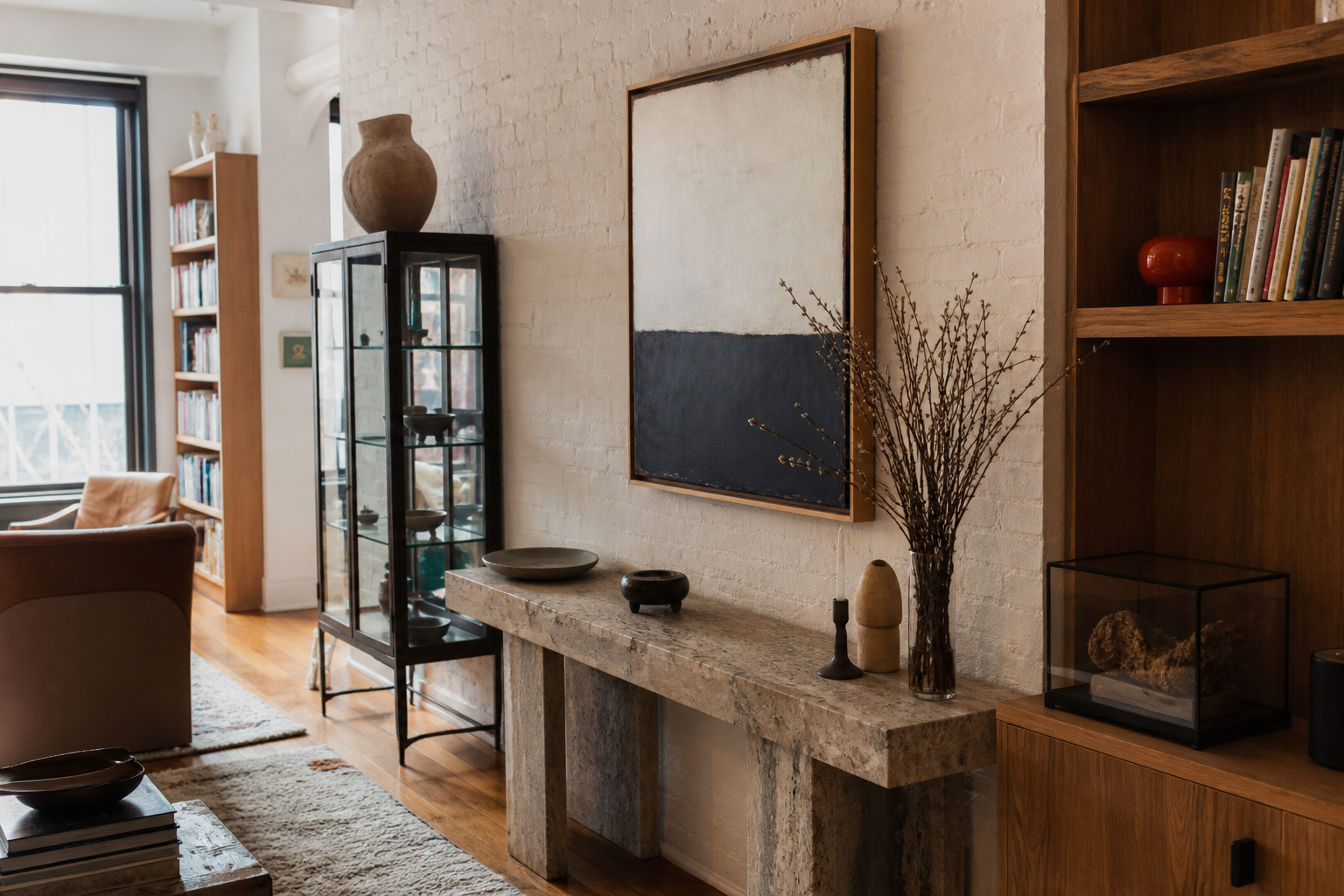
In a Tribeca residence, routine cleaning may take place beside framed art, natural stone, custom woodwork, antiques, glass display cases, and decorative objects that should not be handled like ordinary household items. The most useful preparation is not a longer generic checklist. It is a concise home-care profile that tells the cleaning team what each sensitive area requires, what may be moved, and when work should stop for clarification.
Ready to plan your cleaning?
Review luxury home cleaning services and confirm your rooms, priorities and timing.
This documentation-centered approach gives luxury home cleaning in Tribeca a clear operating plan. It also separates routine cleaning from restoration, which is especially important when a home contains paintings, textiles, sculptures, photographs, or antiques.
Start with a room-by-room care profile
Walk through the residence and record the materials, objects, and access rules that affect cleaning. Keep the profile practical enough to use during a visit. A room entry might identify a marble console, a custom-finished cabinet, a display that should remain in place, and the product approved for an adjacent glass surface.
Include restricted rooms, preferred products, and any household priorities that change the order of work. If manufacturer or fabricator guidance exists for specialty stone, wood, metal, or another finish, keep that information with the profile. Update the document when furnishings, renovations, or art installations change.
Label instructions so they cannot be misunderstood
Broad directions such as “be careful in the living room” leave too much room for interpretation. Pair a photograph with a short, specific instruction: “do not move,” “dry microfiber only,” or “owner-approved stone cleaner.” The note should identify the exact object or surface and the approved action.
Photographs are also useful when shelves or displays contain several pieces. A reference image records the intended placement before anything approved for movement is lifted. It helps the homeowner, property manager, or household contact explain expectations without relying on memory during every visit.
Create three object-handling categories
Small decorative objects can collect dust underneath, but moving every item is not always appropriate. Divide objects into three categories: safe to move, move only with permission, and do not move. Use the same categories for framed pieces, collectibles, electronics, lamps, sculptures, and objects positioned near an edge.
For anything approved for movement, identify a stable temporary location away from foot traffic. Do not stack delicate pieces on upholstery or another unstable surface. Note whether an object requires two people. If an item stays in place, clean only the accessible area around it and record any section that could not be reached safely.
Document the material before choosing the method
Appearance alone does not reliably identify a surface. Stone that looks like engineered quartz may be marble, while custom woodwork may have a veneer or hand-applied finish. Marble and other natural stones can react to acidic products. Unsealed wood can absorb moisture. Brass, bronze, lacquer, acrylic, stainless steel, glass, and painted finishes can each require different care.
When the material or approved method is uncertain, pause and confirm it. Remove loose debris before damp-cleaning stone so grit is not dragged across the finish. Limit moisture around custom woodwork, avoid allowing product to pool at seams or joints, and stop if a finish shows cloudiness, cracking, or lifting. Do not assume a homemade product is safe because it is described as natural.
Keep routine cleaning separate from conservation
A house-cleaning plan can address approved frames, display cases, pedestals, and surrounding surfaces. It should not attempt to treat a painting, textile, photograph, sculpture, or antique with household products. Restoration and conservation concerns belong with an appropriate conservator.
Do not spray cleaner near artwork. Apply an approved product to the cloth away from the object, using only the amount needed for the intended surface. If hanging hardware, a pedestal, or a display piece appears loose or unstable, leave it in place and notify the homeowner or property manager.
Plan access and the order of work
Begin with a walkthrough and confirm who can answer questions. Decide how entry, alarms, elevators, restricted rooms, and building rules will be handled. In a staffed residence, designate one contact who can approve a change rather than asking several people for conflicting instructions.
Clean approved higher surfaces before lower ones, but do not reach across artwork or fragile objects. Keep cords, hoses, buckets, and supply caddies away from pedestals and narrow paths. Complete floors after surface work, using a method appropriate for the actual floor material. Move rugs only when their size, condition, and placement make handling appropriate under the documented plan.
Use a final inspection as a handoff
The final review should confirm more than visible cleanliness. Check glossy surfaces and glass from several angles, then inspect cabinet fronts, hardware, baseboards, corners, and the accessible spaces around decorative objects. Compare movable items with the reference photographs and return them to their documented positions.
Confirm that doors, windows, climate controls, and restricted areas are left as instructed. Record any question, unstable object, unidentified finish, or inaccessible section so the care profile can improve before the next visit.
Review the profile when the home changes
A care profile is useful only when it reflects the current residence. New furniture, repairs, renovations, seasonal displays, and rotating artwork can change both the materials present and the safest path through a room. A brief periodic review keeps the cleaning plan aligned with those changes.
Crystal Breeze Cleaning provides customized luxury home cleaning in Tribeca and other Manhattan neighborhoods, based on the residence, access requirements, sensitive materials, and requested priorities.
Request a cleaning quote by calling (516) 789-2767.
Ready to plan your cleaning?
Review luxury home cleaning services and confirm your rooms, priorities and timing.