
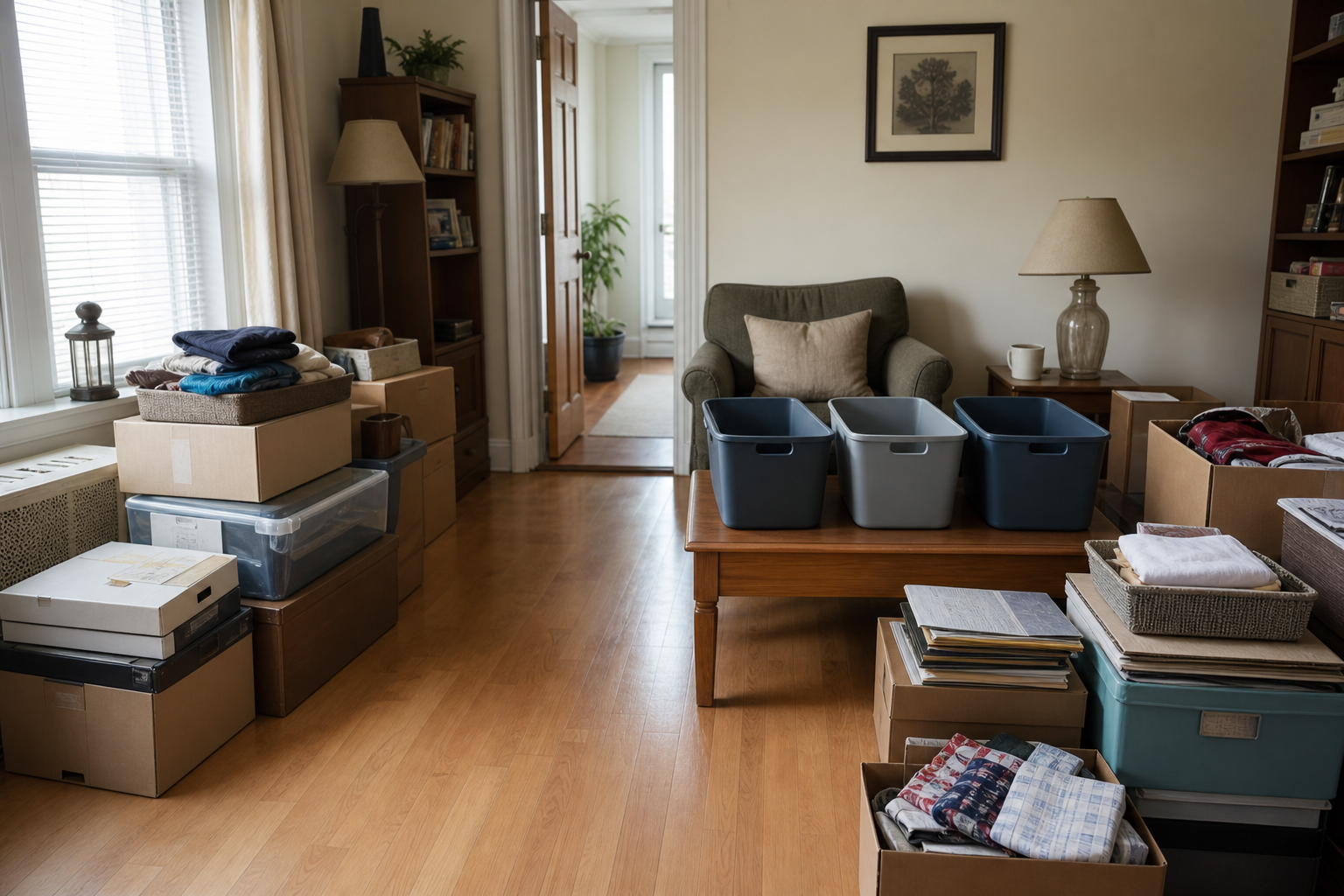
Beginning a clutter cleanup can feel overwhelming when a home contains years of belongings, limited walking space, important papers, sentimental objects, or possessions shared by several people. The consultation is not the cleanup itself. It is a planning conversation used to define priorities, access, safety concerns, decision authority, removal expectations, and a realistic order of work.
Ready to plan your cleaning?
Review clutter & hoarding cleanup services and confirm your rooms, priorities and timing.
Preparing a few specific details can make that conversation more useful without requiring the resident or family to organize the entire property first.
Choose the first outcome, not an all-at-once goal
“Clean everything” is usually too broad to guide an initial visit. Identify the most urgent outcome. It might be reopening a safe pathway, restoring access to a bathroom, preparing for a repair, clearing one usable room, reducing trip hazards, preparing for a move, or establishing a manageable first phase.
Rank concerns by urgency. Mention a blocked exit, unusable bathroom, spoiled food, pest concern, or medical-access problem early. A clear first priority helps define the sequence and identifies situations that may require another qualified specialist.
Describe what completion means for the first phase
The first phase does not have to mean a fully cleared home. It may mean completing one safe, usable zone without forcing decisions elsewhere. Write a specific finish line, such as clearing the hallway and restoring access to a bedroom. Concrete outcomes make the scope and progress easier to understand.
A phased plan can begin with access, move to essential rooms, and continue later to lower-priority storage or detailed cleaning. Cleaning and sanitizing are most effective after loose items and approved unwanted materials have been removed from the target area.
Identify who can approve decisions
A cluttered property may involve the resident, relatives, a landlord, a care coordinator, an estate representative, or a property manager. Decide who can authorize work and who may choose whether an item is kept, reviewed, donated, recycled, or discarded.
If the resident wants support during the consultation, choose someone calm and respectful. Too many decision-makers can slow progress or create conflicting instructions. One primary contact and one backup contact can keep communication clearer. Document any limits on what relatives, staff members, or contractors may authorize.
Protect ownership and consent
An object should not be treated as unwanted merely because it appears old, damaged, or inexpensive. Papers, containers, clothing, photographs, tools, and household objects can have personal meaning. The consultation should establish what happens when an item’s status is uncertain and where it will be placed for review.
Use a small number of categories that fit the resident’s needs, such as keep, review, donate, recycle, trash, and special disposal. An overly complicated sorting system can create fatigue and leave behind dozens of containers that require another major session.
Prepare information without hiding the current condition
You do not need to clean or sort the entire home before requesting a consultation. Seeing the current condition can help explain access, volume, labor needs, supplies, and potential removal requirements. Accurate information is more useful than concealing the most difficult rooms.
If an in-person visit cannot happen immediately, wide photographs or a short video may support initial planning. Show rooms, pathways, doorways, stairs, kitchens, bathrooms, and exterior access. Keep identification, financial papers, medical details, and other private information out of readable view.
Create a short property profile
Note the property type, floor level, elevator or stair access, parking restrictions, number of rooms, working utilities, pets, building rules, and possible staging areas for approved removals. In Queens Village, conditions may differ among detached houses, apartments, and multi-family properties, making parking and entry details relevant to the consultation.
Decide who will unlock the property, manage alarms, secure pets, and answer questions. Identify rooms or containers that remain off-limits. If shared hallways, neighbors, or building staff may be involved, discuss privacy and how materials can be moved through common areas.
Share known safety concerns honestly
Tell the cleanup company about unstable stacks, blocked exits, sharp objects, needles, broken glass, animal waste, insects, rodents, mold-like growth, leaking plumbing, spoiled food, strong odors, structural damage, or nonworking electricity and water. Do not enter an unsafe area only to take better photographs.
Some conditions need specialized equipment, disposal methods, pest control, remediation, or other licensed professionals. The consultation should identify those boundaries rather than treating every condition as ordinary house cleaning.
Create a never-discard-without-review list
Common protected items include identification, passports, financial records, deeds, legal papers, keys, jewelry, photographs, cash, medications, medical equipment, collectibles, and family records. If it can be done safely, place essential medications and critical documents in a secure, clearly identified location.
Agree on how found valuables are handled, who receives them, how they are recorded, and where they are secured. These instructions reduce uncertainty and support a respectful decision process.
Discuss donation and disposal expectations
Ask what removal services are included and what may require a separate vendor, container, appointment, or fee. Furniture, electronics, paint, chemicals, medications, construction debris, and other materials can have special requirements. Building rules and municipal schedules may affect the removal plan.
Donation depends on the receiving organization’s current standards. Wet, broken, recalled, stained, or heavily worn goods may not be accepted. Avoid assuming that every unwanted item can be donated; allow time for realistic sorting and approved disposal.
Choose a communication and approval method
Some clients prefer scheduled photographs, end-of-day summaries, or approval before each removal load. Others want the resident or representative present. Choose the process before work begins so questions do not interrupt every task and important decisions remain documented.
Expect estimates to depend on volume, property size, access, sorting decisions, contamination, disposal logistics, and the number of authorized decision-makers. A smaller room can take longer when every object requires discussion. Treat the estimate as a planning tool rather than a promise about unseen conditions.
Plan respectful clutter cleanup in Queens Village
Crystal Breeze Cleaning provides respectful hoarder and clutter cleanup in Queens Village. A useful consultation identifies the first goal, authorized decision-makers, protected items, access conditions, known hazards, removal expectations, and the finish line for the first phase.
Request a cleaning quote by calling (516) 789-2767.
Ready to plan your cleaning?
Review clutter & hoarding cleanup services and confirm your rooms, priorities and timing.