
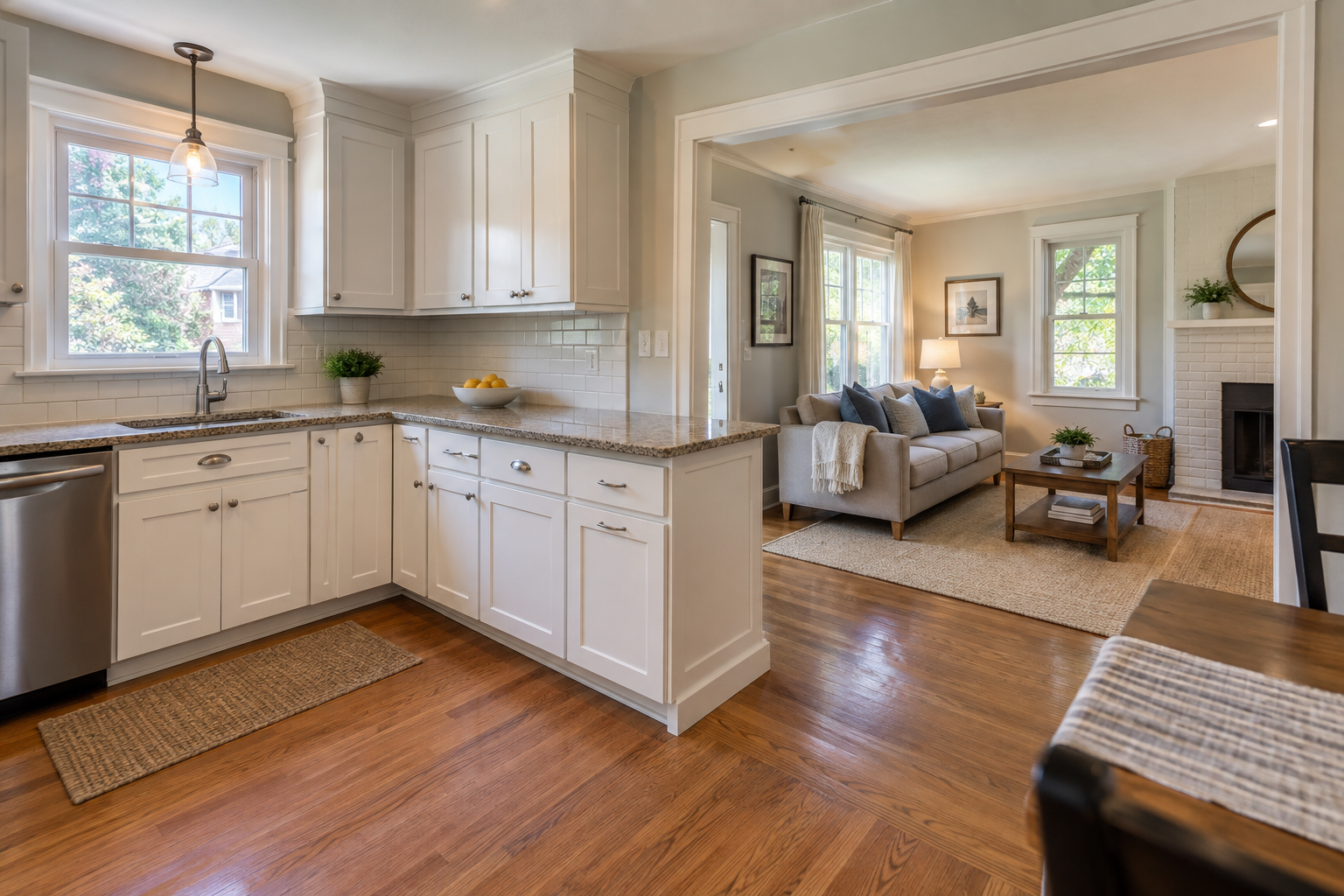
The final day before listing photography is not the time to begin a whole-home makeover. It is the time to protect the photo appointment by stopping dusty work, clearing the camera’s view, and checking the surfaces that bright light tends to expose. A room can feel clean during an ordinary walkthrough while a wide photograph still shows fingerprints, streaks, floor debris, crowded counters, or supplies reflected in glass.
Ready to plan your cleaning?
Review standard cleaning services and confirm your rooms, priorities and timing.
This 24-hour checklist gives Rockville Centre sellers and agents a practical handoff between repairs, staging, cleaning, and photography. It focuses on the last decisions that can prevent repeated work and last-minute confusion. The goal is a clean, orderly presentation that lets the home’s layout and light remain visible without making claims about a sale or photographic outcome.
Twenty-Four Hours Out: Freeze the Moving Parts
Confirm that sanding, drilling, painting, fixture replacement, and other dusty repairs are complete. Finish most furniture movement before detailed cleaning begins. If a contractor must return, identify the exact room and schedule a smaller follow-up pass after that work rather than cleaning the same area twice.
Ask the agent or stager to approve the room layout before small accessories are placed. Cleaners need stable access to counters, floors, cabinet fronts, appliance exteriors, bathroom fixtures, and reachable trim. Repeatedly moving décor slows the work and increases the chance that fingerprints or floor marks return after cleaning.
Protect Private Information Before the Camera Arrives
Remove mail, prescription labels, school schedules, family calendars, keys, alarm details, financial documents, and other identifying information from visible surfaces. Decide where those items will be stored; do not push them into a random closet if that closet may be photographed or opened during an early showing.
Build a Camera-Path Priority List
Walk the property in the order a photographer is likely to move: entry, main living space, kitchen, primary bedroom, bathrooms, hallways, and any office or bonus room included in the listing. Note what can be seen through open doorways. A laundry basket in a hall or supplies in an adjoining room can appear in a wide shot even when the main room is ready.
If time is limited, rank the photographed rooms instead of lightly touching every space. Give the cleaning company the photo date, room priorities, approximate home size, bedroom and bathroom count, floor types, occupancy status, and any approved interior-appliance or cabinet work. Clear scope protects the deadline.
Use the Same Light the Photographer Will Use
Open window treatments according to the staging plan and turn on the fixtures expected during the session. Natural and interior light reveal different problems. Sunlight may expose dust at floor edges, while lamps and ceiling lights can make streaks on mirrors, appliance fronts, and glass more visible.
Dust reachable fixture exteriors only when they are cool and safe to access. Replace burned-out bulbs before the final inspection when possible. Never stand on furniture or improvise access to chandeliers, high glass, ledges, or tall windows. Elevated or specialty work should be agreed in advance.
Take an Unfiltered Phone-Camera Test
Stand in each doorway and take one ordinary wide photo without filters. Review it for cords, crooked rugs, crowded shelves, personal products, floor marks, or items that interrupt the sightline. Then check mirrors, glass doors, glossy cabinets, and appliance fronts for reflections that reveal supplies, trash bags, ladders, or people outside the frame.
Run a Reflection Audit in Kitchens and Bathrooms
In the kitchen, clear excess countertop items and clean the sink, faucet, backsplash, cabinet fronts, pulls, appliance exteriors, stovetop, and food-preparation surfaces included in the scope. Use products appropriate for stone, metal, painted wood, glass, and other finishes. Discuss refrigerator, oven, pantry, or cabinet interiors separately because they require additional time.
In bathrooms, remove personal products that are not part of the staging plan. Check the mirror, counter, sink, faucet, shower or tub, fixtures, toilet, and floor. Look at shower-door tracks, corners, and the base of the toilet. Let surfaces and textiles dry before towels are arranged. Never mix cleaning chemicals, particularly products containing bleach or ammonia.
Report leaks, slow drains, damaged caulk, recurring moisture, chipped finishes, or other maintenance concerns. Cleaning can improve accessible surfaces, but it should not be used to disguise a repair issue.
Finish Floors Only After Upper Surfaces
Dust and small debris fall while counters, reachable trim, furniture, and fixture exteriors are addressed. Vacuum or dry-remove loose material first, including accessible edges and corners, then use floor care suited to the material. Wood, natural stone, tile, vinyl, laminate, rugs, and carpet do not share one safe method.
Use controlled moisture and follow manufacturer guidance. Vacuum carpet slowly in overlapping passes, and test unfamiliar stain treatments in an inconspicuous area. Leave enough drying time before the photographer enters. If furniture was moved, inspect the newly exposed floor and wall areas before returning pieces to their staged positions.
The Final Fifteen-Minute Sweep
Once cleaning is complete, stop bringing new boxes and supplies through finished rooms. Move cleaning products, vacuum cords, trash bags, laundry baskets, step equipment, and packaging out of every camera path. Confirm that floors are dry, trash is removed, beds and towels follow the staging plan, and doors are positioned as requested.
Repeat the phone-camera check from the entry and main doorways. Look through reflections one last time. This short review is more useful than starting an unrelated organizing project just before the appointment.
Choose Standard or Deep Cleaning From the Actual Condition
A maintained, occupied home may need standard cleaning focused on photographed rooms and visible surfaces. Accumulated dust, detailed trim, empty cabinets, interior appliances, renovation residue, or a long gap between services may require a deeper scope and more time. Share those conditions when requesting an estimate rather than assuming they fit into a basic visit.
Crystal Breeze Cleaning provides standard and deep house cleaning for sellers, agents, and homeowners in Rockville Centre and other Long Island communities. Tell us the photo date, repair schedule, home size, room count, floor types, and priority spaces so the requested work can be planned clearly.
Request a cleaning quote: call (516) 789-2767 or visit crystalbreezecleaning.com.
Ready to plan your cleaning?
Review standard cleaning services and confirm your rooms, priorities and timing.