
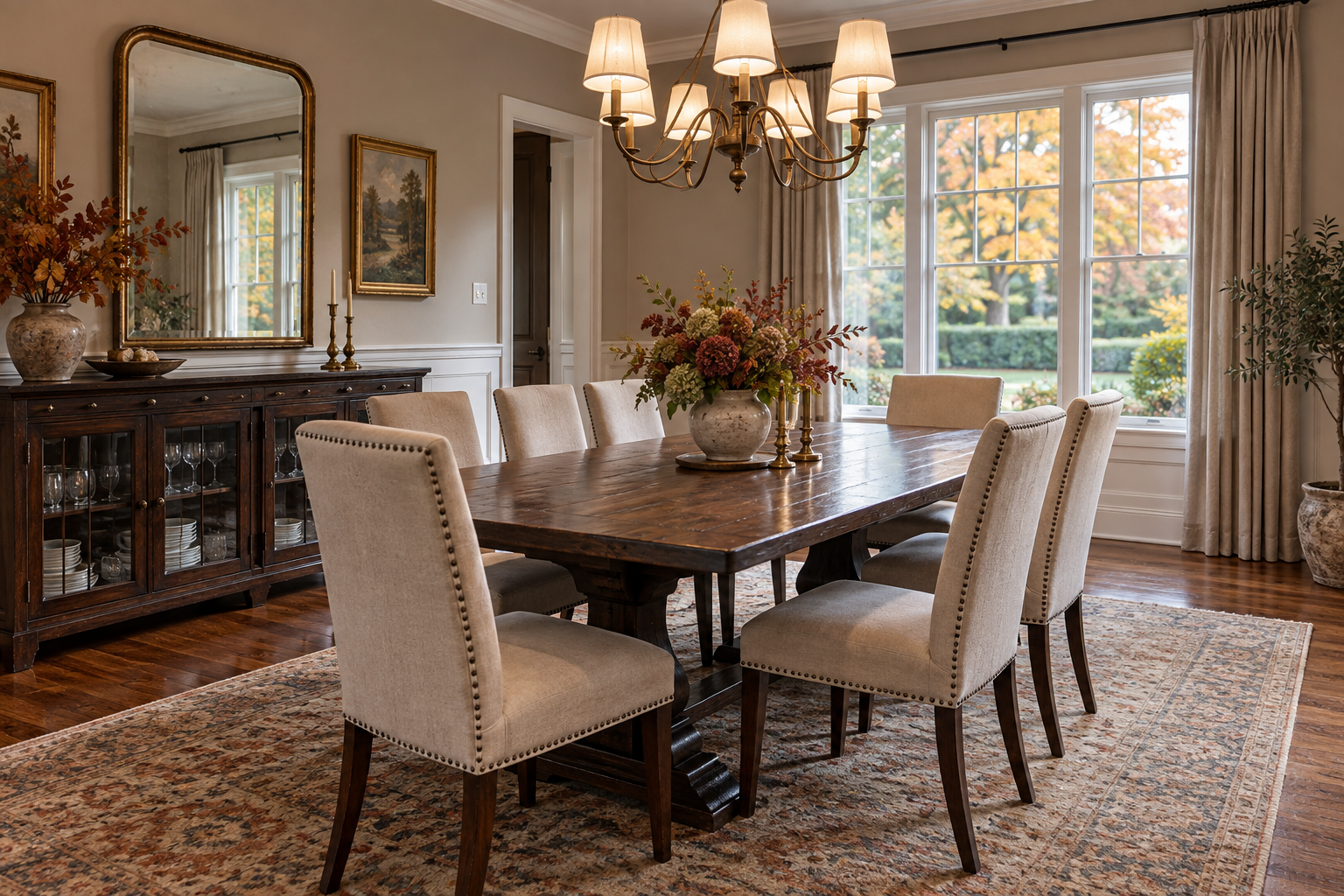
A formal dining room can look ready at first glance while still holding dust along chair rails, cabinet trim, mirror edges, table leaves, and lighting. Before fall entertaining, the safest goal is not to make every surface shine with the same product. It is to identify the room’s materials, decide what may be handled, and clean in an order that protects the finishes.
Ready to plan your cleaning?
Review luxury home cleaning services and confirm your rooms, priorities and timing.
For homeowners planning luxury home cleaning in Old Westbury, that distinction matters. Formal dining rooms often combine finished wood, upholstery, glass, stone, specialty metal, rugs, and meaningful decorative pieces. Each material may need its own method, and some conditions belong with a furniture, textile, electrical, or restoration specialist rather than a routine cleaning scope.
Begin With a Finish and Condition Review
Before moving chairs or applying a product, make a short inventory. A dining table may be lacquered, oiled, waxed, painted, or veneered. The floor may be sealed hardwood, natural stone, porcelain, or a rug over wood. Cabinet hardware can be brass, bronze, chrome, silver plate, or a coated finish that should not be polished.
Record visible scratches, water rings, lifting veneer, frayed upholstery, chipped stone, loose furniture, and damaged cords before work begins. Cleaning can remove ordinary soil, but it should not be treated as repair or restoration. Noting existing conditions makes the handoff clearer and reduces the temptation to experiment with a stronger product.
Decide What May Be Moved
Artwork, antiques, china, crystal, silver, candles, floral pieces, and personal collections need explicit instructions. If washing or rearranging display items is not included, the safer plan is to clean accessible cabinet exteriors and surrounding surfaces without disturbing the contents.
Also decide where table leaves, linens, place settings, and decorative pieces will wait during cleaning. Use a stable, protected surface outside the work path. Crowding fragile items onto a sideboard can turn a straightforward room reset into an avoidable handling risk.
Use a High-to-Low Sequence
A high-to-low route keeps falling dust from landing on completed work. Begin with safely reachable crown molding, door frames, picture rails, vents, and upper ledges. Continue with frames, accessible lighting surfaces, cabinet tops, mirrors, and windowsills. Then work through furniture, chair seats, baseboards, and floors.
Do not improvise with a dining chair or tabletop to reach overhead details. Chandeliers, high ledges, and other areas beyond safe reach should be identified separately so suitable access equipment or specialized service can be planned.
Match the Method to the Dining Table
The table is usually the room’s focal point, but that does not make it a place for aggressive cleaning. Remove loose dust with a clean, soft cloth. Use only a method approved for the specific finish, and follow manufacturer guidance before testing an unfamiliar product in a discreet area.
Avoid spraying liquid directly onto wood, allowing moisture to collect near seams, or using abrasive pads that may change the sheen. If the table includes leaves, extension hardware, carved details, or a glass insert, confirm which components are included before starting.
White marks, deep scratches, cloudy lacquer, heat damage, and loose veneer may require a furniture professional. The practical response is to stop and report the condition rather than rub harder or introduce a new chemical.
Give Chairs and Upholstery Separate Attention
Dining chairs collect crumbs, dust, hair, and fabric lint around seat edges, rails, and joints. Upholstery can be vacuumed with a clean attachment and controlled suction appropriate for the fabric. Care labels or written instructions should guide any spot treatment, and stain removal should never be assumed.
Clean wood or metal frames according to their finish, paying attention to the hand-contact areas along chair backs. If a chair feels loose or unstable, set it aside and notify the property contact instead of continuing to move or use it.
Handle Cabinets, Glass, and Metal With Restraint
Sideboards and display cabinets often combine wood, glass, metal, and lined interiors. Dust the top, face, legs, hardware, and accessible trim with separate tools when needed. Apply glass product to the cloth so liquid does not run into wood edges or cabinet interiors.
Do not automatically polish hardware. A darkened or aged appearance may be intentional, and some metal finishes have protective coatings. Follow the homeowner’s care instructions and keep all products away from linens, serving pieces, and food-contact items.
Mirrors and glass panels should be checked from more than one angle for streaks. The underside of a glass tabletop belongs in the scope only when it is safely accessible. Accessible lamp bases, shades, sconces, and fixture surfaces should be handled only when the power is off and the material can be cleaned safely.
Finish Rugs and Hard Floors Last
Vacuum rugs with settings suited to the pile and construction, working carefully near edges and fringe. Delicate, antique, loosely woven, or shedding rugs may need professional care guidance instead of standard agitation.
For hardwood or stone, remove loose grit before damp cleaning. Use minimal moisture on wood and a product approved for the floor’s seal or stone type. Vinegar, bleach, steam, and general-purpose cleaners are not interchangeable. Return furniture only when the floor is ready and the intended placement is clear.
Protect the Clean Room During Table Setup
Once cleaning is complete, wash hands and use clean, dry materials before placing linens or table settings. The homeowner may prefer to handle china, glassware, silver, and centerpieces personally. If setup is included, follow a photo or written arrangement instead of making design decisions.
Keep used cloths, bottles, and equipment outside the finished room. That small handoff detail prevents a cleaned table, chair, or floor from being marked again during setup.
Complete a Guest-Level Check
View the room from the entrance and from seated height. Check the table surface, chair backs, mirror edges, cabinet glass, baseboards, rug edges, and floor corners. Look for streaks, lint, equipment marks, or items returned to the wrong place.
Confirm that pathways are clear, furniture is stable, windows and exterior doors are in their intended position, and any damage or maintenance concern has been reported. A concise checklist makes the room easier to approve and prepares the same process for the next gathering.
Plan Formal Dining-Room Care in Old Westbury
Crystal Breeze Cleaning can discuss the room’s finishes, priority areas, access instructions, entertaining timeline, and items that require special care before building a personalized cleaning scope.
Request a cleaning quote at crystalbreezecleaning.com or call (516) 789-2767.
Ready to plan your cleaning?
Review luxury home cleaning services and confirm your rooms, priorities and timing.