
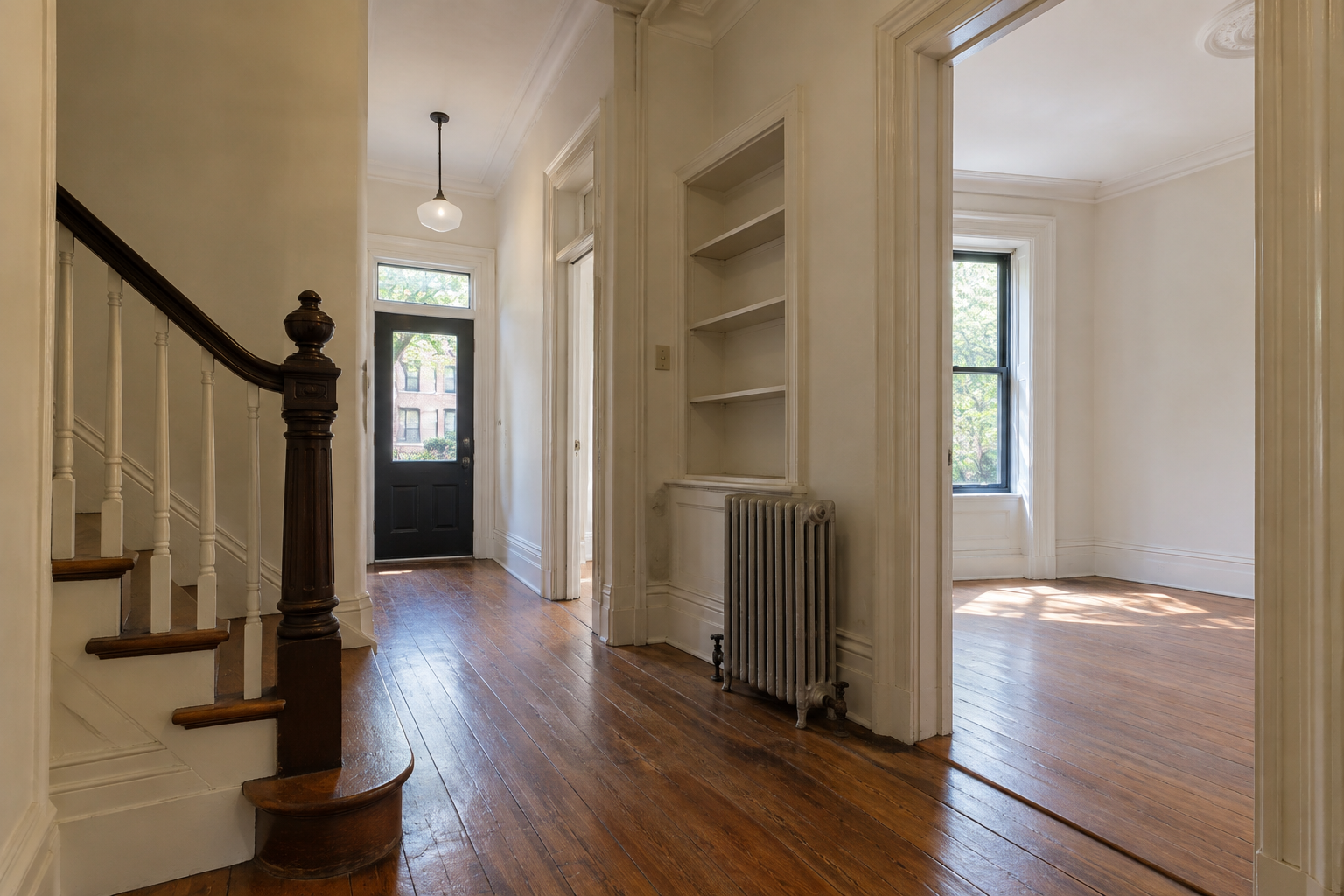
In a Cobble Hill brownstone apartment, the last cleaning decision is not simply which room comes first. It is how the work will move through narrow halls, stairs, and the final doorway without sending dust or footprints back across completed areas. Once the movers remove furniture, newly exposed floor edges, radiators, trim, closet corners, and built-ins can make an apparently empty apartment feel unfinished.
Ready to plan your cleaning?
Review move-in / move-out cleaning services and confirm your rooms, priorities and timing.
A route-based plan for move-out cleaning in Cobble Hill gives renters, owners, property managers, and cleaners a practical sequence. It also separates ordinary cleaning from repairs and helps everyone understand what must remain accessible until the keys are returned.
Why the Exit Route Should Shape the Cleaning Plan
A brownstone apartment may occupy more than one floor, connect rooms through a narrow hall, or rely on one main staircase. If every room is cleaned independently without considering traffic, people may have to walk through a finished space to reach another area. A better plan starts by identifying the uppermost or farthest room and the main exit.
From there, the work can move from high surfaces to low surfaces and from the far side of the apartment toward the door. The entry floor becomes one of the last areas completed. This is not about rushing through rooms; it is about keeping the route usable while reducing avoidable rework.
Leave a Real Buffer After the Movers
Schedule the main clean after furniture, boxes, packing material, and unwanted belongings have left. A sofa, bookcase, or stack of cartons can block the exact floor perimeter, wall edge, outlet cover, or radiator area that needs attention. Moving those items later can also release more dust.
Allow time between the moving appointment and the key handoff. Brownstone stairs, building rules, shared hallways, parking limits, and a late moving crew can all affect access. If the apartment is not empty at the agreed start time, the scope or priorities may need to change.
Keep Utilities and Entry Details Active
Electricity, hot water, and interior lighting should remain available through the cleaning appointment. Working lights help reveal dust and streaks in an empty room, while water is needed for the agreed cleaning tasks. Confirm working keys, entry codes, service hours, and any contact who must provide access.
If the apartment spans multiple levels, identify every included space in advance. Follow building rules for doors, noise, waste, and shared areas. Belongings or trash should not be left in the hall or on the stairs without approval.
Map the Scope Before Work Begins
Start with a room list and the condition of each space. Clarify whether the quote includes the interiors of ovens, refrigerators, cabinets, drawers, closets, or windows. These areas can add meaningful time, especially when they have just been emptied.
Share photographs of tall trim, multiple staircases, unusual surfaces, or heavier buildup when helpful. A clear description lets the cleaning plan reflect the actual apartment instead of relying only on the number of rooms. It also gives the team a chance to identify areas that may be inaccessible or outside the agreed scope.
Follow a High-to-Low Sequence
Within each room, begin with safely reachable upper ledges, molding, door frames, vents, and fixture exteriors. Continue through built-ins, radiators, baseboards, and finally the floor. Removing loose dust before damp cleaning helps keep it from settling onto surfaces that were already finished.
On a multi-level layout, upper rooms can be completed before the stairs and entry. Keep pathways open while people are still moving between levels. Cleaning one manageable stair section at a time preserves safer access and makes it easier to finish edges, corners, spindles, and handrails without blocking the route.
Treat Brownstone Trim and Built-Ins as Distinct Surfaces
Decorative molding, fireplace mantels, shutters, carved details, and built-in cabinetry may be painted, sealed, waxed, unfinished, or previously damaged. The method should match the finish. Soft tools and controlled moisture are safer than assuming one product fits every surface.
If paint is flaking, veneer is lifting, or a finish reacts unexpectedly, stop and document the condition. A dark mark may be removable soil, a permanent scuff, or a change in the finish. Move-out cleaning addresses ordinary soil; it does not restore damaged wood, paint, hardware, caulk, or floor coating.
Clean Empty Storage Before the Floors
Closets, cabinets, and built-in drawers should be empty before interior cleaning begins. Dust often remains along shelf edges, rods, corners, and behind doors after clothing or storage bins are removed. Completing these areas before the floor prevents loose debris from falling onto a finished surface.
In the kitchen, remove food, cookware, and shelf liners. Cabinet faces, hardware, counters, backsplash, sink, and accessible appliance exteriors can then be handled according to their materials and the agreed scope. If oven or refrigerator interiors are included, the appliances should be empty and enough time should be reserved for that detailed work.
Separate Bathroom Cleaning From Maintenance
Clear toiletries, bath mats, shower curtains, and personal cleaning products. This opens access to the tub or shower, toilet, sink, vanity exterior, mirror, fixtures, and floor included in the plan.
Mineral deposits, deteriorated caulk, rust, staining, or damaged grout may not be fully removable with normal cleaning. Those conditions should be recorded rather than attacked with an aggressive product that could damage stone, enamel, metal, or surrounding finishes.
Finish Each Floor According to Its Material
Vacuum or dust-mop loose debris before damp cleaning. Hardwood generally needs limited moisture and a compatible product, while tile, natural stone, laminate, resilient flooring, and carpet have different needs. An all-purpose approach can be inappropriate for a mixed-material apartment.
As the work approaches the exit, complete the far rooms first, then the stairs, hall, and entry. Keep a small safe path available until equipment and supplies are removed. The entry floor can be finished last so the final route out is not immediately crossed again.
Document the Handoff Without Making Promises
Before leaving, compare the apartment with the agreed checklist. Open empty closets and cabinets, view floors from more than one angle, and check sills, baseboards, radiator areas, and spaces behind doors. Confirm that cleaning supplies, equipment, and approved waste have been removed.
When permitted, take completion photos that avoid keys, entry codes, mail, or personal documents. Note inaccessible areas, remaining belongings, maintenance concerns, or conditions outside the cleaning scope. Clear documentation supports the handoff without promising a deposit return or a particular inspection result.
Plan Move-Out Cleaning in Cobble Hill
Crystal Breeze Cleaning provides move-out cleaning for apartments and homes in Cobble Hill and surrounding Brooklyn neighborhoods. The scope can be planned around the layout, stair access, timing, priority areas, add-ons, finishes, and condition of the space.
Request a cleaning quote at crystalbreezecleaning.com or call (516) 789-2767 to discuss the apartment and key-handoff schedule.
Ready to plan your cleaning?
Review move-in / move-out cleaning services and confirm your rooms, priorities and timing.