
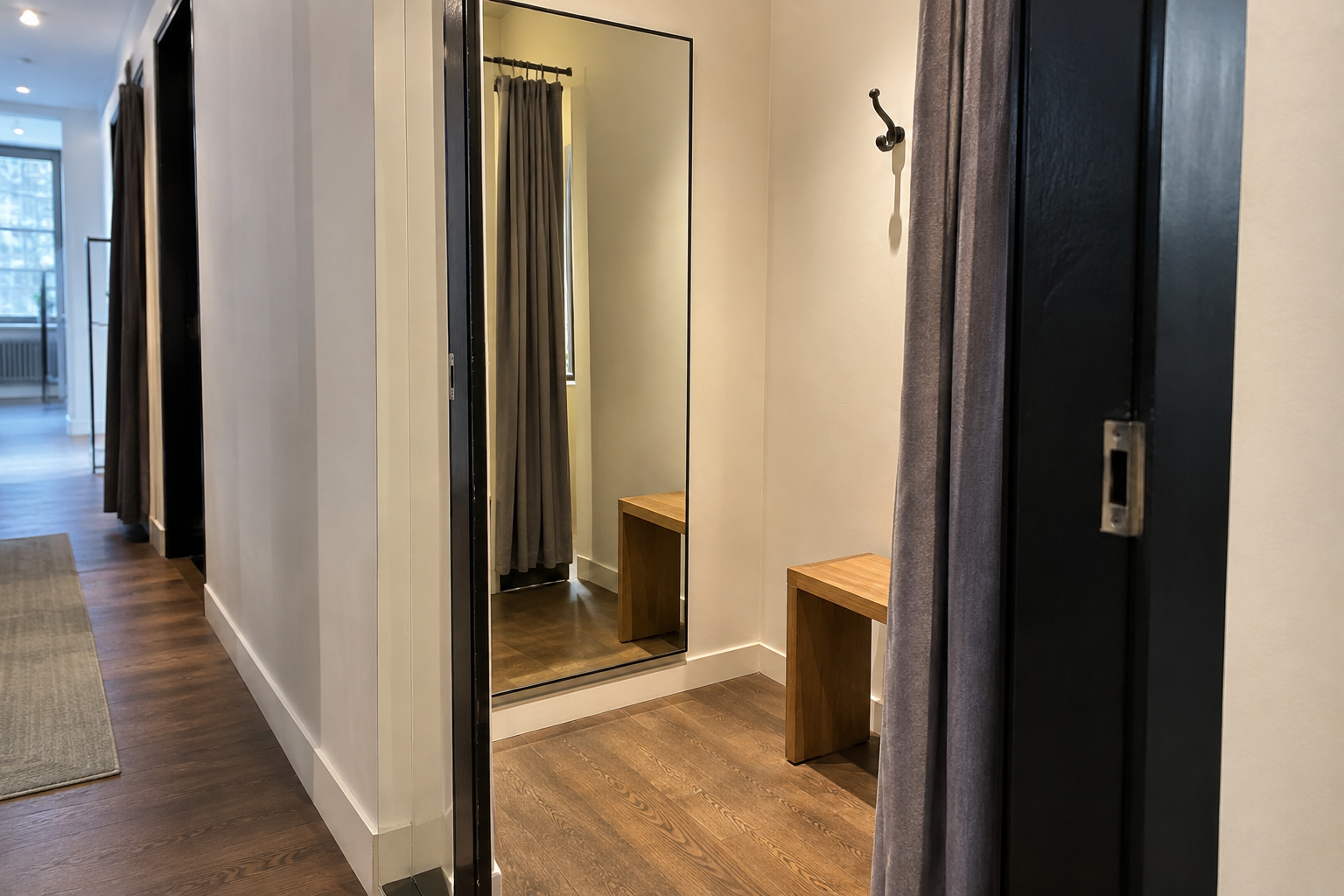
Fitting rooms may occupy a small part of a store, but they can shape a shopper’s entire impression. Smudged mirrors, dusty corners, stray hangers, lint, and an overflowing return rack make merchandise feel less appealing and slow down associates who need to reset the area. A thoughtful approach to retail store cleaning in SoHo keeps these high-use spaces comfortable, polished, and easier to manage throughout the day.
Ready to plan your cleaning?
Review office & commercial cleaning services and confirm your rooms, priorities and timing.
SoHo stores face a distinct mix of challenges. Sidewalk grit can travel deep into a sales floor, busy weekends create rapid turnover, and compact fitting-room corridors leave little space for supplies or unfinished tasks. The best plan combines frequent light resets with a more detailed closing clean. That rhythm protects the customer experience without disrupting selling time.
Why fitting-room cleanliness deserves its own plan
A fitting room is where customers inspect fabric, fit, color, and their own reflection at close range. Details that might be overlooked elsewhere become obvious under bright lighting and beside a full-length mirror. Dust on a baseboard, fingerprints on glass, or debris under a bench can weaken confidence at the moment a shopper is deciding whether to buy.
Cleanliness also supports operations. When hooks are clear, doors close properly, and unwanted items move quickly to a designated rack, associates can find merchandise and prepare rooms faster. A reliable routine reduces end-of-night surprises and gives managers a consistent standard to check.
Separate cleaning from merchandise handling
Start by defining responsibilities. Store associates should remove garments, security tags, hangers, and customer belongings before cleaning begins. Cleaning staff can then address surfaces and floors without moving saleable merchandise or guessing where it belongs. This separation helps prevent misplaced inventory and allows each team to work efficiently.
Build a practical fitting-room reset
A reset should move in the same order every time: clear, inspect, clean high points, clean touchpoints, finish low surfaces, and check the room from the customer’s viewpoint. Consistency matters more than racing through a long checklist.
Clear the room and look for damage
Remove disposable debris and send abandoned garments to the store’s designated recovery area. Before wiping anything, check for loose hooks, sharp edges, damaged seats, burned-out bulbs, stuck locks, or graffiti. Cleaning cannot correct a maintenance or safety issue, so the team needs a simple way to report it immediately.
Clean mirrors without leaving haze
Use a clean microfiber cloth and an appropriate glass cleaner, applying product to the cloth when overspray could reach merchandise, painted walls, or flooring. Work from the top down with overlapping strokes, then inspect the mirror from an angle. Pay attention to lower sections, where shoe marks, bag contact, and fingerprints often collect.
Never scrape a mirror with an unapproved blade. Adhesive, cosmetics, or unknown residue may require a surface-safe method and extra dwell time. If the mirror has a specialty film or decorative finish, follow the manufacturer’s care guidance.
Address every high-touch point
Door pulls, privacy locks, bench edges, hooks, call buttons, and light switches receive repeated contact. Clean visible soil first, then use a compatible disinfectant only when it is part of the approved scope. Follow the product label, including required wet contact time, and avoid mixing chemicals. A quick spray-and-wipe is not automatically disinfection.
Capture lint, hair, and dust
Fitting rooms collect fibers from clothing, tissue paper, shopping bags, and outerwear. Dry microfiber tools or a HEPA-filtered vacuum can capture fine debris more effectively than pushing it into corners. Check beneath seating, along baseboards, behind the door, and at the threshold. These zones are easy to miss when the room is occupied frequently.
Match floor care to the surface
SoHo retail interiors range from finished concrete and tile to wood, vinyl, and carpet. Each material needs the right tools and moisture level. Vacuum carpet slowly at edges and beneath movable seating. For hard flooring, remove loose grit before damp cleaning so particles do not scratch or spread into muddy streaks.
Use only products approved for the floor finish. Excess water can seep into seams, damage wood, or create a slip risk. Place safety signage when floors remain damp, and keep the area out of service until it is safe for customers.
Protect the fitting-room threshold
The threshold collects debris because traffic repeatedly crosses the same narrow path. It is also where customers first notice the transition from sales floor to fitting room. Include the doorway, track, adjacent wall edge, and nearby floor in every reset instead of treating the room as an isolated box.
Create a schedule that follows store traffic
A useful cleaning schedule reflects actual demand. A SoHo boutique may need more frequent checks on weekend afternoons, during a launch, or after a rainy commute. Quieter weekday periods may be better for detail work.
- Opening check: confirm rooms are empty, mirrors are clear, floors are clean, lighting works, and doors operate correctly.
- Midday resets: remove debris, spot-clean fingerprints, recover stray hangers, and address urgent floor issues without blocking customers.
- Closing clean: complete mirror, touchpoint, baseboard, seating, and floor care after merchandise has been removed.
- Periodic detail: clean vents, upper ledges, door tops, wall marks, and hard-to-reach edges on an agreed rotation.
Documenting each round can help managers see when demand is highest and whether the schedule needs adjustment. Keep the log short enough that staff will actually use it.
Support comfort without overwhelming the space
A fitting room should smell neutral and clean, not strongly perfumed. Heavy fragrance can bother customers and may compete with the store environment. Odor problems should prompt a search for the source, such as damp textiles, an overlooked waste bin, dirty mop water, or poor airflow, rather than an attempt to cover the smell.
Supply storage also deserves attention. Keep chemicals labeled and secured away from customers and merchandise. Use color-coded or clearly separated cloths so restroom tools never enter fitting rooms or sales areas. Clean tools matter: a soiled cloth can leave streaks and transfer residue even when the technique is correct.
Use a final customer-view inspection
After cleaning, step into each room as a shopper would. Close the door, face the mirror, sit or look beneath the bench, and scan the corners. Confirm that there are no cloth fibers, cleaner drips, wet patches, strong odors, or supplies left behind. Then look down the fitting-room corridor for consistency across every doorway.
This final minute catches small defects that task-by-task cleaning can miss. It also turns an abstract instruction like “make it clean” into a visible standard: a room that feels ready for the next customer.
Professional retail cleaning for SoHo businesses
Retail teams have customers to help, merchandise to recover, and daily operations to manage. Crystal Breeze Cleaning can build a commercial cleaning plan around your store’s hours, surfaces, traffic patterns, and priorities. Services can address fitting rooms alongside glass surfaces, floors, restrooms, common areas, and trash removal for a more consistent customer-facing environment.
Request a cleaning quote for your SoHo retail space by calling Crystal Breeze Cleaning at (516) 789-2767. Share your store hours, fitting-room surfaces, and preferred cleaning window so the scope can reflect how your business operates.
Ready to plan your cleaning?
Review office & commercial cleaning services and confirm your rooms, priorities and timing.