
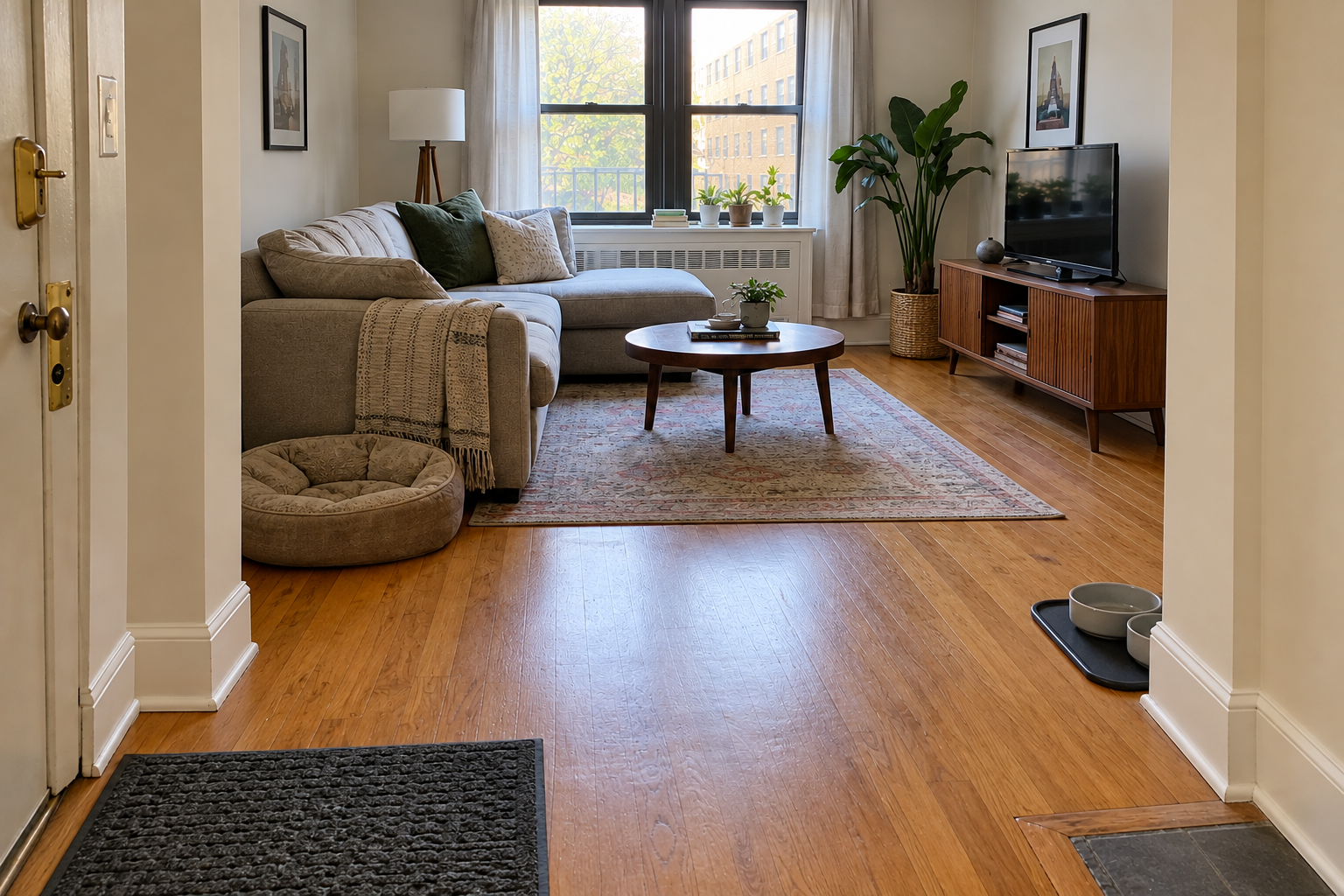
Pets make an apartment feel like home, but fur, tracked-in debris, litter, crumbs, and nose marks can build up quickly in compact spaces. A useful routine does not chase every hair throughout the day. It focuses on the places where debris collects, uses methods suited to each surface, and makes professional visits easier to complete.
Ready to plan your cleaning?
Review standard cleaning services and confirm your rooms, priorities and timing.
For residents arranging apartment cleaning in Riverdale, a plan should reflect the pet, building, floor type, and layout. A shedding dog, long-haired cat, caged pet, or multi-pet household may need different priorities. Cleaning also needs to respect building access, elevator rules, neighbors, and the safest place for each animal during service.
Start With the Pet’s Daily Path
Walk through the apartment from the pet’s perspective. Notice where your pet sleeps, eats, waits by the door, watches from a window, or moves between rooms. These high-use routes often collect more hair, dander, crumbs, litter, and paw debris than the center of the room.
Focus routine attention on entry mats, feeding areas, furniture edges, bed corners, window sills, baseboards, and the floor around litter boxes or cages. A targeted approach is often more manageable than trying to deep clean the entire apartment every day.
Create a Small Entryway Cleanup Station
Keep a washable mat, pet-safe towel, waste bags, and any approved paw-cleaning supplies near the entrance. Dry wet paws before the pet crosses rugs or upholstery. Shake out or wash the mat as its care instructions allow, and remove grit before it spreads across wood, tile, laminate, or carpet.
Remove Loose Hair Before Damp Cleaning
Vacuuming or dry-removing pet hair before mopping and wet wiping prevents it from clumping or streaking. Begin with upholstery and higher horizontal surfaces, then move to baseboards, corners, floor edges, and the main walking area. Use attachments appropriate for the furniture and flooring.
Hair tends to gather beneath radiators, behind doors, under reachable furniture, around chair legs, and along transitions between rooms. Move lightweight items only when safe. Heavy furniture, electronics, and unstable pieces should remain in place unless a separate plan is agreed.
Maintain the Vacuum and Tools
Pet hair can fill brush rolls, filters, and collection bins quickly. Follow the equipment manufacturer’s maintenance instructions, remove wrapped hair with the machine unplugged, and replace or clean filters as directed. A poorly maintained vacuum may lose effectiveness or release debris back into the room.
Give Upholstery and Pet Bedding Their Own Schedule
Sofas, chairs, pet beds, throws, and cushions can hold hair and ordinary odors. Vacuum accessible crevices and fabric surfaces using suitable attachments. Check care labels before laundering covers or applying moisture, and test unfamiliar products in an inconspicuous area.
Wash removable pet bedding on a schedule that fits the material and your household. Dry it completely before returning it to the apartment. If a stain or odor remains after routine care, avoid soaking the fabric or combining products. Professional upholstery treatment may be a separate service.
Clean Feeding Areas Without Mixing Zones
Food and water areas collect crumbs, splashes, and residue. Remove bowls, mats, and loose food before cleaning the surrounding floor or wall. Wash pet dishes according to veterinary or manufacturer guidance and keep dish-cleaning tools separate from bathroom tools.
Check beneath raised feeders and storage containers. Wipe sealed food bins with a method appropriate for the material, and keep food closed before cleaners arrive. Report pest activity or damaged packaging promptly rather than treating it as an ordinary cleaning issue.
Prevent Water From Damaging Floors
Repeated splashes can affect wood, laminate, and some grout or floor seams. Use a stable, washable mat beneath bowls and dry spills soon after they occur. Avoid leaving a wet mat against the floor, especially in a low-airflow corner.
Keep Litter and Cage Areas Clearly Defined
Owners should remove pet waste and handle litter-box or cage tasks according to the animal’s care routine. Before a cleaning visit, secure waste, replace liners if needed, and tell the cleaning team which items should not be moved. Routine room cleaning can address accessible surrounding floors and surfaces when included in the scope.
Never mix cleaning chemicals around litter, urine residue, or other pet waste. Products can react in unsafe ways, and strong fragrance is not proof that an area is clean. Follow product labels and keep pets away until surfaces are fully dry and the room is ventilated as directed.
Match Products to Pets and Surfaces
“Natural,” “green,” or pleasantly scented does not automatically mean safe for every animal or finish. Use products according to the label, follow dilution and ventilation instructions, and check with a veterinarian when a pet has a known sensitivity or health concern. Never invent a homemade chemical mixture.
Share information about delicate floors, stone counters, unsealed wood, specialty fabrics, and any products the household does not want used. If the pet licks floors or jumps on counters, make sure surfaces are rinsed or dried as the product instructions require.
Prepare the Pet for Cleaning Day
Decide where the pet will stay before cleaners arrive. A closed room, secured crate, daycare visit, walk, or trusted caregiver may work depending on the animal. The space should be comfortable, approved by the owner, and clearly communicated to the cleaning team.
Do not assume a cleaner can supervise a pet, prevent an escape, administer medication, or manage behavior. Provide entry instructions that account for exterior doors, elevators, balconies, and building hallways. Label any door that must remain closed.
Reduce Noise and Stress Where Possible
Vacuum noise, unfamiliar people, moved chairs, and open doors can upset some animals. Share important handling restrictions in advance, but keep responsibility for the pet with the owner or designated caregiver. Clean one zone at a time when that helps maintain separation.
Use a Recurring Routine to Control Buildup
Pet hair returns, so consistency matters more than a one-time perfect result. Between professional visits, empty bins, remove visible floor debris, wash feeding mats, refresh bedding, and address entryway soil. A weekly, biweekly, or monthly service can be matched to shedding, household size, floor type, and how quickly the apartment changes.
Keep expectations realistic during seasonal shedding or wet weather. Tell the cleaning company about multiple pets, heavy hair, accidents, stairs, parking, and building access when requesting a quote. Accurate details help set priorities and estimate the time needed.
Complete a Pet-Safe Final Walkthrough
Before releasing the pet, confirm that floors are dry, products and tools are removed, windows and balcony doors are secure, feeding items are back in the approved location, and nothing small was left within reach. Check that furniture is stable and doors match the owner’s instructions.
Request Apartment Cleaning in Riverdale
A strong pet-home routine combines targeted hair removal, clear cleaning zones, surface-appropriate products, and a safe plan for service day. Crystal Breeze Cleaning provides standard and recurring apartment cleaning in Riverdale and other Bronx communities. Share your apartment size, pet type and number, floor materials, building access, and main priorities when requesting a quote.
Ready to plan standard or recurring apartment cleaning in Riverdale? Request a cleaning quote or call (516) 789-2767.
Ready to plan your cleaning?
Review standard cleaning services and confirm your rooms, priorities and timing.