
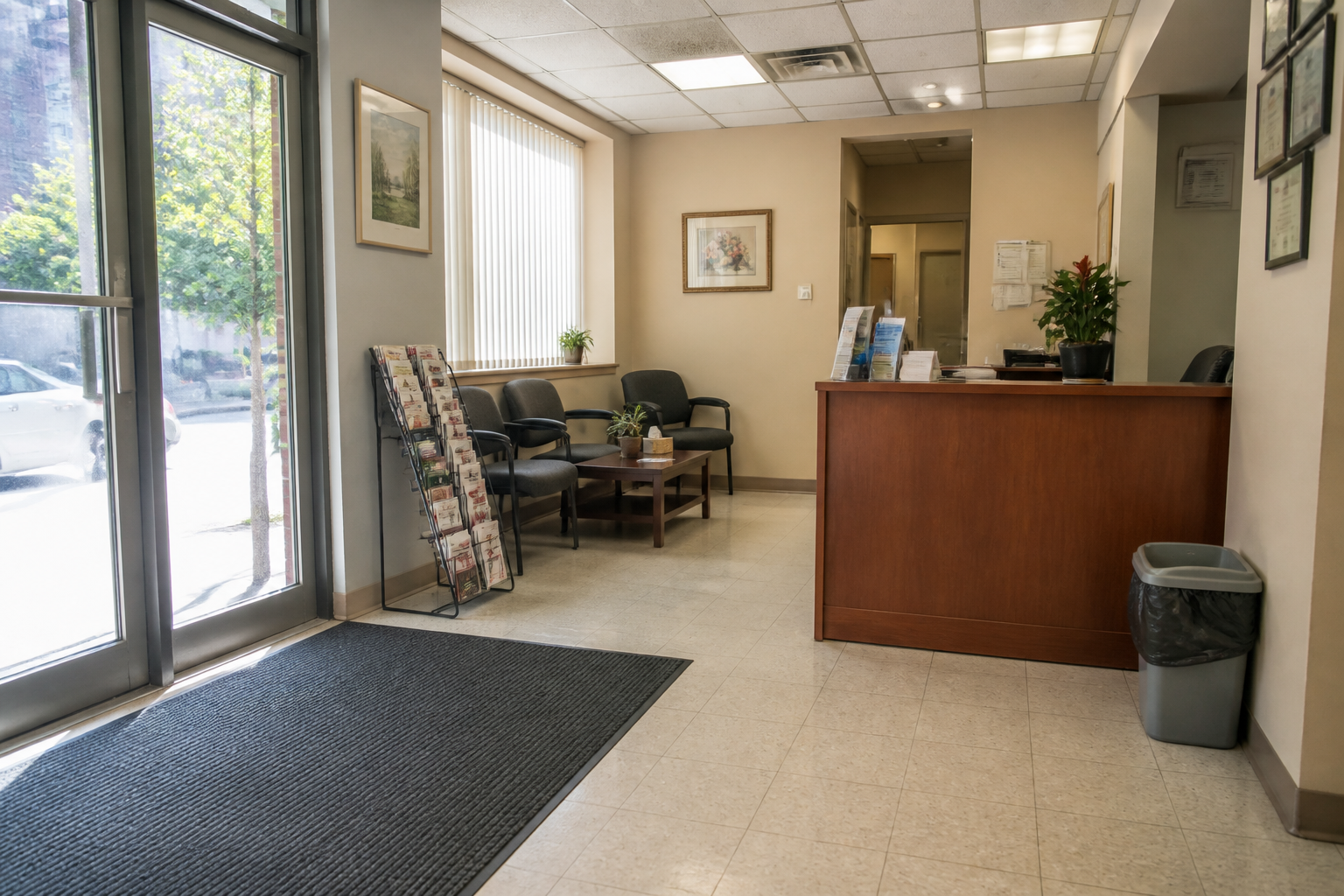
A reception area is where customers, clients, patients, vendors, and employees form their first impression of a business. It is also a transition zone where outdoor debris, deliveries, paperwork, beverages, and daily foot traffic meet. A space can look acceptable from a distance while fingerprints, dusty edges, overflowing bins, marked glass, or cluttered seating reduce its professional appearance.
Ready to plan your cleaning?
Review office & commercial cleaning services and confirm your rooms, priorities and timing.
A practical plan for commercial cleaning in Flushing, NY should define what needs attention, how often it should be completed, which items staff will manage, and how cleaners can work without disrupting visitors or confidential operations.
Map the reception area before creating the scope
Begin with the full path a visitor takes: exterior-facing entrance, vestibule, entry glass, floor mats, reception desk, waiting seats, display materials, hallways, elevators, restrooms, and nearby beverage stations. Include secondary doors used by employees or deliveries because debris from those entrances can travel into the public area.
Record the flooring, furniture, wall finishes, glass, metal, stone, electronics, and specialty surfaces. Product and tool choices should match the installed material. A method that works on tile may not be appropriate for wood, natural stone, coated metal, acrylic, or upholstery.
Separate daily presentation from periodic detail work
A clear plan usually has two layers. Daily or frequent presentation tasks maintain the areas visitors notice first. Periodic detail tasks address buildup that does not require attention at every service.
Frequent presentation tasks
Priorities may include removing loose floor debris, cleaning visible marks from approved entry glass, wiping accessible non-sensitive surfaces, emptying designated waste bins, straightening agreed waiting-area items, and keeping the entry path clear. The exact scope should reflect traffic, business hours, weather, and the service schedule.
Rotating detail tasks
Rotating work may include accessible floor edges, reachable baseboards, door frames, chair legs, display shelving, partition ledges, interior window ledges, or other lower-frequency areas. Schedule these items instead of assuming they will fit into every visit.
Protect the reception desk and confidential materials
The reception desk may hold phones, computers, payment devices, keys, visitor records, packages, documents, and personal belongings. Cleaners should not move, organize, or open sensitive materials. The business should identify which desk surfaces are cleared and approved for cleaning.
Create a simple boundary rule. For example, cleaners may address the exposed counter and exterior panels while staff remain responsible for paperwork, devices, drawers, and items behind the desk. If electronics are included, specify the approved method and product restrictions.
Plan for entry glass and doors
Glass doors and sidelights show fingerprints, smudges, tape residue, and weather marks quickly. Define whether the scope includes interior glass, exterior glass, or both, and whether work above standard reach requires special arrangements.
Door handles, push plates, frames, thresholds, and tracks may need different tools and products. Adhesive, paint, scratches, damaged film, or etched glass are not routine cleaning issues. Report them rather than using aggressive methods that could damage the surface.
Control floor debris at the entrance
Flushing businesses may experience changing foot traffic throughout the day, especially near transit, retail corridors, offices, restaurants, and mixed-use buildings. Mats should be positioned according to building needs and handled in a way that does not block exits or create a trip hazard.
Remove dry debris before damp cleaning. Pay attention to corners, floor edges, under accessible seating, and the route between the entrance and reception desk. Use the approved method for tile, stone, wood, vinyl, laminate, carpet, or another material.
Plan for wet weather
Rain or snow can change the cleaning priority quickly. The business should have a process for warning signs, mat placement, and immediate spill response during operating hours. Scheduled cleaning supports maintenance but does not replace staff responsibility for active hazards between visits.
Keep waiting-area seating manageable
Waiting rooms may include upholstered chairs, hard seating, side tables, charging stations, brochure racks, children’s items, or beverage service. Decide which items should be straightened, wiped, vacuumed around, or left untouched.
Stains, tears, loose hardware, and damaged upholstery should be documented. Spot treatment and upholstery cleaning may require separate approval, products, equipment, and drying time. Do not assume every mark can be safely removed during routine service.
Organize printed materials and displays
Brochures, magazines, signs, samples, and promotional displays can make a clean reception area look crowded when they are outdated or disorganized. Cleaning staff should not decide what to discard. Assign an employee to maintain content, while cleaners address the approved exposed surfaces around it.
Use clearly labeled locations for current materials. Reducing loose items also makes dusting more consistent and helps staff notice when stock is low or a display needs repair.
Coordinate nearby restrooms and beverage areas
A reception plan should account for public or employee restrooms located nearby. Clarify which restrooms are included, their service frequency, supply responsibilities, access restrictions, and reporting process for leaks, blockages, damage, or unusual conditions.
If a coffee station or water area serves visitors, define responsibility for cups, condiments, appliances, spills, waste, and restocking. Appliance interiors, food handling, and inventory management should not be assumed unless they are explicitly included.
Choose a schedule that fits business traffic
Commercial cleaning can occur before opening, after closing, or during quieter periods. The right time depends on access, security, noise, customer flow, and the tasks requested. Floor work may need enough time to dry before visitors return.
Share alarm procedures, elevator rules, parking or loading information, restricted areas, keys, building contacts, and emergency instructions. If a receptionist or security employee remains on site, agree on the order of work so the public entrance stays functional.
Define waste and recycling procedures
Identify the bins cleaners should empty and where ordinary waste and recycling should be taken. Separate confidential shredding, regulated materials, food-service waste, construction debris, and hazardous items from general trash. The business remains responsible for providing lawful handling instructions and appropriate containers.
Ask staff not to place sharp objects, liquids, batteries, chemicals, or unknown materials in ordinary bins. Cleaners should stop and report unsafe or unidentified waste rather than handling it without guidance.
Use a short inspection checklist
After service, review the entrance from outside and inside, then look across the reception area from a visitor’s perspective. Check entry glass, floor paths, seating, visible desk surfaces, waste bins, display areas, and nearby doors. Confirm that no equipment, cords, signs, or supplies obstruct access.
A brief checklist supports consistency without requiring cleaners to guess. Update it when furniture, business hours, tenant rules, or traffic patterns change.
Provide complete details for a quote
When requesting commercial cleaning in Flushing, NY, share the property type, reception size, flooring, seating, number of entrances, restrooms, business hours, desired frequency, building access, waste procedures, security requirements, and any periodic detail work. Explain whether service must occur while visitors are present.
Crystal Breeze Cleaning provides commercial cleaning based on the facility, condition, access, schedule, and requested scope. Call (516) 789-2767 to discuss a reception-area plan for your Flushing business.
Ready to plan your cleaning?
Review office & commercial cleaning services and confirm your rooms, priorities and timing.