
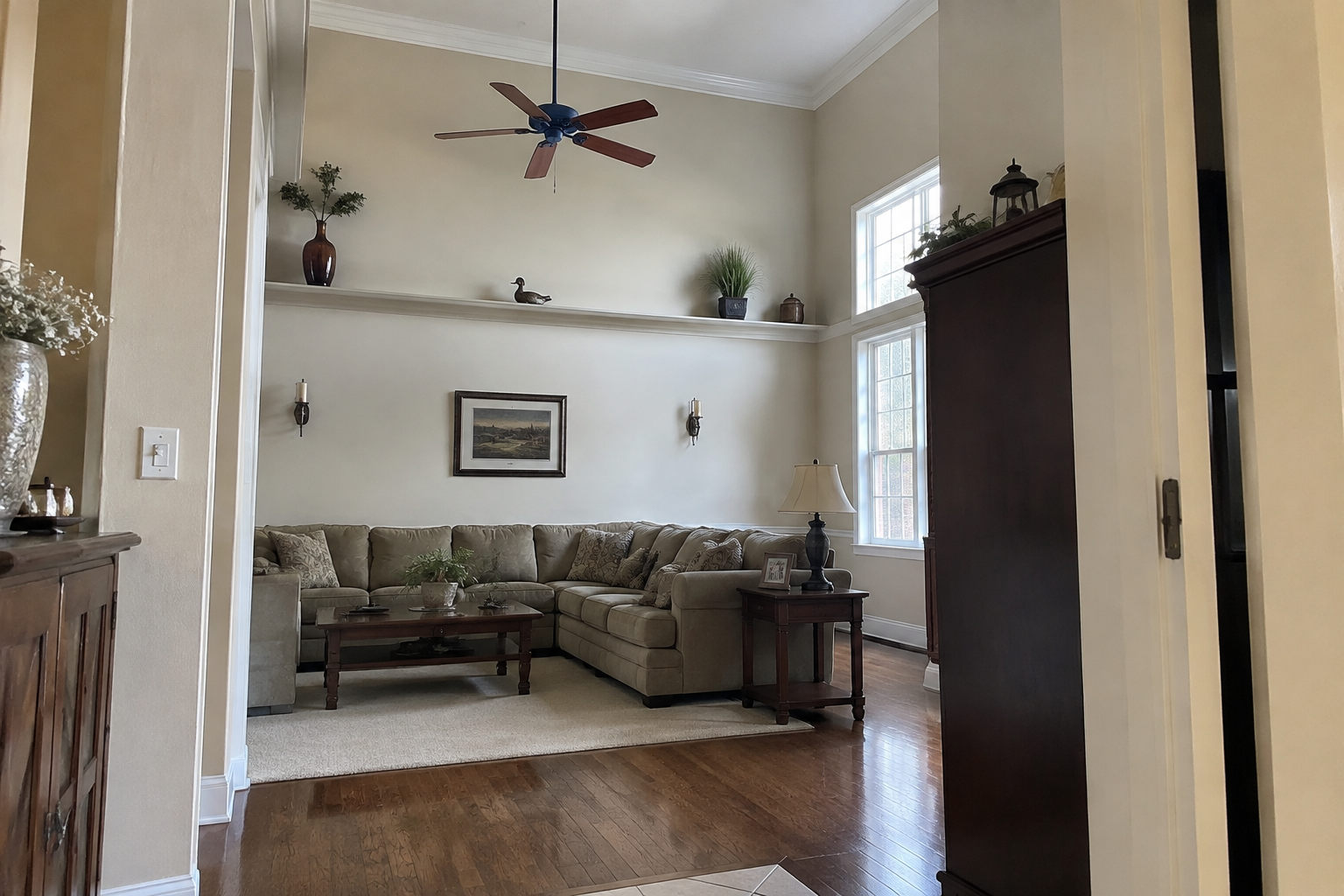
Tall ceilings, open stairways, vaulted rooms, and decorative ledges can make a home feel spacious. They can also create dust traps that ordinary weekly cleaning rarely reaches. When overhead surfaces are ignored, dust eventually drifts onto furniture and floors, making recently cleaned rooms look dull again. A planned high-to-low routine solves that problem by addressing each level in the right sequence.
Ready to plan your cleaning?
Review deep cleaning services and confirm your rooms, priorities and timing.
For homeowners considering deep cleaning in Glen Cove, the goal is not simply to reach higher. It is to clean safely, protect finishes, capture loosened dust, and avoid repeating work. The following approach explains how to organize tall rooms efficiently and when professional help may be the sensible choice.
Why a High-to-Low Cleaning Order Works
Gravity determines the best cleaning order. Dust removed from a ceiling fan, high ledge, or fixture may fall onto a table, sofa, baseboard, or floor. If those lower areas are cleaned first, they will need attention again. Starting overhead and finishing at floor level creates a logical path for debris.
This sequence also makes it easier to see progress. Once the upper zone is complete, the room can be cleaned in layers: walls and trim, furnishings, lower details, and floors. A final inspection in natural and artificial light helps reveal any remaining dust.
Use Dry Methods Before Damp Ones
Loose dust is generally easier to remove when it is dry. A microfiber duster, vacuum attachment, or clean cloth can capture debris before any damp wiping begins. Applying moisture to a dusty surface may create streaks or muddy residue. After dry removal, a suitable lightly damp method can be used where the material allows it.
Plan the Room Before Cleaning Begins
A few minutes of preparation can prevent accidents and protect belongings. Walk through the room and identify the highest safely accessible surfaces, fragile objects, sensitive finishes, electrical fixtures, and areas where dust may fall. Move small décor away from the work zone and cover delicate items that cannot be relocated.
Check manufacturer guidance before using a product on painted walls, natural stone, wood, metal, glass, or specialty finishes. Test an unfamiliar method in an inconspicuous spot. Turn off and allow ceiling fans and light fixtures to cool before cleaning their exterior surfaces.
Do Not Improvise With Access
Never stand on a chair, countertop, sofa, or other furniture to gain height. Use only stable equipment designed for the task, keep both feet supported, and avoid overreaching. If an area cannot be accessed confidently and safely, leave it for a trained professional with appropriate tools. A perfectly dusted ledge is not worth a fall.
Start With the Overhead Dust Zone
Begin with safely reachable ceiling corners, fan blades, high ledges, crown molding, the tops of tall cabinets, and the exterior of light fixtures. Work slowly so dust is captured instead of scattered. For fan blades, supporting the blade gently while wiping can help avoid unnecessary pressure on the fixture. Do not spray cleaner directly onto electrical components.
Air-return grilles and vent covers can also collect visible dust. Clean only what is safely accessible and follow applicable equipment guidance. Deep cleaning can remove surface dust, but it is not a substitute for HVAC inspection or repair when there are airflow, moisture, or indoor-air concerns.
Watch the Direction of Dust Travel
Clean one section at a time and notice where loosened debris lands. A vacuum with a suitable attachment may capture dust at the source. When that is not practical, allow particles to settle before cleaning the next level. Rushing from one side of the room to another can spread debris and make the final cleanup harder.
Move Down to Walls, Trim, and Furnishings
After overhead surfaces are complete, address door frames, window trim, wall décor, shelves, lamps, and furniture. Painted walls should be treated cautiously because finishes vary. Start with gentle dry dusting; spot-clean only when the paint type and condition make damp cleaning appropriate.
Pay attention to the tops and backs of furniture, where fallen dust often gathers. Upholstery can be vacuumed with the correct attachment, while wood, glass, and stone require surface-specific care. In older Glen Cove homes, architectural details may include intricate molding or established finishes that benefit from a careful, low-moisture approach.
Include Often-Missed Lower Details
Once furniture surfaces are complete, clean switch plates, door hardware, baseboards, lower cabinet faces, and reachable trim. These details influence how finished the room feels. Use controlled product application rather than overspraying near walls, flooring, or electronics.
Finish With Floors and a Final Dust Check
Vacuum the room thoroughly after dust has had time to settle. Use edge and crevice tools around baseboards, under accessible furniture, and along room perimeters. Then clean hard floors with a method approved for the flooring material. Carpet may need slow, overlapping vacuum passes rather than a quick sweep.
Complete the room by checking it from several angles. Daylight can reveal dust on ledges and reflective surfaces, while lamps may expose streaks that were not visible earlier. Inspect fan blades, fixture exteriors, furniture tops, baseboards, and floor edges. This final pass is also the time to return décor to its place.
When Professional Deep Cleaning Helps
A professional service can be useful when a room has multiple overhead features, accumulated dust, delicate finishes, or a layout that makes access difficult. It can also help before hosting, after renovation activity has fully ended, when moving into a home, or when regular cleaning has not addressed high surfaces for some time.
Before the appointment, describe ceiling height, fans, ledges, stairways, fragile items, flooring, and any priority concerns. Clear communication helps the cleaning team plan appropriate tools, time, and methods. Some elevated or specialty areas may require separate access arrangements, so they should be discussed in advance rather than assumed.
Build a Cleaner Routine for Your Glen Cove Home
Once a tall room has been deep cleaned, lighter maintenance can keep dust from rebuilding quickly. Add safely reachable ledges and fan exteriors to a rotating checklist, vacuum room edges regularly, and watch for early accumulation on dark or reflective surfaces. A manageable schedule is more effective than waiting until every overhead area looks visibly dusty.
Crystal Breeze Cleaning provides detailed deep cleaning based on your home’s layout, finishes, access, and priority areas. Request a cleaning quote or call (516) 789-2767 to discuss your Glen Cove home.
Ready to plan your cleaning?
Review deep cleaning services and confirm your rooms, priorities and timing.