
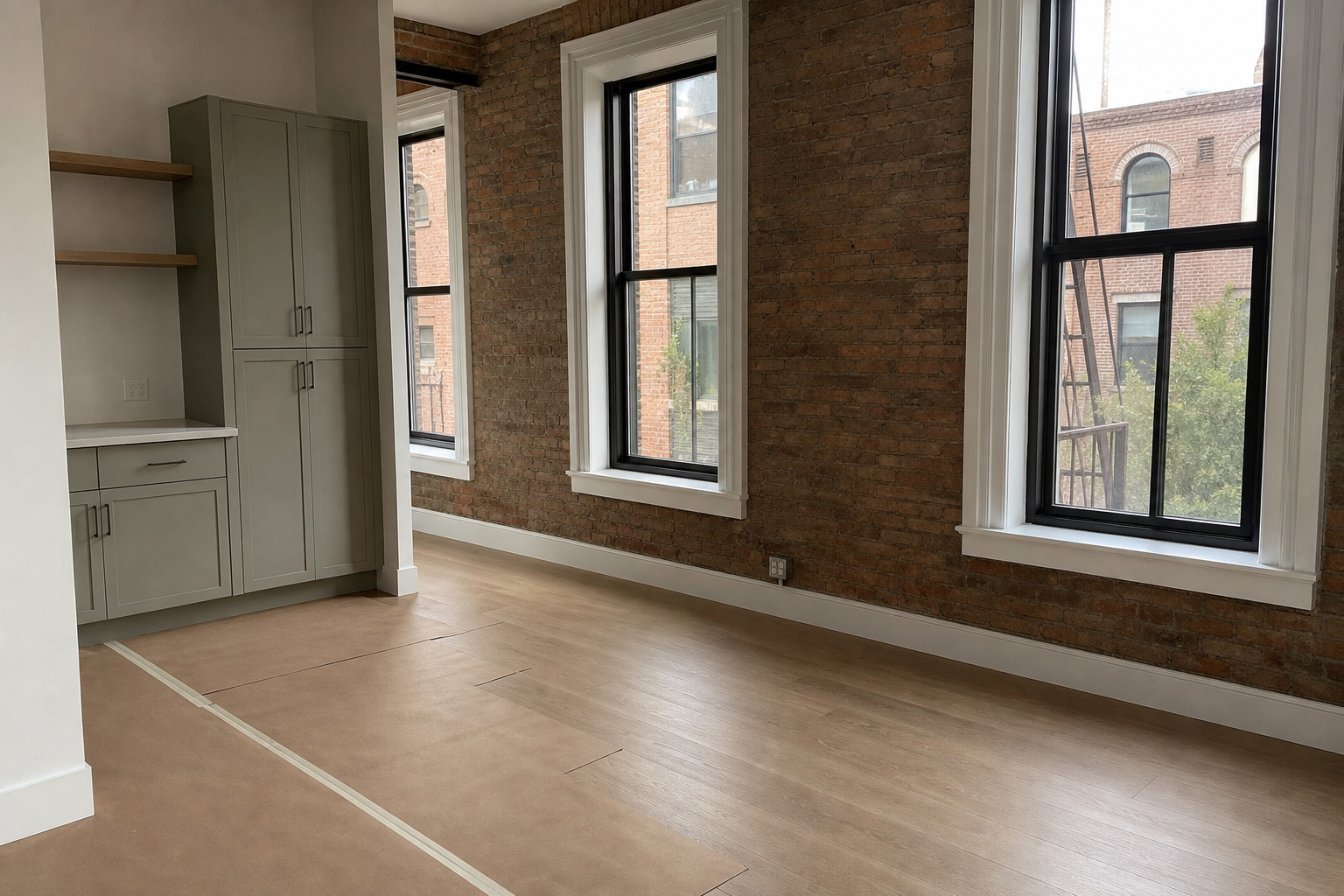
Construction dust does not disappear with one quick sweep. After a renovation, fine particles can remain on cabinet tops, window ledges, trim, fixtures, inside empty storage areas, and along floor edges. Workers may also need to return for adjustments, creating a new layer of dust after the first cleaning.
Ready to plan your cleaning?
Review post-construction cleaning services and confirm your rooms, priorities and timing.
A multi-stage plan helps a DUMBO apartment, loft, or commercial space move from active worksite to usable interior without asking one cleaning visit to solve every problem at once. The right sequence depends on contractor completion, debris removal, ventilation, surface materials, access, and the date the space must be ready.
Confirm that construction work is actually complete
Before scheduling the detailed clean, ask the contractor which tasks remain. Touch-up sanding, grout repair, paint correction, hardware installation, drilling, and punch-list work can release more dust or require cleaners to move out of the way. If active work continues, a limited rough clean may be more practical than a final detail service.
Tools, ladders, protective coverings, scrap materials, and contractor waste should be removed or organized before cleaners arrive. Construction debris hauling is different from post-construction cleaning. Define who is responsible for wood, tile, drywall, packaging, adhesives, paint cans, sharp material, and other jobsite waste.
Use three clear cleaning stages
Not every project needs three separate appointments, but thinking in stages helps set priorities. The stages can be combined when conditions allow or scheduled separately for larger renovations.
Stage one: rough interior reset
The first stage focuses on accessible loose debris, heavy dust, labels, packaging, and surfaces that must be cleared before detail work. This is not the time for final polishing if contractors still need access. The goal is to make the space safer to navigate and ready for closer cleaning.
Stage two: detailed surface cleaning
Once dust-producing work is finished, clean from higher areas downward. Address tops of doors and cabinets, shelving, ledges, trim, fixtures, wall-adjacent surfaces, empty storage, appliance exteriors, and other areas included in the scope. Dry removal should usually come before damp wiping so loose particles are not turned into residue.
Stage three: final touchup
Allow time for remaining dust to settle and for the owner, contractor, or property manager to inspect the space. A final visit can address light resettling, footprints, smudges, cabinet dust, and details revealed after protective coverings or staging materials are removed.
Create a room-by-room scope
A renovation may affect only one room, but dust can travel beyond the work zone. List every area that needs cleaning, including hallways, closets, stairs, entryways, adjoining rooms, and the path used by contractors. Mark closed or occupied rooms that should remain untouched.
For each included room, specify the surfaces and interiors that need attention. Cabinet interiors, drawers, closets, appliance interiors, walls, blinds, window tracks, and interior glass may require extra time and should not be assumed. A written scope makes the quote more accurate and supports a useful final walkthrough.
Match cleaning methods to new materials
Recently installed stone, wood, tile, metal, glass, cabinetry, paint, grout, and specialty finishes may have manufacturer or contractor care instructions. New does not mean indestructible. A strong product or abrasive tool can scratch, dull, discolor, or etch a surface before the space is even occupied.
Ask about curing and sealing
Confirm whether paint, grout, caulk, sealers, coatings, and floor finishes have completed the required cure time. The contractor or manufacturer should determine when a surface can be wiped, washed, or covered. Cleaners should not guess whether a new finish is ready for moisture or pressure.
When the material is uncertain, use the approved method provided by the project contact and test in an inconspicuous area when appropriate. Keep tools clean so grit from one surface is not transferred to another.
Remove dust without spreading it
Use a top-to-bottom sequence and clean tools as they become loaded. Vacuum attachments, microfiber materials, and other equipment should be appropriate for fine dust and the surface being treated. Avoid dry actions that simply push particles into the air or from one room to another.
Door tracks, trim edges, hardware recesses, shelf corners, and the tops of electrical plates can hold dust that is easy to miss. Electrical components, open wiring, unfinished fixtures, and mechanical equipment should be addressed only by the appropriate qualified professional.
Separate cleaning from building-system work
Post-construction cleaning can address accessible household and commercial surfaces, but it does not replace HVAC inspection, duct service, filter decisions, electrical work, plumbing, pest control, or environmental testing. Assign those needs to the responsible contractor or qualified provider.
Report unusual odors, moisture, damaged materials, exposed wiring, active leaks, or unknown residue before continuing in the affected area. The project contact should determine the correct next step rather than asking a cleaner to diagnose the condition.
Plan cabinets, appliances, and fixtures carefully
Empty cabinets and drawers are easiest to clean before belongings arrive. Remove loose dust with an appropriate method, then wipe only with products suitable for the interior finish. Check corners, shelf-pin holes, hardware, and the top edges of doors.
Appliances should be installed, stable, and safe to access. Exterior cleaning may be part of the routine scope, while interiors require a separate request. Do not move heavy appliances or perform gas, water-line, electrical, or mechanical work as part of general cleaning.
Give floors their own sequence
Floors collect debris from every earlier task, so complete them near the end. Vacuum or sweep loose grit before damp cleaning. Use the approved method for wood, laminate, vinyl, ceramic, porcelain, natural stone, concrete, carpet, or another material.
Remove paint, adhesive, grout, or protective-film residue only when the material and removal method are known. Aggressive scraping can damage a new finish. Contractor corrections should remain with the contractor when residue results from installation or unfinished work.
Coordinate DUMBO building access
In a DUMBO building, confirm service entrances, freight-elevator reservations, loading rules, parking, certificates or building requirements, allowed work hours, and the route for equipment. Tell management whether the cleaning is residential or commercial and how many people need access.
Protect common areas according to building instructions and avoid blocking corridors, stairs, doors, or elevators. Clarify where collected ordinary waste may be taken; construction debris may require a different removal plan.
Finish with a documented walkthrough
Inspect the space in good lighting after surfaces are dry. Review the written scope room by room and identify any areas blocked by furniture, contractor materials, or unfinished work. Photos can document condition and exceptions when authorized, but they should avoid sensitive personal or project information.
Expectations should distinguish cleanable dust from scratches, installation defects, paint errors, damaged grout, or unfinished construction. Cleaning can reveal these concerns, but it does not repair them.
Provide complete details for the quote
When requesting post-construction cleaning in DUMBO, Brooklyn, share the property type, approximate size, renovated rooms, project stage, completion deadline, surface materials, building access, remaining contractor work, cabinet or appliance interiors, window requests, and debris status.
Crystal Breeze Cleaning provides post-construction cleaning based on the property, condition, access, and requested scope. Call (516) 789-2767 to discuss a customized multi-stage cleaning plan for your DUMBO space.
Ready to plan your cleaning?
Review post-construction cleaning services and confirm your rooms, priorities and timing.