
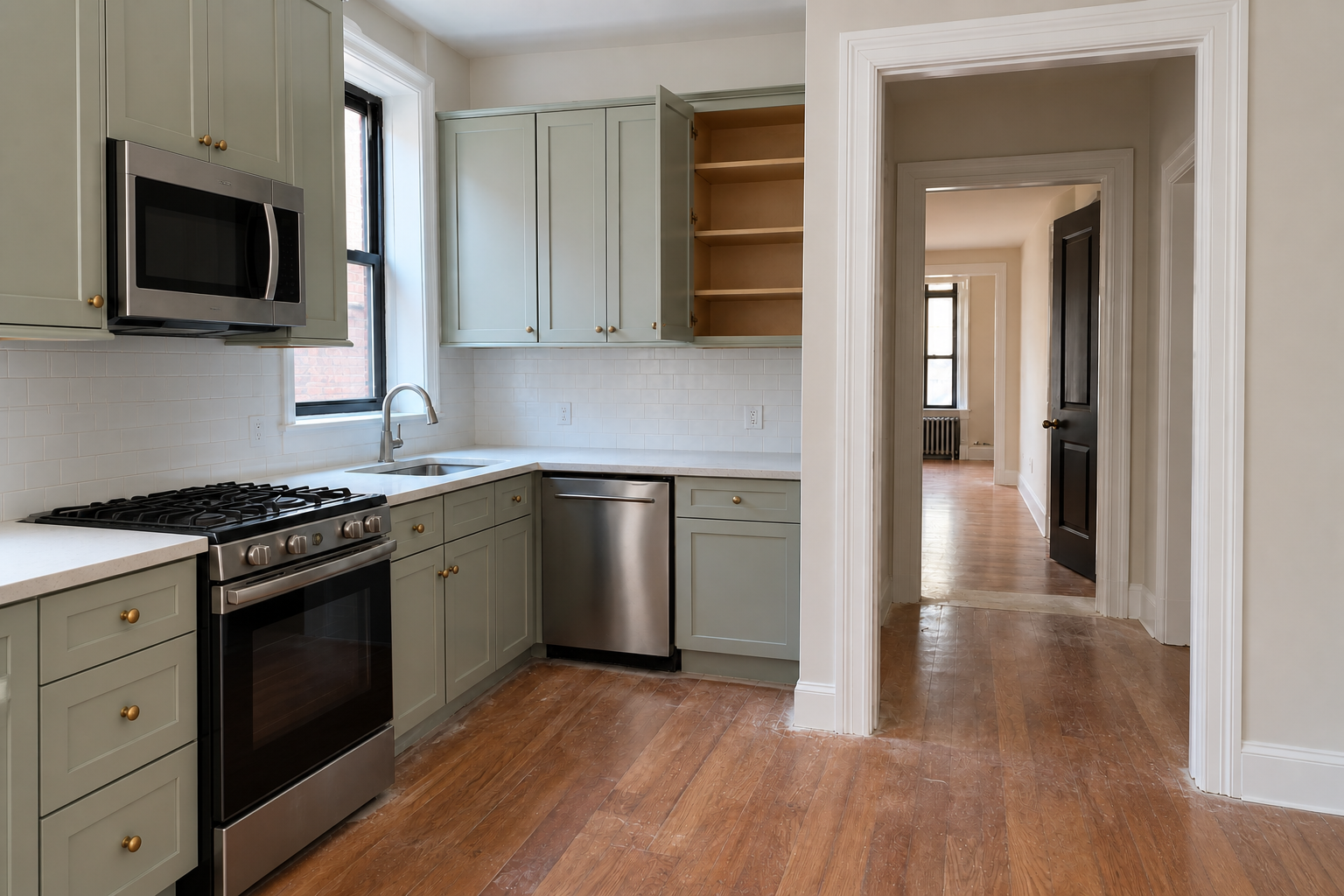
A finished kitchen remodel can look complete while fine dust still lingers on cabinet shelves, trim, lighting, floors, and nearby rooms. Construction cleanup is different from ordinary weekly cleaning because dust can settle repeatedly, protective materials may still be present, and new finishes need careful product choices. The best result comes from cleaning at the right stage, with the work area cleared and responsibilities defined.
Ready to plan your cleaning?
Review post-construction cleaning services and confirm your rooms, priorities and timing.
For homeowners planning post-construction cleaning in Park Slope, access and timing matter as much as the checklist. Brownstones, apartments, and co-op buildings may have narrow stairs, elevator rules, limited loading space, or scheduled contractor access. A clear handoff between the contractor, homeowner, and cleaning team helps prevent duplicated work and protects the newly completed kitchen.
Wait Until Dust-Producing Work Is Finished
Detailed cleaning should begin after cutting, sanding, drilling, grouting, and paint touch-ups are complete. If contractors return for punch-list work after the clean, fresh dust may spread across finished surfaces. Ask the project lead to confirm that the main work is done, tools are removed, and the area is safe to enter.
Some final adjustments may happen after cleaning, but they should be identified in advance. If a cabinet door still needs trimming or a wall needs sanding, schedule that task before the detailed cleanup whenever possible. Leave enough time between cleaning and moving food, dishes, or small appliances back into the room.
Separate Debris Removal From Detailed Cleaning
Scrap wood, drywall pieces, tile, packaging, empty containers, and contractor materials should be removed before cleaners begin. Construction debris and heavy disposal are separate from routine cleaning and may require building-approved handling. Do not leave unidentified materials for a cleaning crew to sort or discard.
Document New Finishes and Care Instructions
Before the appointment, list the materials installed in the kitchen. Countertops may be natural stone, engineered quartz, porcelain, laminate, wood, or stainless steel. Cabinet fronts may be painted, stained, lacquered, glass, or another specialty finish. Floors and backsplashes also require material-specific care.
Share manufacturer or contractor instructions when available. New surfaces can be damaged by abrasive pads, strong alkaline or acidic products, excess water, or aggressive scraping. If the correct method is uncertain, start with the least aggressive approach and test an inconspicuous spot instead of assuming one product is safe everywhere.
Inspect Before Cleaning Begins
Photograph the completed room and note scratches, chips, uneven caulk, paint splatter, grout haze, loose hardware, or appliance issues. Cleaning can remove ordinary dust and residue, but it cannot repair installation defects or permanent damage. Reporting conditions early prevents confusion during the final walkthrough.
Control Loose Dust Before Damp Wiping
Fine particles should be removed methodically before wet cleaning. Start at higher reachable areas such as the tops of cabinets, light fixtures, vent exteriors, window trim, door frames, and ledges. Continue down through cabinet faces, backsplash areas, counters, baseboards, and floors.
Use vacuum attachments and cloths appropriate for the surface and the agreed service. A wet cloth applied too early can turn loose dust into streaks or paste, especially around grout, textured finishes, and floor edges. Replace loaded cloths and vacuum filters as needed so dust is not redistributed through the room.
Check Rooms Beyond the Kitchen
Renovation dust can travel into hallways, living areas, entryways, staircases, and adjacent rooms through foot traffic and air movement. Inspect nearby sills, shelves, baseboards, doors, and floor edges instead of limiting the walkthrough to the construction boundary. Confirm in advance which surrounding areas are included in the cleaning quote.
Clean Cabinet Interiors Before Restocking
Empty cabinets and drawers are easiest to clean before dishes and food return. Remove loose dust from corners, shelf-pin holes, drawer tracks, hinges, and accessible edges. Use a lightly damp method only when the finish allows it, then let interiors dry fully before closing doors or lining shelves.
Confirm whether removable shelves and drawers may be taken out. Do not force hardware or disassemble unfamiliar cabinetry. Report misaligned doors, loose pulls, damaged liners, or construction debris trapped behind fixed components rather than risking damage.
Handle Appliances as a Separate Zone
New or reinstalled appliances may have protective film, labels, dust, fingerprints, or residue around edges. Follow manufacturer instructions before removing film or using cleaning products. Do not pull out a refrigerator, range, dishwasher, or other installed appliance without authorization and a safe plan.
Clarify whether appliance interiors are included. An oven, refrigerator, microwave, or dishwasher interior can add time even when it is new, especially if packaging, labels, or construction dust remain. Electrical panels, gas connections, vents, and technical components should be left to the appropriate contractor or technician.
Give Backsplashes, Counters, and Sinks Careful Attention
Backsplashes can hold grout haze, adhesive residue, and fine dust along outlets and trim. Counters collect particles around seams, edges, and wall transitions. Remove loose material first, then use a method approved for the specific tile, grout, stone, metal, or composite surface.
Never mix cleaning chemicals. Avoid using metal blades or abrasive pads unless the surface manufacturer specifically permits them and the person doing the work is trained. Around sinks and faucets, inspect caulk and connections for gaps or leaks before applying water. Report concerns instead of treating a construction defect as a cleaning problem.
Finish Floors After Higher Surfaces Are Complete
Floors should be one of the final cleaning stages because dust continues to fall from cabinets, trim, and fixtures. Remove grit carefully before damp cleaning; dragging particles beneath a mop or pad can mark a new finish. Match the method and moisture level to wood, tile, stone, vinyl, laminate, or another installed material.
Check beneath toe kicks, along baseboards, behind doors, and at transitions between the kitchen and adjacent rooms. Protective paper, tape, or floor covering should be removed only when the contractor or homeowner confirms it is ready. Adhesive residue may need a finish-approved method rather than force.
Plan for More Than One Dust Pass
Fine construction dust may resettle after the first pass, particularly on dark cabinets, glass, glossy tile, and horizontal ledges. A careful post-construction clean often works best in stages: remove loose dust, clean surfaces, allow the room to settle and dry, then inspect again under good lighting.
Complete a Practical Final Walkthrough
View the kitchen from several angles and check high ledges, cabinet interiors, drawer corners, backsplash edges, appliance fronts, sink areas, baseboards, floor transitions, and adjacent traffic paths. Confirm that surfaces are dry, cabinets are empty unless restocking was agreed, and no cleaning equipment or waste remains.
Keep the punch list separate from the cleaning checklist. Note paint corrections, hardware adjustments, chipped materials, appliance installation concerns, and other contractor items for the responsible trade. This makes it easier to judge whether the cleaning scope itself is complete.
Request Post-Construction Cleaning in Park Slope
A kitchen remodel deserves a cleanup plan that respects new materials and the order of work. Crystal Breeze Cleaning provides post-construction cleaning for homes and apartments in Park Slope and other Brooklyn communities. Share the room size, project stage, building access, installed finishes, adjacent areas, and desired completion date when requesting a quote.
Request a cleaning quote at crystalbreezecleaning.com or call (516) 789-2767.
Ready to plan your cleaning?
Review post-construction cleaning services and confirm your rooms, priorities and timing.