
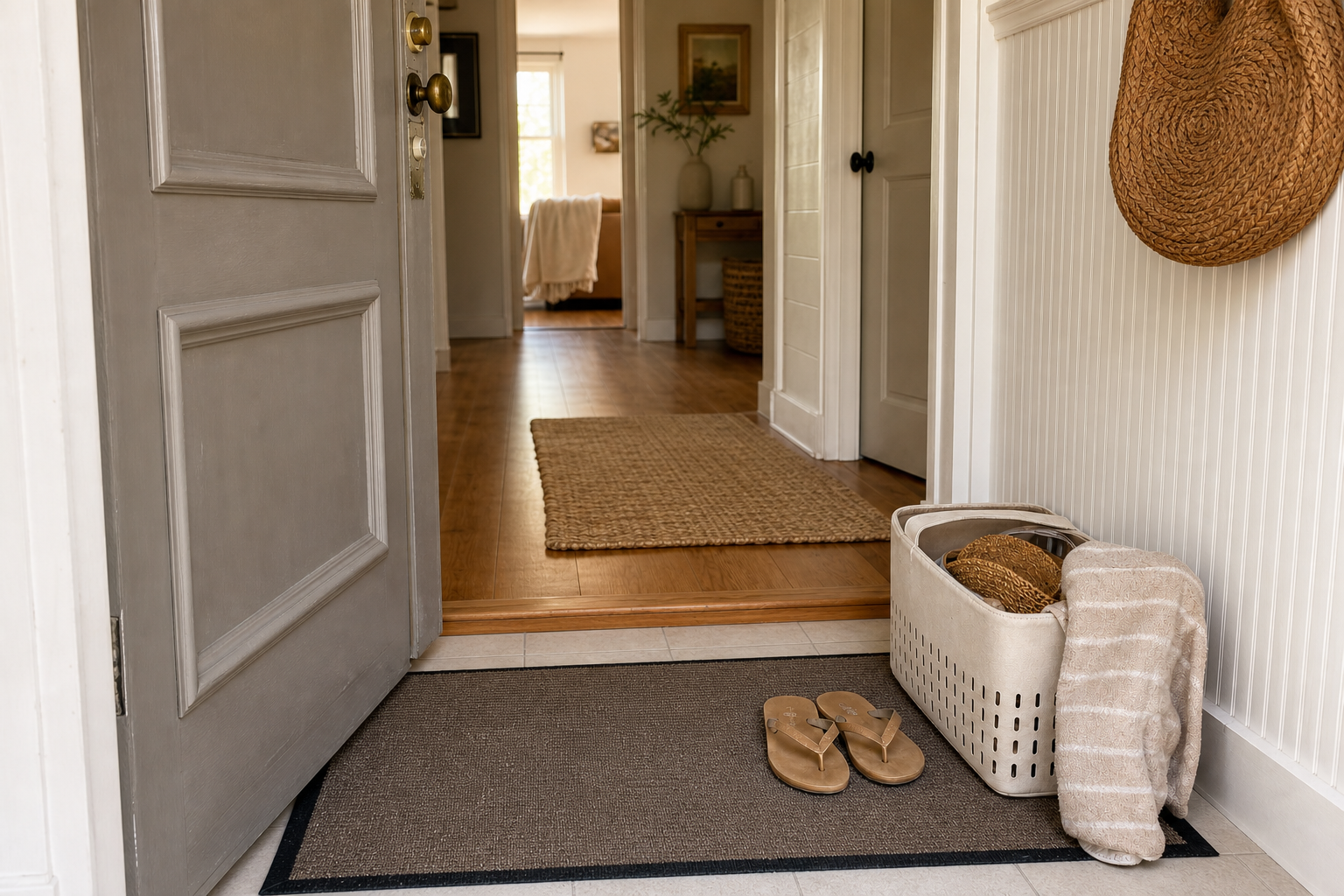
Sand has a way of traveling. A few grains arrive on shoes, beach bags, stroller wheels, or pet paws, and soon they appear in the hallway, kitchen, bedrooms, and upholstered furniture. In a Long Beach home, the most effective response is not constant full-house mopping. It is a simple system that catches debris near the entrance, removes it in the right order, and keeps high-traffic surfaces on a realistic schedule.
Ready to plan your cleaning?
Review standard cleaning services and confirm your rooms, priorities and timing.
A thoughtful routine can protect floors, make everyday cleanup faster, and help a recurring cleaning visit focus on the details that are harder to reach during a busy week. The following plan explains how to manage sand and street debris without spreading grit or using the wrong method on delicate materials.
Turn the Entryway Into a Control Point
The first few feet inside the door matter most. Create a clear place for shoes, wet umbrellas, reusable bags, dog leashes, and beach gear. A washable tray or sturdy basket keeps loose sand from falling across the floor, while hooks prevent damp items from being dropped on furniture.
Use two mats when space allows: a durable mat outside to remove coarse debris and an absorbent, low-profile mat inside to catch what remains. Shake outdoor mats away from the entrance, vacuum indoor mats regularly, and follow their care labels before washing.
Make the System Easy to Follow
An entryway routine works only when everyone can use it. Keep the shoe zone visible, place a small hand broom or cordless vacuum nearby, and give frequently used items a designated home.
Remove Dry Grit Before Adding Moisture
Sand should generally be vacuumed or swept before any damp cleaning begins. Water can turn fine particles into a gritty paste and may push them into grout lines, floor seams, or textured surfaces. Start at the edges, move under the mat and shoe tray, and work toward the center of the traffic path.
Use a vacuum attachment that suits the floor and inspect the wheels or brush head for trapped grit. When sweeping, use short, controlled strokes instead of pushing debris down the hallway.
Match the Cleaning Method to the Floor
Long Beach homes can contain several floor materials within a short distance of the entrance. The same product or amount of water may not be appropriate for hardwood, laminate, vinyl, tile, natural stone, or carpet. Check manufacturer guidance when available and test an unfamiliar product in an inconspicuous area.
Hardwood and Laminate
Remove grit gently because repeated foot traffic can drag abrasive particles across the finish. Use a soft vacuum setting or microfiber dust mop, then clean with the approved method and minimal moisture. Wipe drips promptly and avoid leaving a wet mat against the floor.
Tile, Grout, and Resilient Flooring
Vacuum the perimeter and grout lines before damp cleaning. Pay attention to corners beside the door, where fine debris collects. Use a cleaner compatible with the specific tile or resilient material; natural stone may require a different product than ceramic or porcelain.
Carpet and Area Rugs
Vacuum slowly in more than one direction, especially near the threshold and along rug edges. Lift movable rugs only when it is safe to do so, and vacuum beneath them. If a rug is delicate, oversized, or labeled for professional care, follow that guidance instead of experimenting with excess water or aggressive spot treatment.
Stop Beach Gear From Becoming a Second Entryway
Beach chairs, coolers, toys, towels, and bags can release sand long after shoes are removed. Choose one unloading point, preferably on an outdoor or easy-to-clean surface. Let items dry as appropriate, brush off loose debris, and empty pockets before gear enters living areas.
Store clean, dry items in a consistent location. A ventilated bin for toys and a separate container for towels can prevent damp gear from mixing with household linens. Before washing sandy towels, shake them outdoors and follow the appliance and fabric instructions; large amounts of grit should not be sent directly into a machine.
Include Pets, Strollers, and Wheels in the Plan
Dogs can carry grit between paw pads and along damp fur. Keep a washable towel near the door and wipe paws gently after walks. Check for irritation rather than scrubbing sensitive areas. Pet bedding near the entrance should be vacuumed and laundered according to its care label.
Stroller and cart wheels also deserve attention. Allow mud to dry when appropriate, brush or vacuum away loose material, and wipe the wheels before rolling through the home. Place a washable mat beneath parked equipment so debris stays in one manageable zone.
Use a Five-Minute Daily Reset
A short routine prevents a small amount of grit from becoming a whole-house project. Put away shoes and gear, shake or vacuum the inside mat, collect visible debris around the threshold, and wipe the door handle or other frequently touched surfaces when needed. Finish by checking whether damp items are drying safely.
Do not try to detail every baseboard or wash every floor each day. Focus on containment. When the entrance stays clear and dry debris is removed promptly, the scheduled whole-home cleaning becomes more efficient.
Build a Practical Recurring Cleaning Schedule
Weekly needs vary with household size, pets, visitors, beach trips, floor materials, and the number of entrances. High-traffic floors and rugs may need attention more often than guest rooms. A useful plan separates routine tasks from rotating detail work.
- Every visit: vacuum or dust-mop traffic paths, clean compatible hard floors, address entry mats, and wipe accessible surfaces.
- On rotation: detail baseboards, door frames, corners, lower walls, rug edges, and the storage area for shoes or gear.
- As needed: add focused attention after gatherings, extended beach days, storms, or periods of heavy guest traffic.
Before service, mention delicate floors, loose tiles, unstable furniture, specialty rugs, pet instructions, parking considerations, and any area that should not be moved or treated. Clear communication helps the cleaner choose the right sequence and understand the priority areas.
Prepare the Entryway for a Professional Visit
You do not need to pre-clean, but a few decisions can make the appointment smoother. Remove valuables and personal papers, secure pets as planned, and place items that should remain untouched in a clear location. If possible, group shoes and beach equipment so the accessible floor can be cleaned.
Share which entrance receives the most traffic and where debris tends to travel. A cleaner may need to start with upper surfaces and quieter rooms, then finish the entry path near the exit. The exact sequence should reflect the home, floor care requirements, and access.
Ask for a Cleaning Plan That Fits Your Home
When requesting recurring house cleaning in Long Beach, NY, provide the home size, bedroom and bathroom count, floor types, pets, entry points, current condition, preferred frequency, and priority rooms. Also identify extras you want quoted separately, such as interior windows, appliance interiors, or detailed blind cleaning.
Crystal Breeze Cleaning provides standard and recurring residential cleaning tailored to the requested scope. Call (516) 789-2767 or visit crystalbreezecleaning.com to discuss your Long Beach home, scheduling needs, high-traffic areas, and the cleaning details that matter most to your household.
Ready to plan your cleaning?
Review standard cleaning services and confirm your rooms, priorities and timing.