
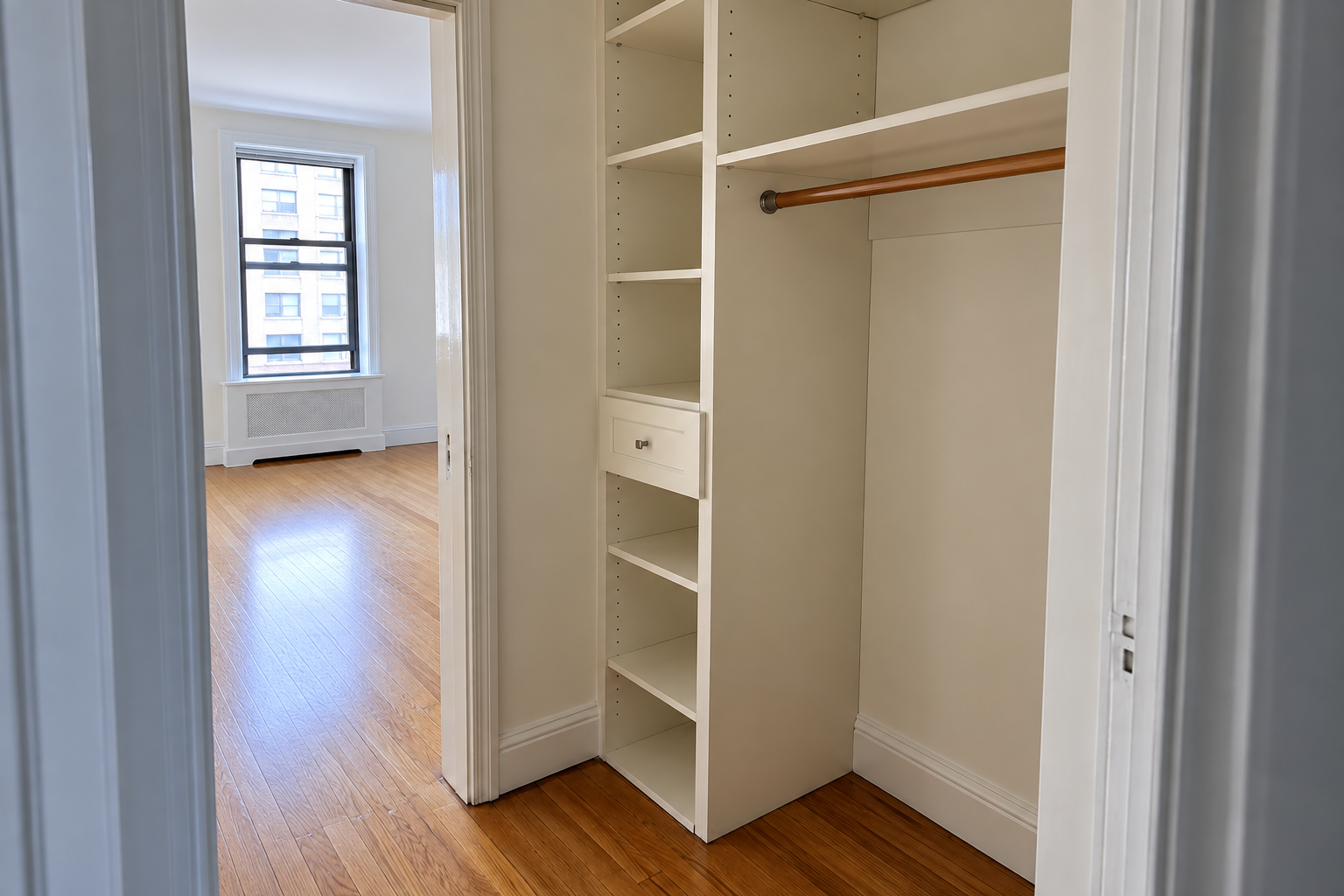
Before an Upper East Side apartment fills with boxes, its closets and built-in storage offer a brief, useful chance to see every shelf, corner, rod, track, and floor edge. Once clothes, dishes, and household items are in place, reaching those surfaces becomes a second project. An empty-storage inspection helps you decide what belongs in a move-in cleaning scope and what should be flagged for repair or special care.
Ready to plan your cleaning?
Review move-in / move-out cleaning services and confirm your rooms, priorities and timing.
This checklist is intentionally about storage interiors, not the entire move schedule. Use it while the apartment is empty, then share the relevant details when requesting move-in cleaning. The goal is to make the included areas, finishes, and boundaries clear before anyone begins work.
Make an inventory of the storage you want cleaned
Walk through the apartment and count the closets, built-ins, drawers, and cabinet interiors you want considered. A bedroom closet can contain a high shelf, hanging rod, adjustable shelving, lower cubbies, and a narrow floor edge; each part is easy to overlook if the request says only “clean the closet.” Kitchen and bathroom storage may have different materials and conditions, so list those areas separately.
Open doors and drawers only where you have permission. If a locked unit, owner cabinet, or unfinished area should remain closed, identify it clearly. Do not assume that every interior is included in a standard room clean. An explicit list makes the quote and final check more useful than a general request to clean “all storage.”
Keep included interiors empty until after cleaning
Move-in cleaning is most practical after repairs and dusty contractor tasks are complete, but before delivery crews fill the apartment. Leave the included closets, built-ins, and cabinets free of boxes, hangers, shelf liners, and personal items. Clearing them later takes time and creates questions about what may be moved. If an area cannot be emptied, say so when discussing scope rather than expecting the cleaner to work around private belongings.
Check whether any shelf paper, adhesive residue, loose hardware, or packing material remains. Removing or repairing those items may be a separate task. The person responsible for the apartment should decide what may be discarded; a cleaning visit is not an authorization to reorganize or remove possessions.
Inspect the finish before choosing a product
Built-in storage is not one uniform surface. Painted wood, laminate, veneer, glass, metal, unfinished edges, and specialty coatings may all appear in the same apartment. Note any manufacturer or installer care guidance you have, especially for newer cabinets. If you do not know what a finish is, avoid assuming a strong product or wet method is safe for it.
Look at shelf seams, drawer edges, hinges, and the material beneath sinks. Swelling, peeling, rust, a leak, or unstable shelving is a condition to document and refer to the appropriate building contact or repair professional. Cleaning may expose an issue, but it does not fix water damage, faulty hardware, or unsafe construction. If there is suspected mold-like growth, pest activity, or contamination, obtain the appropriate assessment before treating it as ordinary cleaning.
Check from the upper shelf downward
A top-to-bottom look shows where loose dust can fall. Start with reachable upper shelves and trim, then check rods, shelf surfaces, cubbies, drawer interiors, door hardware, baseboards, and the floor. Corners and tracks deserve a close look because fine material can sit where a broad wipe or vacuum pass misses it. If a shelf or drawer is removable, do not take it out unless the design permits it and removal is agreed in the scope.
For ordinary loose dust, dry removal before a compatible damp wipe can help avoid spreading grit across the finish. Product choice and moisture level should follow the material. Avoid soaking seams, raw edges, slides, or particleboard. The practical sequence is to inspect first, remove loose debris, address accessible surfaces as agreed, and finish with the lower edges and floor.
Give kitchen and bathroom interiors their own check
Kitchen cabinets are easiest to inspect before dishes and food arrive. Look into upper corners, shelf joints, drawer cavities, and reachable toe-kick edges. A newly installed cabinet may contain sawdust or construction residue rather than ordinary household dust; describe that condition accurately because it may call for a different scope. Keep moisture away from unsealed edges and nearby electrical components.
Bathroom vanities and medicine cabinets also need a surface-specific approach. Before wiping beneath a sink, check whether plumbing is dry and stable. Do not put toiletries into a cabinet that is still damp. If a leak, swollen panel, or damaged seal is present, record it for the responsible party rather than trying to hide it with cleaning.
Mark the boundaries that protect the apartment
A clear scope includes exclusions. Identify delicate finishes, fixed glass, a storage unit that should stay shut, or a cabinet that contains another person’s belongings. Point out any wet paint or unfinished installation. A simple note such as “leave this closet closed” can prevent confusion. Also distinguish ordinary cleaning from repair work, adhesive removal, heavy debris removal, or organization if those are not part of the agreed service.
For an Upper East Side apartment, confirm the building’s approved access hours and entry procedure, then keep water, electricity, and lighting available. These logistics matter because a detailed interior check is difficult in a dark apartment or with the cleaning window cut short. The earlier Upper East Side move-in guide on this site covers the broader handoff and mover schedule; this list focuses on what to inspect inside storage before it is filled.
Do a final empty-storage walkthrough before unpacking
Open each included closet and cabinet while it is still easy to see into it. Look at upper shelf edges, corners, tracks, rods, drawer interiors, and the floor beneath storage. Check from more than one angle if light falls unevenly. If a surface is damp, allow it to dry before placing clothing, paper, or boxed items against it. Note any remaining mark or pre-existing damage separately from a cleaning question.
After this walkthrough, the apartment can be stocked without immediately hiding a missed area. The inventory also gives you a record of which interiors were discussed and which were excluded. That is more useful than trying to reconstruct the scope after closets are full.
Ask for a storage-specific move-in cleaning scope
When contacting Crystal Breeze Cleaning about move-in cleaning on the Upper East Side, describe the number and type of closets, built-ins, drawers, and cabinet interiors you want considered. Mention unusual finishes, visible dust or residue, damaged areas, building access limits, and the time before deliveries arrive. Ask which interiors are included and whether any extra task needs separate time or a different service scope.
Request a cleaning quote at crystalbreezecleaning.com or call (516) 789-2767. Share the empty-storage checklist so the conversation starts with the areas you can inspect now—before boxes and belongings cover them.
Ready to plan your cleaning?
Review move-in / move-out cleaning services and confirm your rooms, priorities and timing.