
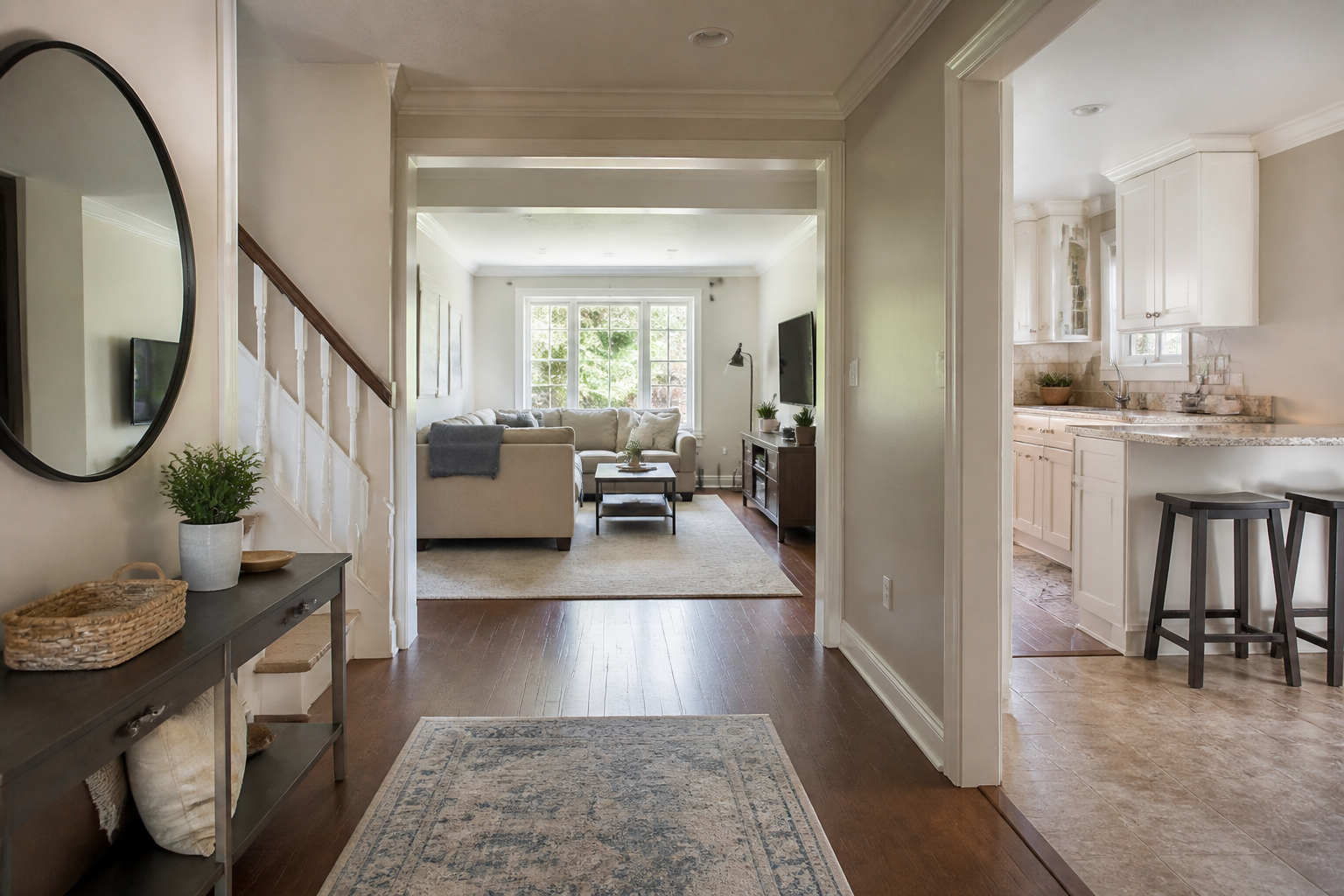
A larger home can look orderly while still being difficult to maintain. Multiple living rooms, bedrooms, bathrooms, staircases, entry points, and lightly used spaces create more surfaces to track. When every room is treated as equally urgent, cleaning time can be spread too thin and the areas that matter most may not receive enough attention.
Ready to plan your cleaning?
Review standard cleaning services and confirm your rooms, priorities and timing.
A zone-by-zone system gives homeowners a more practical way to plan house cleaning in Old Westbury, NY. Instead of relying on one oversized checklist, the home is divided into functional areas with clear priorities, realistic frequencies, and agreed expectations. This approach works for one-time service, recurring maintenance, or a combination of routine visits and occasional deep-cleaning projects.
Begin with how the home is actually used
A floor plan shows where rooms are located, but it does not show how the household moves through them. Start by identifying daily traffic patterns. Which entrance is used most? Where do bags and shoes collect? Which bathroom serves family members or guests? Where are meals prepared, homework completed, pets fed, or laundry sorted?
Also identify spaces that are rarely used. A formal dining room, guest suite, library, or lower-level sitting area may need dust control and periodic floor care without requiring the same attention as the kitchen or primary bathroom at every visit. Cleaning frequency should reflect use, not simply room count.
Divide the property into practical zones
Zones should be easy to understand and inspect. They can follow floors, wings, or functions depending on the property. A clear plan might include the entry zone, daily living zone, kitchen and dining zone, bedroom zone, bathroom zone, and secondary-space zone.
Entry and transition areas
Foyers, mudrooms, side entrances, hallways, and stairs collect debris carried from outdoors and connect the rest of the house. Priorities may include clear walking paths, mats, reachable ledges, handrails, visible glass, floor edges, and the surfaces where keys or deliveries are placed.
Daily living spaces
Family rooms, dens, play areas, and frequently used sitting rooms benefit from a consistent reset. Common tasks include dusting accessible surfaces, straightening lightweight items, vacuuming upholstered-area surroundings, addressing visible fingerprints, and cleaning floors.
Before service, decide how personal items, toys, electronics, paperwork, and fragile décor should be handled. Cleaning is faster and more predictable when frequently used surfaces are reasonably accessible.
Kitchen and dining areas
The kitchen usually needs priority because it is used repeatedly throughout the day. A routine scope may address counters, sink, backsplash, appliance exteriors, cabinet fronts where accessible, tables, chairs, visible residue, and floors. Interior appliances, cabinet interiors, heavy buildup, or detailed fixture work should be requested separately when needed.
Dining spaces should be assigned a frequency based on actual use. A breakfast area may need attention every visit, while a formal dining room may need a lighter recurring reset plus more detailed cleaning before hosting.
Bedrooms and private spaces
Bedrooms vary widely in use. Primary bedrooms and children’s rooms may need regular floor care, reachable-surface dusting, bed making when requested, and attention to frequently touched areas. Guest rooms may need periodic dusting and a full reset before visitors arrive.
Clarify whether desks, vanities, nightstands, or dressing areas will be cleared. Cleaners should not reorganize personal belongings or guess where valuables, medication, documents, or delicate items belong.
Bathrooms
Bathrooms often require more time per square foot than other rooms. Create a consistent sequence for sinks, counters, mirrors, toilets, tubs or showers, reachable fixtures, and floors. Identify hard-water residue, soap buildup, specialty stone, delicate finishes, or grout concerns in advance so the scope and product choices can be planned appropriately.
Secondary and occasional-use rooms
Home offices, gyms, craft rooms, finished basements, bonus rooms, and extra sitting areas should not disappear from the plan. Place them on a rotation if they do not need full service every visit.
Separate core tasks from rotating details
A strong recurring plan has two layers. Core tasks are completed in the agreed high-use zones at each visit. Rotating details are scheduled across future visits. This keeps the service consistent while allowing the home to receive broader attention over time.
Examples of rotating details may include reachable baseboards in one zone, interior window ledges in another, guest-room resets, detailed door frames, or additional dusting in seldom-used spaces. Extras such as interior windows, appliance interiors, cabinet interiors, or other specialty requests should be confirmed rather than assumed.
Choose priorities before the appointment
Even with a detailed plan, priorities can change. Hosting, overnight guests, school schedules, repairs, and seasonal activity may make one zone more important than usual. Share those changes before the appointment when possible.
Use three priority levels: must complete, complete if time allows, and defer. The must-complete list should remain short. If every room is labeled urgent, the list no longer helps the cleaning team make good decisions.
Reduce avoidable delays
Access and preparation have a significant effect on usable cleaning time. Confirm entry instructions, alarm details, parking, pets, occupied workspaces, rooms that should remain closed, and any areas with ongoing repairs. Make sure water and electricity are available when required.
Pick up loose clothing, paperwork, toys, and small floor items when practical. The goal is not to pre-clean; it is to make the requested surfaces reachable. Point out fragile objects, unstable furniture, damaged fixtures, and materials that require special care.
Match products to the home’s finishes
Old Westbury homes may contain a mix of natural stone, sealed wood, metal, glass, tile, specialty cabinetry, antique furniture, and custom finishes. No single cleaner or tool is right for every surface. Provide manufacturer instructions when available and identify newly installed, refinished, or especially delicate materials.
Avoid assuming that a strong product will produce a better result. Abrasive tools, excess moisture, acidic products, or incompatible chemicals can damage finishes. When material is uncertain, pause and confirm the correct method before proceeding.
Plan the order of work
A logical sequence reduces repeated effort. Begin with upper-level or lower-traffic zones when appropriate, work from higher surfaces downward, remove dry debris before damp cleaning, and finish floors after surrounding tasks. Keep used tools from moving residue between bathrooms, kitchens, and living spaces.
If household members will remain home, agree on a route that preserves access. One floor or wing can be completed before the team moves to the next, helping residents understand which spaces are ready to use.
Review the plan after several visits
A recurring schedule should improve with experience. After several appointments, review which zones consistently need more time, which stay clean longer, and which rotating details are most valuable. Adjusting the plan is more useful than forcing the same checklist onto changing household needs.
Prepare useful information for a quote
When requesting house cleaning in Old Westbury, NY, provide the bedroom and bathroom count, approximate property size, number of floors, high-use entrances, occupied rooms, pets, surface concerns, parking or access instructions, preferred frequency, and any extras. Explain whether you want the entire home maintained at every visit or selected zones prioritized on a rotation.
Crystal Breeze Cleaning offers standard and recurring house cleaning based on the property, requested scope, condition, access, and priorities. Call (516) 789-2767 or visit crystalbreezecleaning.com to discuss a zone-by-zone plan designed around how your Old Westbury home is actually used.
Ready to plan your cleaning?
Review standard cleaning services and confirm your rooms, priorities and timing.