
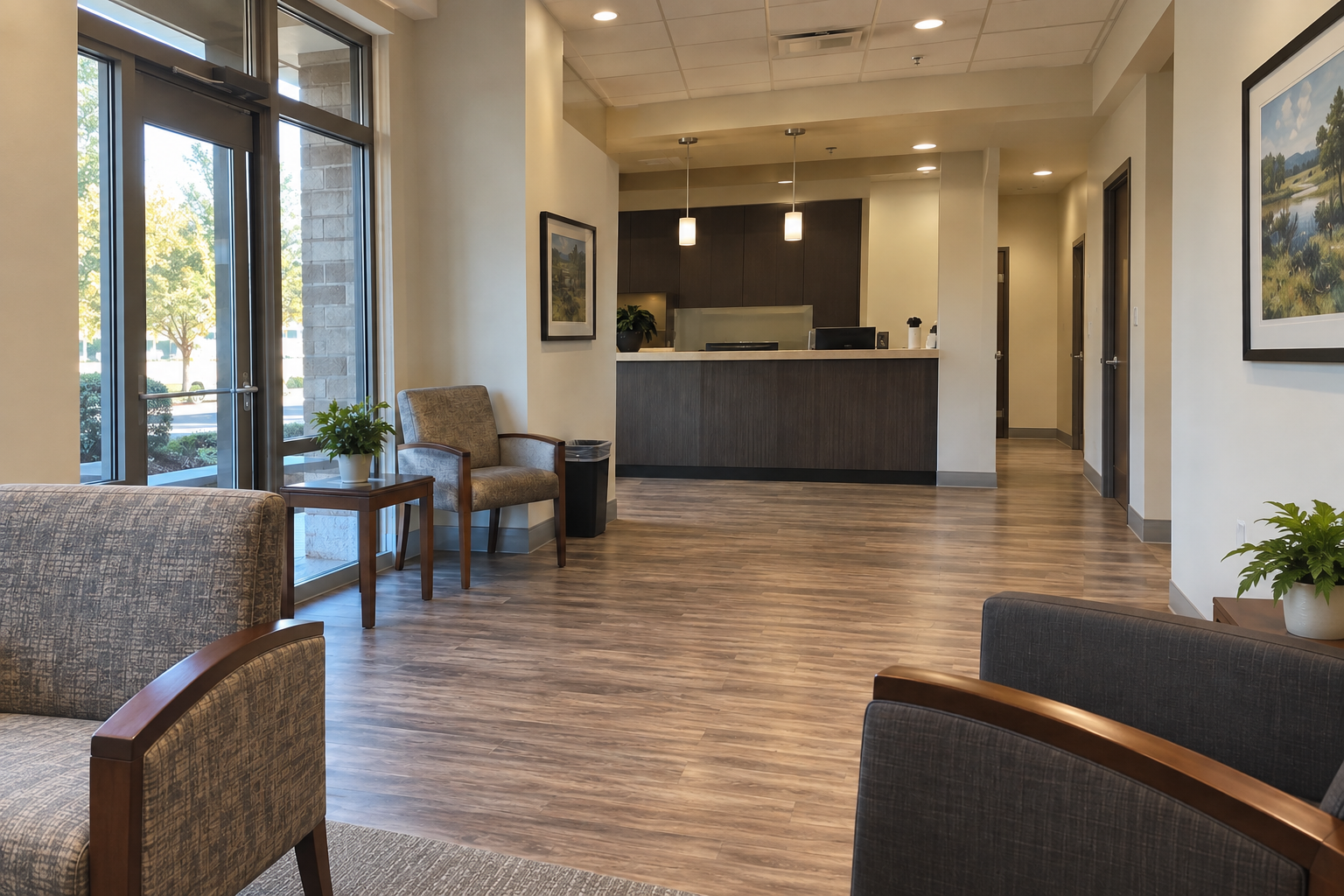
A waiting room may be the first and last part of a medical office that every visitor sees. That makes the closing handoff important: the office team needs to leave clear instructions, and the cleaning team needs a defined routine that can be completed without guessing about restricted rooms, sensitive materials, or patient information.
Ready to plan your cleaning?
Review office & commercial cleaning services and confirm your rooms, priorities and timing.
For practices arranging medical office cleaning in Mineola, a useful handoff is more specific than “clean the waiting room.” It explains which public and staff areas are included, which products are approved, how the building is accessed, what must remain untouched, and what “ready for opening” means. This approach supports an orderly space while keeping routine commercial cleaning separate from clinical protocols, regulated waste, sharps, bodily-fluid response, and specialized infection-control work.
Build the Handoff Around the Patient Path
Start at the entrance and follow the route a visitor would take: glass doors, mats, reception, seating, public restrooms, and the exit. This simple walk reveals the surfaces and floor areas that need routine attention. It also helps the practice identify shared-building areas that may belong to a landlord or another vendor rather than the office cleaning scope.
At the entrance, note glass panels, handles, thresholds, and places where grit or moisture collects. In the seating area, identify chair arms, backs, legs, tables, reachable ledges, and floor edges. At reception, specify which ledges and exterior surfaces may be cleaned without moving documents or touching sensitive equipment.
Protect Privacy With Clear Boundaries
A cleaning checklist should never depend on access to patient information. Before service begins, the office should define restricted spaces and make sure sign-in sheets, printed schedules, files, labels, and open screens are secured. Cleaning teams should not photograph documents, screens, people, or any area that could expose private information.
A service log can still be useful when it records only operational details: visit time, completed scope, supply shortages, maintenance concerns, and tasks that could not be completed. The log should not contain patient names, appointment information, diagnoses, or photographs of office records.
Separate Ordinary Waste From Regulated Materials
The practice should provide labeled containers and written instructions for ordinary trash, recycling, confidential papers, medication packaging, and regulated waste. Routine commercial cleaners should never have to decide whether an unidentified item is safe to handle. Sharps, bodily-fluid incidents, clinical waste, and other regulated materials belong under the facility’s established procedures and properly qualified personnel.
Define the Approved Surface Routine
Waiting rooms combine several materials: glass, laminate, metal, upholstery, painted trim, electronics, and different floor finishes. The handoff should list approved products and any relevant manufacturer guidance. Using one product everywhere can damage finishes or leave unwanted residue.
Frequently handled surfaces need a repeatable method, not simply more spray. If the practice requires a particular product, its label directions and contact time must be followed. Never mix cleaning chemicals. Products containing bleach should not be combined with ammonia, acids, or other cleaners.
Electronic check-in devices, payment terminals, phones, computers, and outlets need extra caution. Do not spray liquids toward equipment. When the owner permits routine exterior wiping, apply the appropriate product to a cloth and keep moisture controlled. Devices that require a specialized method can remain the responsibility of office staff.
Make Seating and Floors Part of One Sequence
Chair arms may be obvious, but dust and debris also collect on backs, legs, crevices, and the floor beneath the seating. Move lightweight chairs only when it is safe and authorized, and return them to the approved layout. Keep exits, door swings, accessible routes, and mobility space clear.
Upholstery should be handled according to its care label and the agreed service. Routine vacuuming of accessible crevices may be more appropriate than wet treatment. Loose legs, torn fabric, sharp edges, and unstable furniture should be reported, not repaired by the cleaning team.
Work from higher reachable areas down to the floor so dust does not land on a finished surface. Remove dry grit before damp cleaning, use a method suited to the flooring, and allow enough time for the area to dry before opening. Mats should lie flat and should not create a trip hazard.
Give the Public Restroom Its Own Checklist
Public restrooms need dedicated tools and a separate sequence. A practical order moves from higher surfaces to mirrors, dispensers, counters, sinks, fixtures, toilets, base areas, and floors. Refill only supplies authorized by the practice, and report leaks, slow drains, damaged caulk, persistent odors, or broken dispensers.
Keep restroom cloths and tools separate from those used in the waiting room and staff areas. A strong fragrance is not proof that a room is clean and may be uncomfortable in a healthcare environment, so the office’s product and ventilation preferences should be written into the plan.
Choose Service Timing That Fits the Office
Medical offices do not always have even traffic throughout the day. Appointment peaks, staff schedules, building access, weather, and shared hallways can all affect the plan. Detailed work should be scheduled so it does not interfere with check-in, conversations, or patient movement.
For after-hours service, provide reliable entry instructions, alarm steps, lighting and water access, and one authorized contact for questions. Access codes should be shared through an approved secure method rather than left on an open checklist. The closing team should also identify rooms that remain occupied or off-limits that evening.
Use a Patient-View Final Check
The final walkthrough is where separate tasks become an opening-ready room. Stand near the entrance and scan the space as a visitor would. Look at the glass, reception ledge, seating rows, corners, floor edges, bins, and restroom. Confirm that floors are dry, chairs are reset, supplies are placed only where authorized, and no cloths, bottles, cords, signs, or equipment remain behind.
The office should define this completion standard in advance. A short, consistent final check is easier to verify than a vague promise that everything will “look clean.” It also gives both teams a clear way to record anything that needs follow-up.
Plan Medical Office Cleaning in Mineola
A privacy-safe closing handoff brings together scope, approved products, access, restricted areas, waste boundaries, timing, and a final patient-view walkthrough. Crystal Breeze Cleaning provides commercial cleaning for professional offices in Mineola and other Long Island communities, with service planned around the office layout, hours, floor types, access requirements, and agreed cleaning priorities.
Request a cleaning quote at crystalbreezecleaning.com or call (516) 789-2767.
Ready to plan your cleaning?
Review office & commercial cleaning services and confirm your rooms, priorities and timing.