
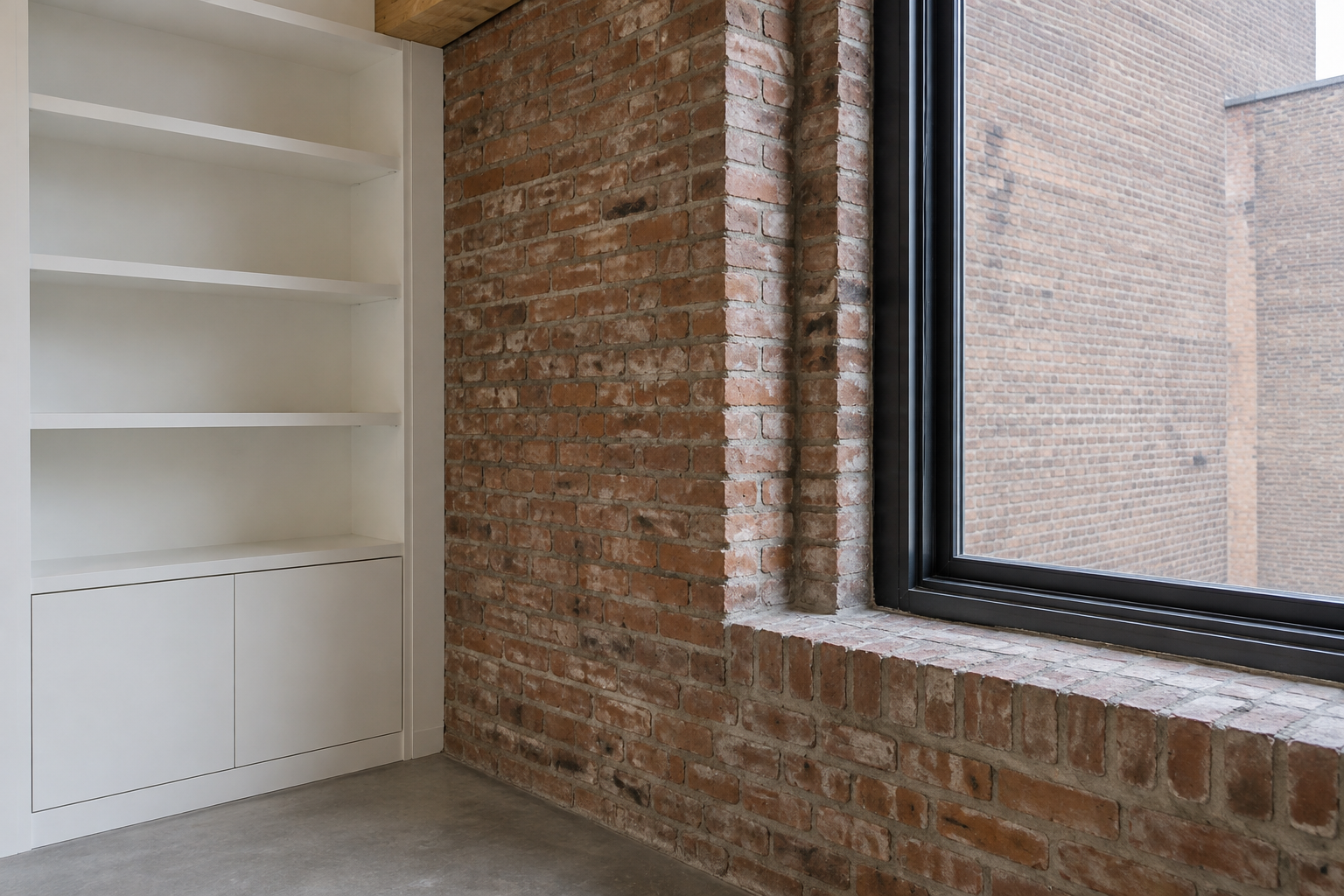
A renovated DUMBO loft can place old brick, new cabinetry, tall glass, metal fixtures, and a freshly finished floor within a few steps of one another. Fine construction dust does not respect those material boundaries. It rests in brick joints, window tracks, shelf corners, and floor edges, then becomes visible again when the light changes or people move through the space.
Ready to plan your cleaning?
Review post-construction cleaning services and confirm your rooms, priorities and timing.
Before arranging post-construction cleaning in DUMBO, identify what each surface is and who can approve its care. This focused material checklist helps an owner, project manager, or renter give the cleaning team useful direction. It addresses the handoff decisions that matter in a mixed-finish loft, rather than assuming one cleaner or technique belongs everywhere.
Start With a Surface Inventory
Walk the loft with the project contact and list the materials that were installed, refinished, or exposed during construction. Note whether brick is sealed or unsealed, whether concrete is polished or coated, and whether new wood or stone has specific care instructions. Include painted millwork, cabinet interiors, window frames, glass, and decorative metal.
Photographs can make the list clearer, especially where one finish meets another. Ask for manufacturer instructions and the contractor’s finish schedule when available. A new surface may still have curing restrictions. The responsible trade or manufacturer should confirm when moisture, pressure, or a cleaning product is permitted.
Question One: Is the Dust or the Material Itself Shedding?
Exposed brick can trap construction dust on ledges and in mortar joints. It can also shed naturally. Before anyone scrubs, check whether the residue is loose dust, crumbling masonry, paint, or another condition. Gentle dry methods may suit sound brick, but saturated cleaning or strong chemicals can create a moisture or finish problem.
If the brick is friable, stained, or releasing substantial material, pause and ask the project team for masonry guidance. A cleaner should not be asked to stabilize the wall, apply a coating, or promise that a naturally shedding surface will stop producing particles. Document what was observed so the owner can decide on the appropriate specialist.
Question Two: What Kind of Glass and Frame Is Installed?
Large loft windows reveal streaks and dust in changing daylight. Their tracks can hold gritty construction residue even when the glass looks clear. Confirm which interior panes, frames, sills, and tracks are accessible and included in the quote. Dry debris should be removed from a track before liquid is introduced, so grit is not dragged across coated frames or glass.
Ask whether any pane is tempered, tinted, coated, or otherwise specialized. Scrapers and abrasives can be risky without an approved method. Exterior glass, rope access, and windows beyond safe reach require separate arrangements. The cleaning scope should name those exclusions instead of leaving the crew to improvise.
Question Three: Are Cabinet Interiors Ready to Open?
New shelves and drawers can hold fine dust from installation. Confirm that they are empty, that doors and drawers operate normally, and that interior cleaning is included. Remove loose particles from corners and hardware openings before wiping. This prevents dry grit from spreading over the finish.
Some protective film is intentionally left in place until final inspection or appliance setup. Ask the owner or contractor before removing it. Unfinished edges and materials prone to swelling need controlled moisture. Adhesive residue and a sticking drawer may belong on the contractor’s list rather than the cleaning checklist.
Question Four: What Has Finished Curing?
Fresh paint, grout, caulk, sealers, coatings, and floor finishes may not be ready for ordinary washing. The cleaning team needs the product and cure instructions, not a guess based on appearance. If the schedule is uncertain, confirm it with the responsible trade before damp cleaning or covering that surface.
This matters where materials meet. A product suitable for one cabinet face may be wrong for adjacent stone, metal, brick, or concrete. Keep methods tied to the specific finish and use clean materials so grit from a rough surface is not transferred to a polished one.
Question Five: Is Trade Work Truly Finished?
Final detail cleaning works best after sanding, cutting, drilling, painting, and other dust-producing work is complete. A returning contractor can recreate dust on ledges and in tracks after those places were cleaned. Confirm that tools, protective coverings, scrap material, and contractor waste have been removed or clearly assigned to someone else.
Separate cleaning from repairs. Chips, scratches, loose hardware, failed caulk, paint drips, and unknown cured adhesive should be recorded for the responsible trade. Routine cleaning also should not open electrical equipment or mechanical systems. If interior ducts or building systems need attention, bring in the appropriate specialist.
Set a Clear Inspection Standard
A single glance across an open loft is not enough. Agree on which reachable ledges, cabinet interiors, fixtures, tracks, and floor perimeters are in scope. After high surfaces and ordinary dust are addressed, allow particles time to settle and inspect again under daylight and installed lighting.
Look at dark cabinetry, glass, and floors from a low angle, where fine residue and streaks become easier to see. A clean white cloth can help check an accessible surface, used gently and away from delicate finishes. Record blocked, damaged, unfinished, or excluded areas so a final walkthrough leads to precise follow-up rather than a vague claim that the whole space is complete.
Protect the Floor at the End
Leave final floor care until dust from other included surfaces has been removed. Vacuum or dust-mop loose particles before damp work. A sealed concrete floor, newly finished wood, stone, tile, and resilient flooring each have different instructions. Returning contractors, wheels, and foot traffic can affect a floor after cleaning, so coordinate the handoff route and timing.
If heavy equipment remains in place, record the inaccessible area rather than moving it without permission. Refinishing, polishing, grout repair, and adhesive removal are separate decisions unless the agreed scope says otherwise.
Discuss Your DUMBO Loft With Crystal Breeze Cleaning
Crystal Breeze Cleaning provides post-construction cleaning for renovated lofts and other interiors in DUMBO and nearby Brooklyn neighborhoods. Share the project stage, building access rules, surface list, care instructions, and priority areas when discussing the scope.
Request a cleaning quote at crystalbreezecleaning.com or call (516) 789-2767. Clear material decisions help the final cleaning plan match the space you actually have.
Ready to plan your cleaning?
Review post-construction cleaning services and confirm your rooms, priorities and timing.