
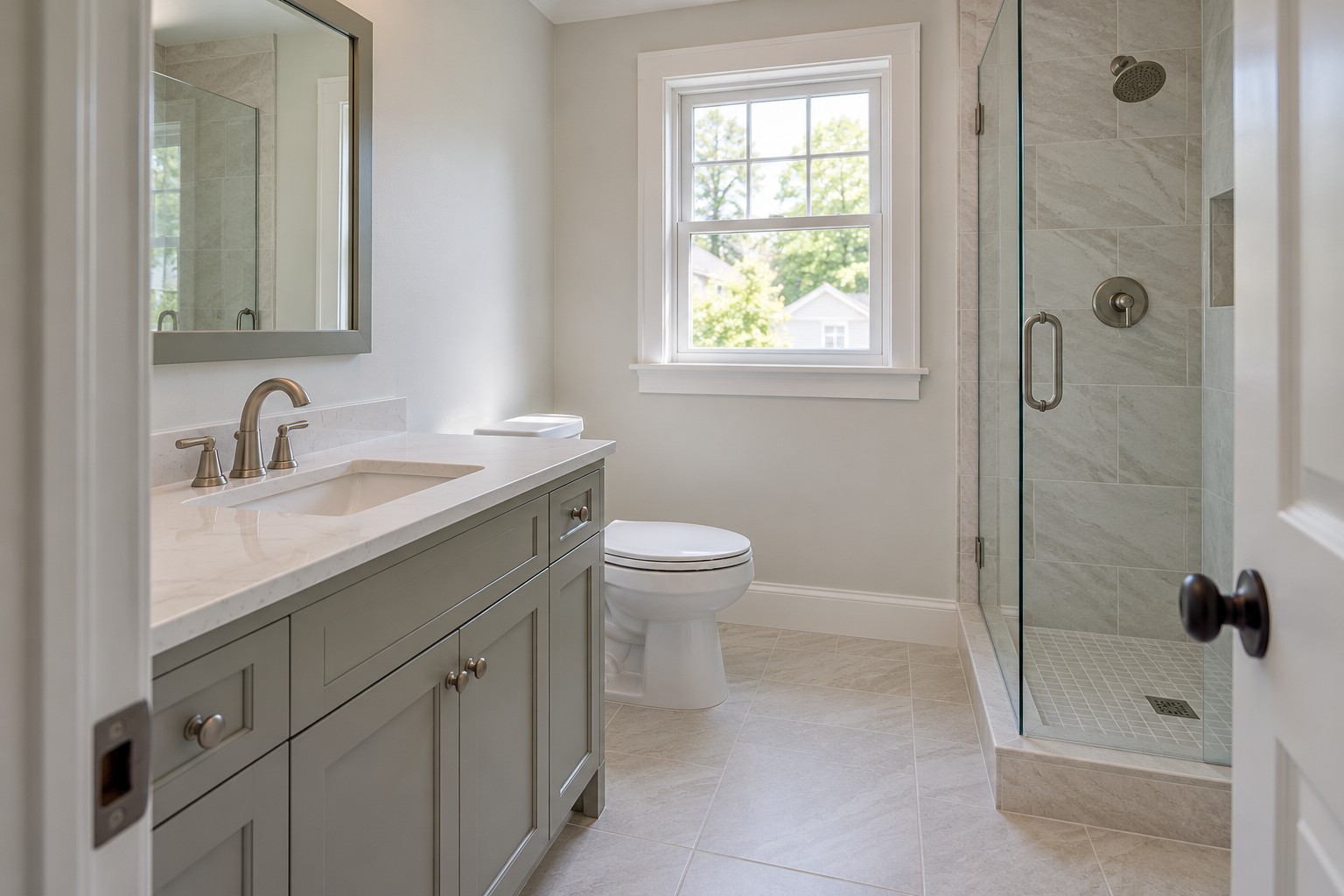
After a Bridgehampton bathroom remodel, loose construction dust belongs in the final-clean discussion, but bonded grout haze, adhesive, paint spots and installation defects need separate review with the contractor or an appropriate specialist. Do not treat every visible mark as dirt to scrub away. Identify the material, confirm its cure time and approved care method, and agree who handles uncertain residue before cleaning begins.
Share the new materials and remaining residue so the assessment can define the appropriate cleaning scope.
Make a mark list, not a stronger-product list
Walk the bathroom with the contractor before the final clean. Note the location and appearance of each concern: a dusty ledge, a smear beside the shower glass, a mark on a fixture or a rough patch near a tile edge. A useful note describes what can be seen without guessing what caused it. “Mark beside shower hinge” is more helpful than deciding that every pale mark must be removable grout residue.
Photograph unresolved areas only when authorized. Keep the record separate from a promise of removal. A chip, scratch, incomplete caulk line, leak or loose fitting may look like a cleaning problem at first glance, but wiping cannot complete an installation or repair damage. The handoff should name which trade or person will review those conditions.
Loose dust is the first cleaning category
Fine dust can settle on vent covers, upper ledges, door tops, trim, fixtures and floor edges. It may also travel into the hallway or the route used by workers. Before introducing moisture, plan dry capture from safely reachable higher areas downward, using appropriate tools and filtration. Clean tools matter because carrying grit onto glass or a newly finished surface can create another problem.
Leave floors until overhead work, cabinetry and other agreed details are complete. Otherwise, falling particles can land on a floor already treated as finished. Check corners, the vanity toe kick, thresholds and accessible space behind the toilet. If sharp fragments or unsafe construction waste remain, stop and have the contractor clear them before ordinary cleaning proceeds.
Bonded residue needs a named owner
Adhesive, hardened mortar, paint spots, silicone smears and construction haze are not interchangeable with loose dust. Ask who is responsible for each remaining area and whether the installer has an approved method. Crystal Breeze Cleaning’s post-construction scope does not include paint removal. Do not assume scraping or a stronger chemical is part of a final cleaning appointment.
Record an unresolved mark rather than repeatedly increasing pressure. On shower glass, a blade may affect a coating or leave scratches; on tile or metal trim, an abrasive pad can change the finish. A contractor’s review is especially important when the material or residue is unidentified. The aim is to establish a safe next step, not to turn the clean into an experiment.
Check cure times before any damp pass
A surface can look ready while grout, sealant, paint or a coating is still curing. Ask for the product name, installation or sealing date and written care instructions. Follow the manufacturer or contractor’s waiting period for moisture and cleaning products rather than choosing a general number of days. Different parts of the same bathroom may have different restrictions.
Do not assume the tile cleaner is suitable for stone, grout, coated glass and fixture finishes. Avoid soaking, steam, strong products or abrasive methods unless the relevant material guidance allows them. The assessment should identify restricted areas so no one interprets “clean the bathroom” as permission to treat every new surface alike.
Keep fixtures and ventilation within cleaning scope
Faucets, handles, drains, shower controls, towel bars and hinges can collect dust around small edges. Use only compatible methods, and report stiff handles, loose hardware, leaks or missing sealant. Tightening fittings or troubleshooting drainage is not a cleaning task. A record of these concerns helps the homeowner distinguish the cleaning list from the contractor’s punch list.
Reachable exterior vent covers may need dust removal, but routine cleaning is not fan servicing or electrical work. Do not open fixtures or service internal components. High ceilings and difficult access need an advance discussion; tubs, toilets and counters are not safe substitutes for suitable access equipment.
Release the room only after dusty work ends
Confirm that cutting, sanding, drilling, painting and relevant touch-ups are complete. Ask whether a trade will return and create more dust. If so, schedule the final pass afterward or define a separate additional pass. The contractor should address tools, packaging, unused materials and unsafe debris, while protective coverings and films need an explicit removal decision.
For empty cabinetry included in the scope, capture dust in accessible corners and joints before approved wiping. Keep moisture away from unfinished edges and hardware. Finish mirrors and shower glass after higher dust work, then inspect the floor and nearby hallway. The post-construction cleaning assessment page explains how to discuss surfaces, access and remaining work.
Inspect what remains after surfaces dry
Use natural and approved task lighting to check ledges, glass, fixture bases and room edges from more than one angle. Keep two short lists: cleaning observations within the agreed scope and contractor or specialist questions still unresolved. That avoids handing over a single vague instruction to “make it all disappear.”
For a broader project, the new-finish handoff checklist helps organize material information. If storage interiors need attention, the cabinet-interior scope guide explains what to agree before detailing. These complement a bathroom residue review rather than replacing it.
Bathroom-remodel cleaning questions
Can every pale mark on tile be wiped away?
No. Describe it and have the material and residue reviewed. Haze, hardened residue and installation defects may require the installer or a specialist.
Is there one waiting period for the whole room?
Follow each material’s care and cure-time instructions. Do not substitute a single general timeline for the contractor’s guidance.
Should protective film be removed before cleaning?
Confirm who removes it and whether it is ready to come off. Do not assume every film, liner or label is intended for removal.
What should I send with an assessment request?
Share the bathroom size, renovation status, materials, ceiling height, access, affected nearby rooms and any remaining residue or coverings.
About Crystal Breeze Cleaning: discuss your Bridgehampton project and its surface restrictions before arranging the final clean.
Share the new materials and remaining residue so the assessment can define the appropriate cleaning scope.