
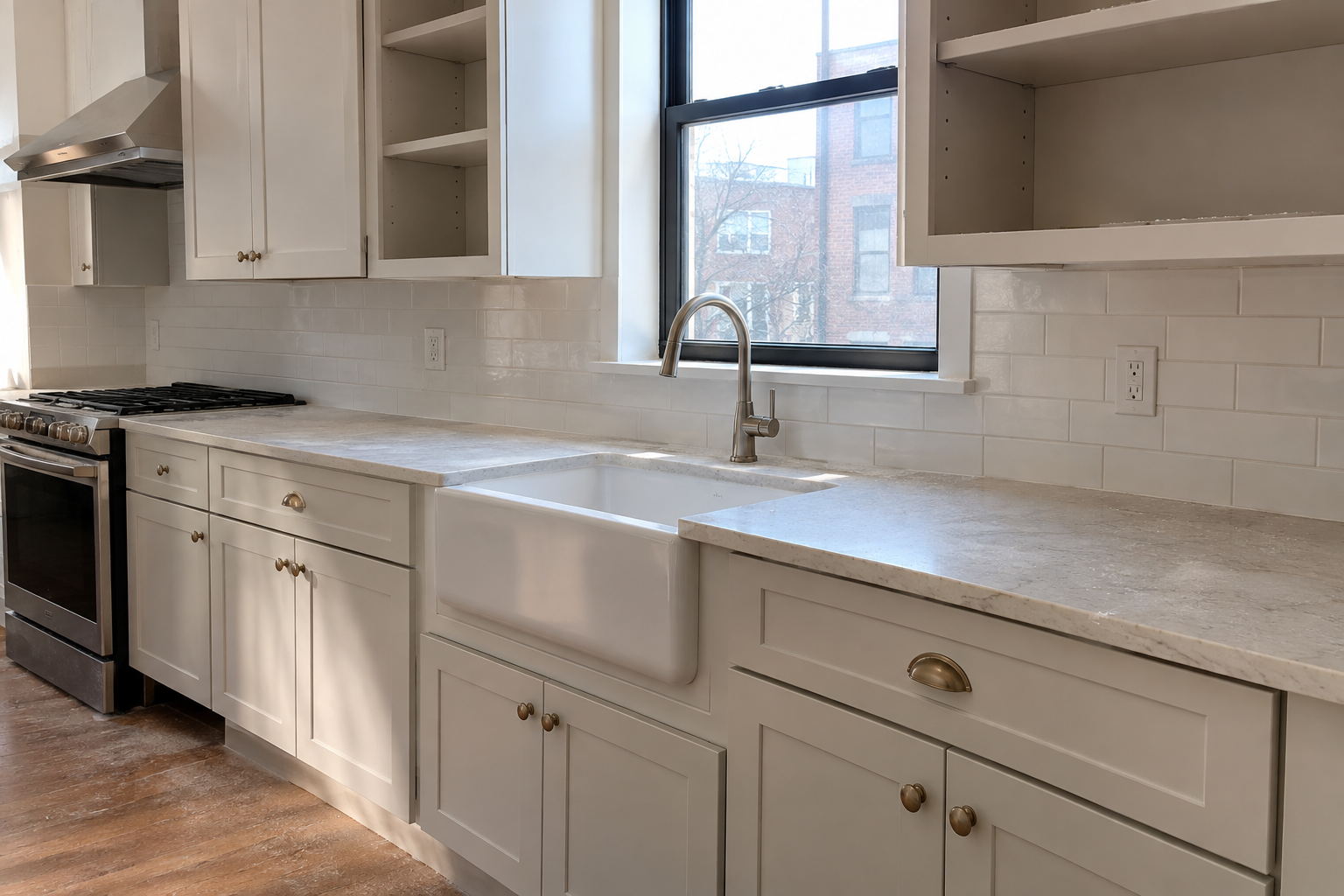
New cabinets can look ready for use while fine construction dust remains on shelves, in door profiles and around hardware. In a Red Hook renovation, the useful question is not simply “Are the cabinets clean?” It is “Which cabinet spaces are ready to be cleaned, and what method is safe for each finish?” Answering that before the final visit prevents confusion between cleaning work and unfinished contractor work.
Planning a post-construction clean?
Request a post-construction assessmentRequest a cleaning quoteCall (516) 789-2767
Define the interior scope before anyone opens a drawer
“Clean the kitchen cabinets” can mean very different things. One project may need only exterior doors and faces. Another may include empty shelf surfaces, drawer boxes, hinge cups, open shelving and the narrow ledge beneath a toe kick. Those details can hold dust, but they should not be assumed to be included in every job. Put the requested areas in writing when asking for an assessment.
Walk the room and count the areas you want addressed: upper cabinets, lower cabinets, drawers, tall pantry units and any exposed millwork. Note whether each one is installed, accessible and empty. If a unit is still being worked on, mark it as pending rather than assuming a cleaner can finish around active work. This short inventory gives both the homeowner and the cleaning team a shared scope.
Empty means empty—and ready to access
Interior dust removal is easiest to plan when shelves and drawers are free of stored items, tools, packaging and contractor materials. Decide who will empty them and when. Do not leave that handoff to the moment cleaning begins. If shelf pins, removable dividers or inserts are loose, ask the installer how they should be handled; a cleaner should not have to guess whether moving a component could change the installation.
Check for unfinished work as well. A cabinet door waiting for adjustment, an unsealed edge or a drawer that does not open smoothly is not a cleaning defect. Photograph or note it for the contractor’s punch list. That protects a clear record of what was present before the clean and avoids asking cleaning staff to repair or force new hardware.
Confirm the finish-care rules with the installer
New millwork may combine painted faces, wood or veneer, laminate, metal hardware and countertop-adjacent edges. They do not necessarily tolerate the same products or amount of moisture. Ask the installer or manufacturer for finish instructions, including whether protective film should remain in place and which cleaning methods are approved. Share those directions before a quote is finalized, especially if you want interiors included.
Pay attention to raw edges, seams, hinge areas and any nearby electrical components. The source guidance favors capturing loose dust with a clean, soft tool first, then using only an approved lightly damp wipe where the finish permits it. It does not support soaking surfaces or applying a solvent to every paint speck or adhesive mark. Unknown residue should be identified with the installer rather than scraped off by guesswork.
Separate ordinary dust from the punch list
Fine dust on a shelf is a cleaning question. A chip, scratch, uneven paint touch-up, incomplete caulk line or stuck protective film may be a contractor question. Write down visible issues before cleaning begins. This distinction matters because wiping cannot correct a damaged finish, and aggressive attempts to remove a bonded mark may make it worse.
A practical handoff note can be simple: “Upper shelves empty; lower drawers empty except one installer kit; protective film to remain on pantry door; adhesive mark on right cabinet side to be reviewed by installer.” The point is not paperwork for its own sake. It is to make the agreed work visible and to keep uncertainty from becoming an on-site decision about a brand-new surface.
Time the clean for the end of dusty work
If sanding, drilling, cutting or paint touch-ups are still ahead, dust can settle back onto the cabinets after they are cleaned. Confirm that those tasks are finished before scheduling the cabinet detail. If the project is moving in phases, identify the specific section that is released to cleaning and the section that remains a work zone. Avoid describing the whole room as complete when only some units are ready.
Once the cabinetry is released, work can move from loose dust capture to approved finish-safe wiping, then to adjacent counters and floors. That order is useful because dust dislodged from door profiles or shelves should not land on surfaces already treated as final. It is a planning sequence, not a promise that every mark can be removed.
Write a scope note a cleaner can actually use
Before requesting an assessment, put the essentials in one message: the Red Hook location, whether dusty trade work has ended, how many cabinet interiors are empty, the finish-care instructions you have, and any surfaces still on the contractor’s list. Mention difficult access, such as shelves blocked by stored materials, without assuming they can be moved during cleaning. If you are unsure about a coating or residue, say so. This lets the assessment start with the right questions rather than a broad request to “clean everything.” It also helps you decide what must be resolved with the installer before the final clean can be scheduled.
Use a cabinet-by-cabinet final check
At handoff, open the same doors and drawers that were included in the scope. Look at shelf corners, hinge cups, drawer tracks, door profiles and the surrounding counter edge. Confirm that accessible dust was addressed and note any issue that belongs with the installer. If an interior was occupied or off limits, record that exception rather than treating it as a missed clean.
For a Red Hook project, share the scope, finish guidance, access timing and punch-list exceptions when contacting Crystal Breeze Cleaning about post-construction cleaning services. A precise request makes it easier to discuss an appropriate assessment without assuming that cabinet repair, film removal or every interior is part of cleaning.
Planning a post-construction clean?
Request a post-construction assessmentRequest a cleaning quoteCall (516) 789-2767
Pingback: Bathroom Remodel Cleaning in Bridgehampton: Dust or Contractor Residue? | Crystal Breeze Cleaning