
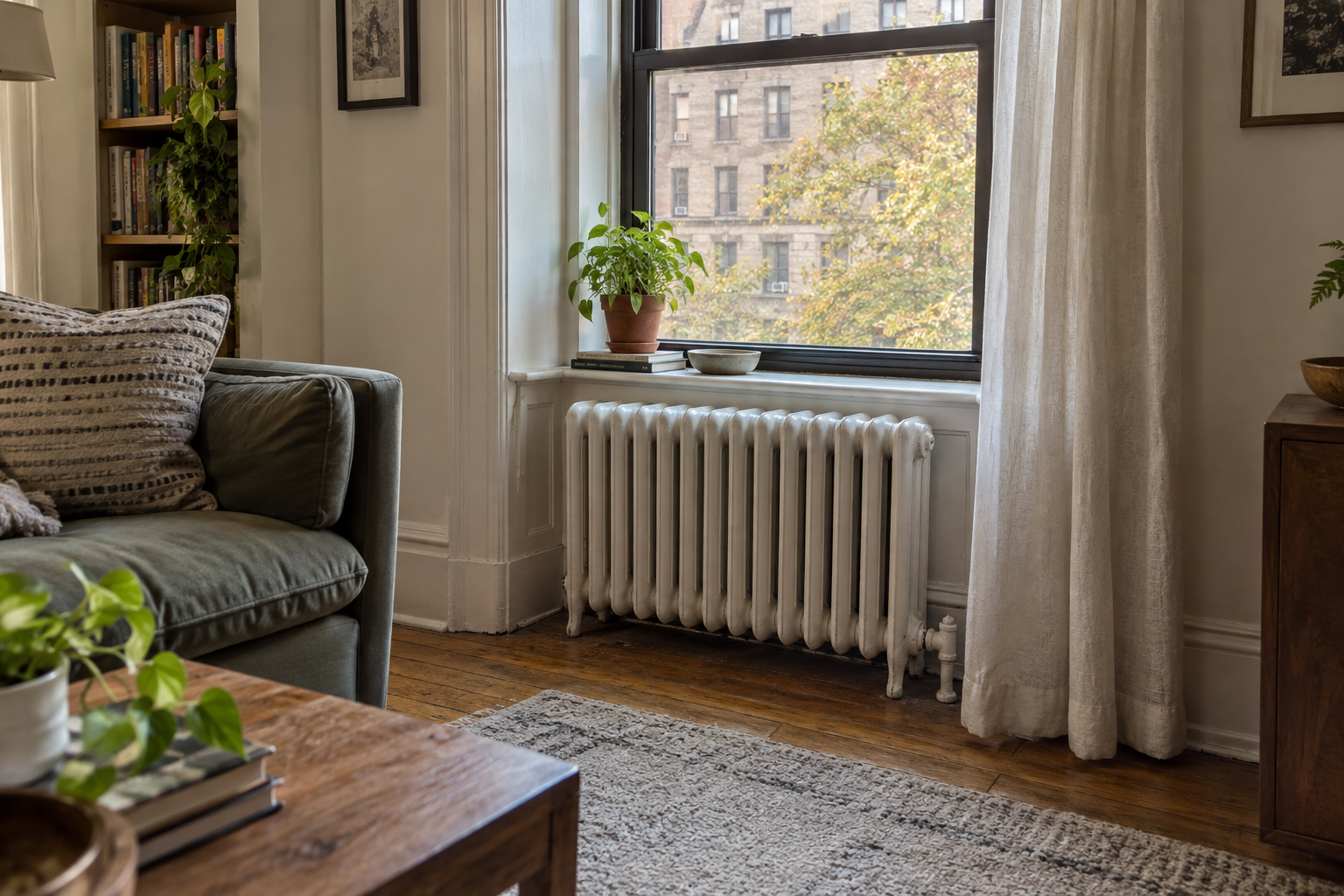
When heat returns to an older Upper West Side apartment, the radiator often draws attention to dust on the nearby sill, baseboard, curtain hem and floor. Those details are easy to miss when the rest of the room looks tidy. A useful plan is neither to ignore the heating zone nor to treat it as a repair project: keep the cleaning limited to safe, reachable surfaces and decide which details belong in your regular routine.
Plan your next apartment clean
Start with the boundary between cleaning and maintenance
Before touching a radiator or its cover, let the unit cool. The exterior may look simple, but an older heating unit has valves and components that are not ordinary dusting surfaces. Do not disassemble it, force a cover, work inside a tight opening, or put liquid near valves, wiring or floor gaps. If you find a leak, corrosion, an unusual odor or a loose part, stop and tell your building staff or manager. Those are maintenance questions, not cleaning tasks.
For a standard apartment clean, identify what is accessible without moving or altering the unit. The top of a stable exterior cover, adjacent trim and open floor area may be reasonable places to discuss. A narrow gap that cannot be reached safely should be left alone. This distinction is especially useful in prewar apartments, where the radiator, paint and surrounding finishes may not be as uniform as newer fixtures.
Work high to low so dust has one direction to travel
A simple order helps keep loose dust from settling on a surface you have already finished. Start with reachable upper trim and the window sill. Continue to the radiator’s cool, approved exterior surface, then the baseboard and the visible floor nearby. Capture dry dust first with a suitable vacuum attachment or dry microfiber cloth. If the surface and finish allow it, use only a lightly damp cloth afterward and dry the area. Do not spray the unit directly or use a wet cloth over an opening.
The high-to-low order matters beyond the radiator. A dusty curtain hem can shed particles when you pull it aside, and the baseboard behind it may be hidden during an ordinary room pass. Moving the curtain gently to inspect the reachable edge makes the task clearer. The goal is not to take down window treatments or reach behind fixed equipment; it is to notice the safe surfaces that everyday traffic and warm-air movement can leave behind.
Give the nearby textiles and floor their own check
Radiator-season dust control is not only about the metal unit. Look at the curtain edge, rug border and floor immediately around the heating zone. A vacuum pass around the accessible perimeter can pick up loose material before it is tracked across the room. Keep fabric away from a hot unit and follow its care instructions rather than assuming it can be washed or treated on the spot. If a rug or furniture blocks access, discuss whether it can be moved safely before adding that area to a cleaning plan.
Window sills and painted trim deserve a gentle approach too. Test a cleaning method against the finish guidance you have, and avoid saturating old paint or wood. The document’s practical sequence—dry capture first, minimal moisture only where appropriate—keeps the focus on ordinary dust rather than aggressive scrubbing. It also gives you a clear stopping point when a stain, flaking finish or damaged part needs a different kind of attention.
Use a recurring schedule for the slow-building details
Standard cleaning covers routine upkeep; recurring cleaning describes how often that upkeep happens. A weekly, biweekly or monthly visit does not automatically turn every radiator, blind and curtain edge into a detailed task each time. Make a short list of the slower-building zones you notice, then agree on priorities and rotation. One visit might emphasize reachable radiator exteriors and baseboards; another might give the window sill and nearby textile edges more attention. The exact scope should be confirmed before the visit.
This approach is practical for a small Upper West Side apartment because it avoids a vague instruction such as “get all the dust.” It names the room, the reachable surfaces, the materials that need care and the places that must remain off-limits. You can also note whether building access, furniture placement or a fragile finish changes what is safely reachable. A clear handoff helps everyone distinguish ordinary cleaning from a request for a specialist or building staff.
Make a five-minute room note before requesting service
Walk through the room while the radiator is cool. Write down the window and radiator locations, the sill and trim that collect dust, and any curtain or rug edges you want considered. Separate “routine” from “ask first.” Routine might include accessible sills, exterior surfaces, baseboards and floors; “ask first” might include fragile paint, blocked access or a cover that does not lift easily. Put leaks, corrosion, odors and loose parts in a third category for building maintenance rather than the cleaning team.
When you request an apartment-cleaning quote, share the room priorities instead of assuming a broad service name covers every detail. The Crystal Breeze standard-cleaning service page explains routine dusting and floor care, while the booking form lets you review the standard service and choose a frequency. If your main concern is heavier buildup or a task beyond the regular checklist, describe it before booking so the scope can be discussed.
A safe radiator-season plan is a repeatable one
A single careful pass can make the heating zone easier to maintain, but the most useful habit is repeatable: wait for a cool unit, capture loose dust from high to low, use little moisture where the finish permits, include adjacent textiles and floors, and leave repairs to building staff. That gives a recurring visit a sensible order without turning a cleaner into a radiator technician.
For standard or recurring apartment cleaning on the Upper West Side, share the rooms and reachable details you want prioritized. Crystal Breeze Cleaning can discuss the appropriate service and the schedule that fits your home.
Ready to plan your cleaning?
Request a cleaning quote through the link above or call (516) 789-2767 to discuss your apartment-cleaning priorities.