
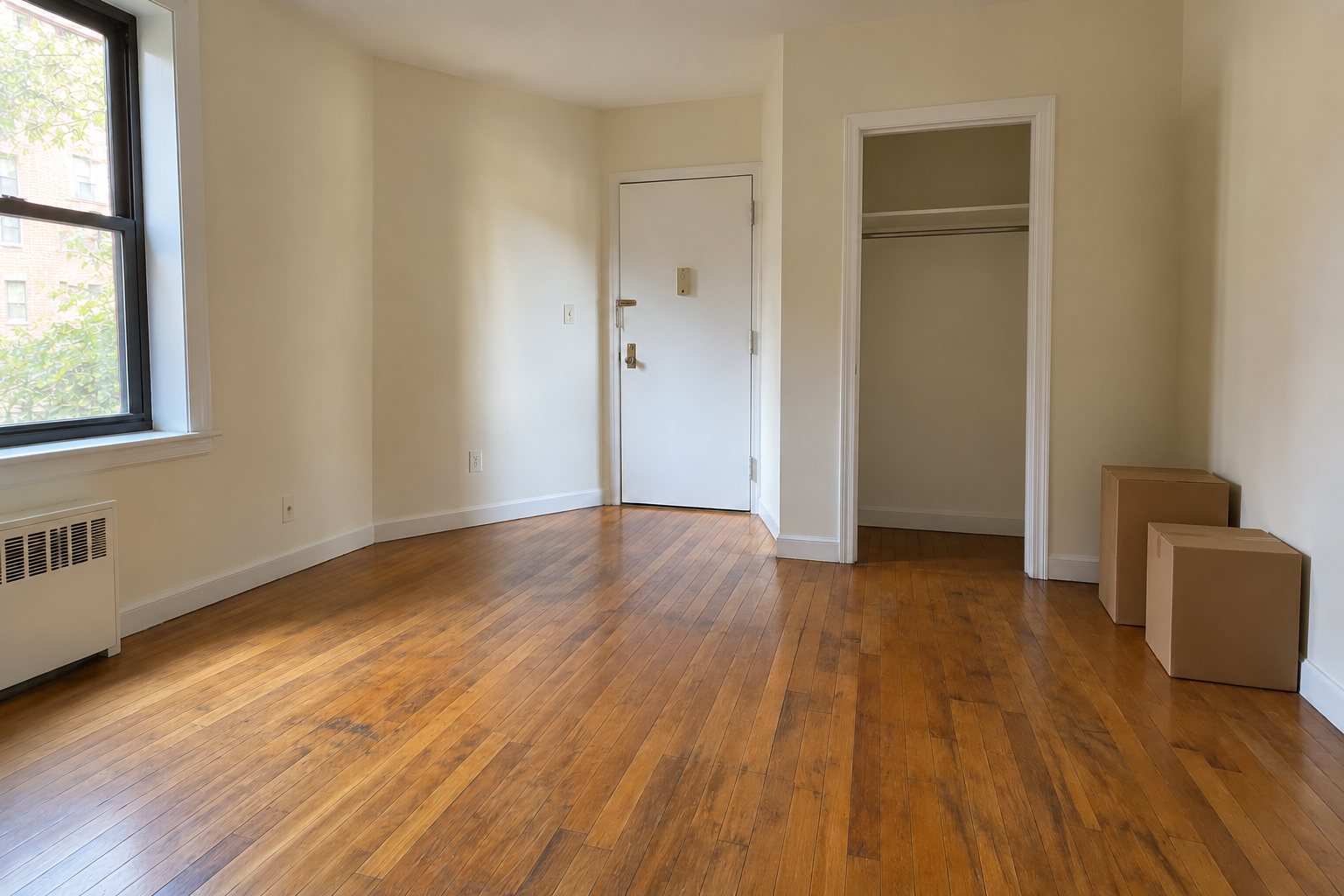
For a rental cleanout in Long Island City, detailed cleaning should begin after approved hauling is finished and the included rooms have been checked again. Otherwise, each trip with furniture or bags can bring soil back through finished areas. A clear handoff between removal and cleaning helps the property representative confirm what remains, what is accessible and what needs separate attention.
Share the unit, remaining contents and building rules so the assessment can address the removal and cleaning sequence.
Define the handoff before setting the work sequence
A turnover date is useful, but it does not answer whether the unit is ready for cleaning. First identify the person authorized to direct the work, the spaces included and the contents approved for removal. Put those instructions in writing. If authority or an item’s destination is uncertain, pause that removal decision and refer it to the appropriate property or legal professional.
The crew should not decide whether a left-behind possession may be discarded. This article addresses coordination, not the legal status of belongings. The authorized contact needs to resolve those questions before removal. Name one person who can answer scope questions so instructions do not change depending on who happens to be present.
Document the starting condition without exposing private information
Before approved contents move, record the rooms, closets, appliances, storage spaces and visible damage. Time-stamped photographs or video can help the decision-maker compare the starting condition with the later empty-room check. The record should support the work instructions, not become public marketing material.
Keep names, mail, medication labels and other private details out of casual sharing. Agree who receives the documentation and which retained items must remain protected. If a photograph reveals an unresolved possession, obtain a decision before treating the image as permission to remove it. Documentation and authorization are different parts of the plan.
Confirm the route through the building
Ask management about service-elevator reservations, loading approval, insurance-document requirements, protective coverings and permitted work windows. A Long Island City apartment may have requirements that affect when hauling can happen. Confirm the entrance, loading destination and access arrangements before labor and transport are committed.
Map the route from the unit to the approved loading or disposal area. Keep hallways, stairs, exits and fire doors clear. Where protection is required, use the building-approved arrangement for floors, elevator walls and corners. A shared corridor is not a place to leave a temporary removal pile while the apartment is cleaned.
Give every approved item a destination
Do not combine all remaining contents into an ordinary-trash stream. The source plan separates approved disposal, recycling, donation, electronics, documents needing secure handling, appliances, bulky furniture and retained property. Confirm what can leave, where it can go and which arrangements belong in the assessment.
Retained belongings need a clearly identified protected area, placed there only with approval. Uncertain belongings need a decision, not a convenient spot beside outgoing bags. This distinction helps keep the final walkthrough meaningful: the representative can see that what remains is intentional rather than something overlooked during hauling.
Unknown liquids, paint, chemicals, cylinders, sharps or biological concerns require a separate safety plan. Do not compress, sweep or bag them as routine contents. Stop and report the condition for appropriate handling. An assessment request is not a promise that every material can be removed by an ordinary cleanout crew.
Use an empty-room check to release areas for cleaning
Once approved hauling is complete, check the included areas again before beginning detail work. Look behind doors, on closet shelves, inside approved empty cabinets and around any balcony or storage area in the scope. Include only appliance edges that are safely accessible; an empty apartment does not automatically make heavy equipment safe to move.
- Confirm that approved removal is finished, not merely paused.
- Check that retained items are where the decision-maker directed.
- Identify any contents or areas still awaiting approval.
- Record damage, inaccessible surfaces or specialist concerns separately.
- Confirm that the agreed cleaning areas are accessible.
If more hauling is needed, resolve its timing before finishing the same floor again. Keep cleaning questions separate from unresolved disposal decisions. The eviction and rental property cleanout service page provides the relevant starting point for discussing this sequence.
Clean to the condition, not a promise of a ready-to-rent result
After removal and the second check, capture loose debris before compatible surface cleaning. Work from safely reachable higher areas downward and finish floors after the work above them. Continued hauling should no longer be crossing those finished surfaces.
Confirm that included kitchen storage and appliance interiors are empty. Report broken glass, active leaks, pest evidence or damaged appliances instead of assuming cleaning resolves them. Bathrooms also need condition-based decisions: plumbing failures, unstable fixtures and heavy biological contamination are not ordinary surface-cleaning tasks. Record persistent odor or repair concerns for the responsible person.
Questions about the removal-to-cleaning handoff
Can detailed cleaning start while bags are still leaving?
The source plan calls for approved removal to finish first. Repeated hauling can track soil and create new dust, undoing work on surfaces and floors.
What happens to an item without a clear instruction?
Pause the removal decision and ask the authorized contact. A cleaning or cleanout crew should not make ownership or disposal decisions on the representative’s behalf.
Are balconies and storage cages automatically included?
No. Confirm those areas in the scope and check any separate building requirements. Small storage spaces can hold the last unresolved contents.
What should the completion record show?
Document included empty rooms, protected retained belongings, clear common areas and unresolved repair or specialist concerns. Confirm the return of keys and access devices with the authorized contact.
Close the job with a documented walkthrough
Have the authorized contact walk the unit or receive the agreed completion record. Check that no bags remain in shared spaces and note anything cleaning could not resolve. For wider timing considerations, the empty-apartment handoff guide explains why access before new belongings arrive matters. The empty-storage inspection checklist helps identify shelves and corners before they are filled again.
About Crystal Breeze Cleaning explains who is helping plan the service. For a Long Island City turnover, bring the authorized scope, contents, building requirements and desired date to the assessment discussion.
Share the unit, remaining contents and building rules so the assessment can address the removal and cleaning sequence.