
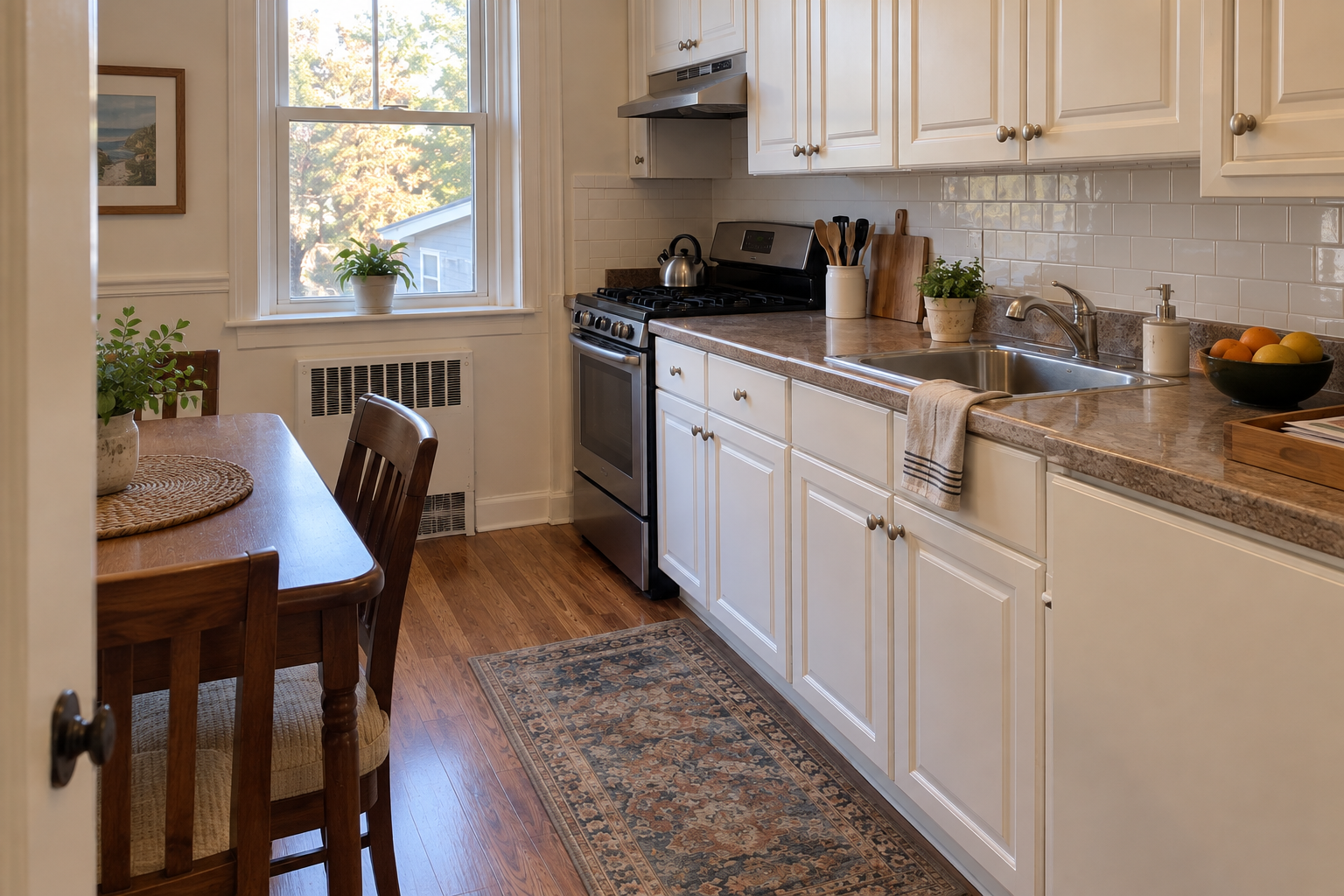
A kitchen can be reasonably tidy on a weeknight and still need more attention than a household has time to give it. Dishes, fresh splatter, and food waste are immediate jobs. Cabinet fronts, fixture details, appliance exteriors, and complete floor care are different kinds of work. The distinction matters when you are considering recurring house cleaning in Bayside: a useful service plan begins with a clear kitchen scope, not an assumed list of tasks.
Ready to plan your cleaning?
Review standard cleaning services and confirm your rooms, priorities and timing.
Crystal Breeze Cleaning provides standard and recurring house cleaning in Bayside and nearby Queens communities. Before the first visit, use the decisions below to describe how your kitchen is used, which surfaces need special care, and what you want handled during each scheduled clean. The goal is a practical agreement that complements your between-visit routine.
Separate daily household jobs from scheduled cleaning
Start by naming the tasks that cannot wait for an appointment. Food needs to be stored safely; dishes and food waste need a household plan; fresh spills should be addressed before they dry. A short weeknight reset can also leave one usable counter, a rinsed and dried sink, and a clear walking path. Those are immediate maintenance decisions, not a substitute for a planned cleaning visit.
Then list the wider work you would like to discuss for recurring service: countertops, reachable fixtures, cabinet fronts, appliance exteriors, floor edges, and the full kitchen floor. Do not assume that every item is included at every frequency. Ask what fits the standard visit, what requires an extra request, and which tasks are outside the cleaning scope. A written list helps keep expectations consistent even when household routines change.
Describe the kitchen as it is actually used
A kitchen used for daily cooking has different pressure points from one used mostly for reheating. Note where meals are prepared, whether a table or island collects mail and bags, and which floor path sees the most traffic. If children use the room for snacks or schoolwork, that may affect where crumbs and clutter gather. The important detail is not the size of the room alone; it is how use creates residue between appointments.
Tell the cleaner which areas matter most when time is limited. One household may prioritize the stovetop and sink; another may care most about the floor near the eating area. Naming priorities makes it easier to discuss a realistic scope without turning a recurring visit into an open-ended deep clean.
Identify finishes before choosing products
Countertops and floors are not interchangeable surfaces. Natural stone, engineered stone, laminate, butcher block, stainless steel, tile, and wood may have different care instructions. Share any manufacturer guidance or known restrictions before the visit. The same applies to specialty finishes on cabinets, faucets, or appliances. If you are unsure what a material is, say so rather than assuming a stronger product will be better.
Point out areas with existing staining, scratches, loose caulk, leaks, or other damage. Cleaning and repair are different jobs. A clear condition note protects expectations and gives the team a chance to avoid an unsuitable method. For day-to-day spills, use only a surface-safe approach and avoid mixing products.
Make clutter boundaries explicit
A recurring cleaner should know whether countertop items may be moved and where they belong afterward. Mail, keys, charging cables, lunch containers, and small appliances often share the kitchen. Give each a landing zone that does not obstruct food preparation. If certain papers or items are private, put them away before service rather than expecting the cleaner to sort them.
You do not need a perfectly organized kitchen to ask for help. Clearing food, dishes, and loose personal items from the priority surfaces is enough to make the cleaning scope easier to understand. If a counter cannot be cleared, identify the accessible portion that should receive attention. This keeps the appointment focused on cleaning rather than household decision-making.
Ask which appliance and cabinet tasks are extras
Wiping the exterior of a refrigerator or range is not the same as cleaning inside it. Oven interiors, refrigerator shelves, cabinet interiors, and heavy baked-on buildup can require additional time and preparation. Ask whether each is available, how it should be requested, and what the household must do beforehand. Do not leave food-disposal decisions, fragile contents, or an unexpectedly full appliance for the team to resolve on arrival.
Similarly, routine attention to cabinet fronts differs from emptying and cleaning inside cupboards or drawers. If interior work is a priority, name the exact units and confirm the scope in advance. This is especially useful in a busy kitchen where a single “clean the cabinets” instruction could mean several very different jobs.
Choose a frequency from the room’s rhythm
Weekly, biweekly, or another schedule should be discussed in light of how often the kitchen is used and how much the household can maintain between visits. A daily-cooking family may notice buildup more quickly than a lightly used apartment. But frequency alone does not define quality: the task list, surface conditions, and available time matter too.
Start with your current habits. Can the household put food away, manage dishes, wipe a fresh spill after the stovetop cools, rinse the sink, and sweep the busiest path? If those essentials are difficult to maintain, say so during the quote discussion. A useful plan should reflect real life, not an idealized schedule that nobody follows.
Plan the first visit as a handoff
Before service, share the kitchen’s priority areas, finish-care instructions, access needs, pets, and any rooms beyond the kitchen that should be included. Identify any surface that should not be moved or treated. If a slow drain, leak, damaged disposal, or loose fixture is present, flag it as a maintenance issue; cleaning will not correct a mechanical problem.
After the first visit, review whether the agreed tasks matched what you needed. Were the sink and cooking zone the right priorities? Did the floor require more attention than expected? Did an appliance interior need a separate booking? Use those observations to refine the next visit instead of silently assuming the same plan will fit every week.
Keep the between-visit routine deliberately short
The household’s job between scheduled cleans does not need to duplicate the professional visit. A simple closeout can be enough: store food, contain dishes, clear one counter, address fresh splatter on a cooled surface, rinse and dry the sink, check waste, and sweep the main floor path. Assigning those specific tasks is clearer than a vague instruction to “clean the kitchen.”
When the daily routine and recurring scope are distinct, each has a purpose. The first keeps fresh messes from sitting overnight. The second gives agreed surfaces and room details planned attention. Both can change as the household’s schedule changes, so revisit the list when kitchen use increases or priorities shift.
Discuss recurring house cleaning in Bayside
Crystal Breeze Cleaning can discuss standard and recurring house cleaning for your Bayside home, including kitchen surfaces, household priorities, preferred frequency, access needs, and any extras you want quoted separately. Share what the room needs rather than assuming a one-size-fits-all checklist.
Request a cleaning quote by calling (516) 789-2767 or visiting crystalbreezecleaning.com.
Ready to plan your cleaning?
Review standard cleaning services and confirm your rooms, priorities and timing.
Ready to plan service for this property? Review Bayside house and apartment cleaning for checklist choices, access and booking details.